CM Rekha Gupta dares Rahul Gandhi to Parliament debate
Synopsis
Delhi Chief Minister Rekha Gupta issued a sharp open challenge to Rahul Gandhi on 4 November 2026, daring him to a Parliament debate and invoking the 1975 Emergency and 1984 anti-Sikh riots alongside BJP's three consecutive national election wins.
Key Takeaways
Delhi CM Rekha Gupta posted a direct open challenge to Rahul Gandhi on 4 November 2026 , naming Parliament as the debate venue.
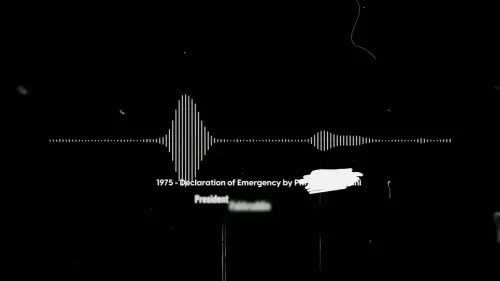
The post cites the 1975 Emergency imposed by Indira Gandhi — involving mass detentions and press censorship — as a democratic failure.
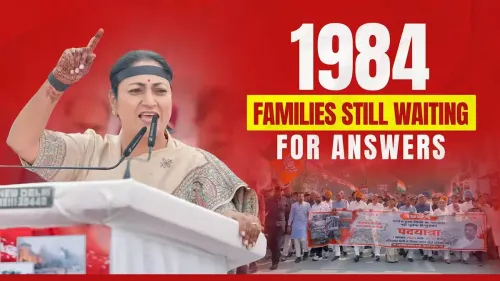
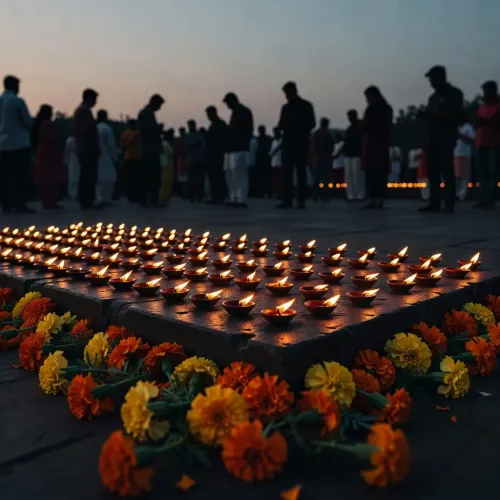
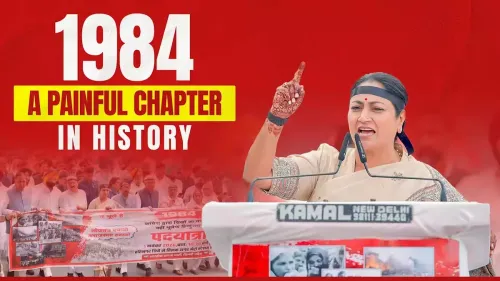
It references the anti-Sikh riots of November 1984 , when thousands were killed in Delhi during Rajiv Gandhi's tenure as Prime Minister.
BJP's three consecutive national election wins — 2014, 2019 and 2024 — are flagged as evidence of Congress's declining mandate.
The closing taunt 'Bhaagna mat!' ('Don't run away!') and the reference to 'no visa required' reflect entrenched BJP attacks on Rahul Gandhi's foreign travel history.
No formal parliamentary debate notice has been filed; the exchange remains political positioning ahead of an upcoming session.
A combative open challenge landed on Indian political timelines early Wednesday, when Delhi Chief Minister Rekha Gupta issued a direct dare to Congress leader Rahul Gandhi — come to Parliament and debate. The post, uploaded on 4 November 2026, is blunt, theatrical, and calculated: it frames two of Congress's most sensitive historical wounds as the opening argument.
The Emergency and 1984 — BJP's perennial double-barrel
Rekha Gupta's challenge leads with two episodes that have shadowed Congress for decades. First: the Emergency of 1975, when Prime Minister Indira Gandhi suspended civil liberties on 25 June 1975, ordering mass detentions of opposition leaders and imposing press censorship that lasted 21 months. Second: the anti-Sikh violence of November 1984, which erupted in Delhi after Indira Gandhi's assassination — when Rajiv Gandhi was Prime Minister — and left thousands of Sikhs dead. 'Congress still cannot escape that bloodstained legacy,' Gupta wrote, in language deliberately chosen to sting.
These are not new charges. BJP spokespersons have routinely invoked both episodes to contest Congress's claim to democratic credentials, and every parliamentary session in recent years has seen at least one sharp exchange on the subject. What makes Gupta's post distinctive is its arena: she is not a party spokesperson but the sitting Chief Minister of Delhi, and she is naming Parliament itself as the venue.
Three lotus symbols and a taunt
The post's structure is almost theatrical in its confidence. Three years — 2014, 2019, 2024 — each followed by a 🪷, the BJP's election symbol. Then: 'The fourth is already your biggest nightmare.' The closing line, 'Bhaagna mat!' ('Don't run away!'), strips away any diplomatic veneer. It is a dare, not a debate proposal. The tag 'Parliament of India, New Delhi. No visa required' sharpens the jab: Rahul Gandhi's foreign travel and residency questions have been a long-running BJP talking point.
What a formal parliamentary debate would actually require
Gupta's challenge is political theatre for now — a formal debate on historical events would require a notice in the Lok Sabha or Rajya Sabha under specific procedural rules, and neither side has filed one. But the post does what it is designed to do: force Congress into a response loop. If they ignore it, the 'Bhaagna mat' framing sticks. If they engage, every rebuttal becomes fresh oxygen for the BJP's historical argument. It is a trap shaped like an invitation.
With Parliament's next session approaching, the question is whether this exchange stays on social media or crosses the floor into the chamber that Gupta has so pointedly named as her arena.
Point of View
She attempts to elevate the dare into something institutional. The 'no visa required' barb signals that this is not just about history — it is also aimed at Rahul Gandhi's domestic political credibility. Whether Congress chooses to engage or dismiss will itself become the next news cycle, which is precisely the point.
NationPress
4 Nov 2026
Frequently Asked Questions
What did Delhi CM Rekha Gupta post about Rahul Gandhi?
Rekha Gupta issued an open challenge to Rahul Gandhi on 4 November 2026, daring him to a debate in Parliament and invoking the 1975 Emergency and the 1984 anti-Sikh riots as Congress's unresolved historical liabilities.
What is the 1975 Emergency that BJP keeps citing?
The Emergency was declared by Prime Minister Indira Gandhi on 25 June 1975, suspending fundamental rights, jailing opposition leaders, and gagging the press for roughly 21 months until elections were called in 1977.
Why do BJP leaders mention 1984 in attacks on Congress?
Anti-Sikh violence broke out across Delhi in November 1984 following the assassination of Indira Gandhi, killing thousands of Sikhs while Rajiv Gandhi was Prime Minister — an episode for which Congress has faced persistent accusations of inaction.
Has BJP won three consecutive general elections?
Yes. The Bharatiya Janata Party formed the national government after winning the general elections of 2014, 2019 and 2024 — three consecutive terms that Rekha Gupta references in her post.
What does 'Bhaagna mat' mean in Rekha Gupta's post?
'Bhaagna mat' is Hindi for 'don't run away' — a taunt directed at Rahul Gandhi implying he avoids direct political confrontation, a line of attack BJP has used repeatedly in recent years.