CM Rekha Gupta Invokes 1984 Riots, Targets Congress
Synopsis
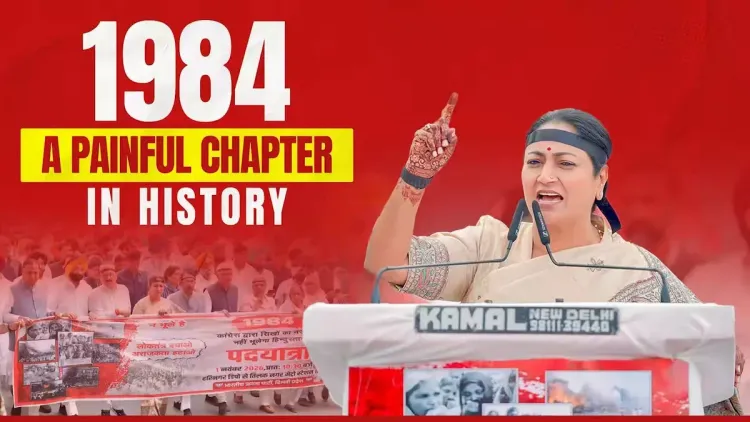
Delhi Chief Minister Rekha Gupta invoked personal memories of the 1984 anti-Sikh riots on their anniversary, accusing the Congress party of living by the same power-lust that caused the violence 42 years ago, using the hashtag SaveDemocracyRemoveAnarchy.
Key Takeaways
Delhi CM Rekha Gupta posted on 1 November 2026 , the anniversary of the 1984 anti-Sikh riots, sharing that she was 10 years old when the violence occurred.
She accused the Indian National Congress of still being driven by the same 'lust for power' she holds responsible for the 1984 killings.
The 1984 anti-Sikh riots followed the assassination of PM Indira Gandhi on 31 October 1984 and left thousands dead, primarily in Delhi .
The Nanavati Commission , set up in 2000 , investigated the role of Congress leaders and Delhi Police during the violence.
The post was tagged with #SaveDemocracyRemoveAnarchy , framing the historical grievance as a contemporary democratic argument.
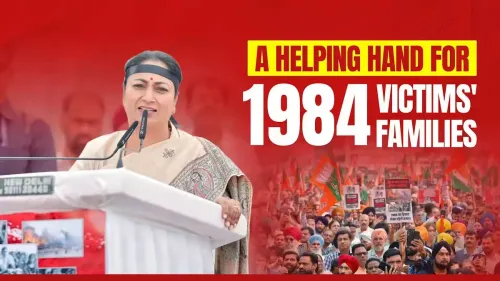
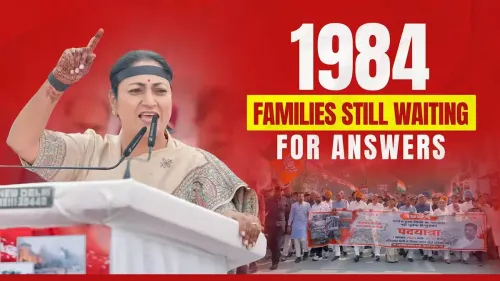
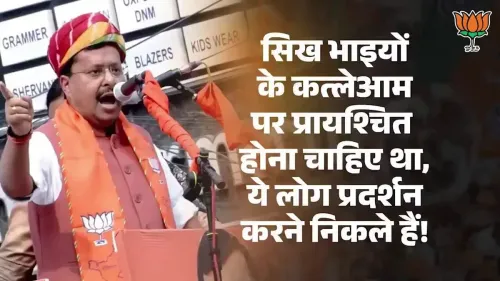
Forty-two years have not dulled the wound. On 1 November 2026 — the anniversary of the outbreak of the 1984 anti-Sikh riots — Delhi Chief Minister Rekha Gupta posted a deeply personal reflection on X, recalling childhood memories of the violence and drawing a direct line between that tragedy and what she described as Congress's enduring hunger for power.
Writing in Hindi, Gupta said: 'Today, on 1 November, seeing such a large number of my Sikh brothers and sisters, those painful memories of 1984 have been refreshed once again. I was only 10 years old then… 42 years later, Congress still lives for the same lust for power that inflicted such a deep wound on the Sikh community in 1984.'
The Weight of 1 November
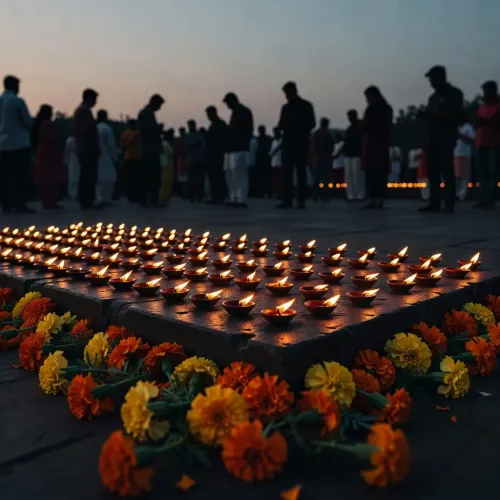
The date carries immense symbolic freight. The violence that consumed Delhi and other cities in late October and early November 1984 followed the assassination of Prime Minister Indira Gandhi on 31 October 1984, and left thousands of Sikh lives destroyed. Delhi, home to a large Sikh population, witnessed some of the worst carnage. The Indian National Congress was the party in power at the centre, and opponents have long accused its leadership and police apparatus of failing to prevent — or actively enabling — the killing.
Gupta was a child of ten when the riots erupted. Her post makes that personal register explicit: this is not just a political accusation but a memory carried in the body across four decades.
The Nanavati Commission and a Still-Open Wound
The political and legal reckoning has been slow. The Nanavati Commission, constituted in 2000, examined the role of Congress leaders and Delhi Police in the violence. Its findings sharpened the accusations that have shadowed the party ever since. For BJP, the 1984 riots have become a recurring reference point — deployed to question Congress's credentials on minority safety and democratic governance, and especially potent in Delhi politics, where Sikh voters are a significant constituency.
Gupta anchored her post to the hashtags #SaveDemocracyRemoveAnarchy and #लोकतंत्र_बचाओ_अराजकता_हटाओ ('Save Democracy, Remove Anarchy'), signalling that the historical grievance is being framed as a live democratic argument, not merely a memorial one.
A Forty-Two-Year Accusation Renewed
BJP leaders have invoked 1984 consistently in Delhi and national debates — at election time, at anniversaries, whenever the party seeks to contrast its governance record with Congress's. Gupta's post follows that pattern but adds something rarer: the voice of a witness, not just a politician. The combination of personal testimony and partisan charge is precisely what makes it resonate beyond a standard political broadside.
Congress has not historically disowned its failures in 1984 outright — senior leaders have at various points issued apologies — but the party continues to dispute the framing that its leadership orchestrated or condoned the violence. Whether that response resurfaces in the coming days, and how Sikh organisations respond, will determine how far this moment travels beyond a single post.
Four decades on, the embers of 1984 still have the power to rewrite today's political temperature in Delhi.
Point of View
She makes the accusation harder to deflect as mere electioneering. The 'Save Democracy, Remove Anarchy' framing suggests the party is deliberately connecting historical grievance to its present-day anti-Congress campaign in Delhi, likely ahead of further political contestation. The durability of this issue in Delhi politics reflects a genuine unresolved wound in public memory — one that no formal apology or commission report has fully closed.
NationPress
1 Nov 2026
Frequently Asked Questions
What did Delhi CM Rekha Gupta say about the 1984 riots?
On 1 November 2026, Rekha Gupta said that seeing Sikh community members on the riots' anniversary revived her painful childhood memories of 1984, when she was just 10 years old. She accused Congress of still being driven by the same power-hunger that caused the violence.
What were the 1984 anti-Sikh riots?
The 1984 anti-Sikh riots were widespread attacks on Sikh communities across India, especially in Delhi, following the assassination of Prime Minister Indira Gandhi on 31 October 1984. Thousands of Sikhs were killed in the violence that erupted over several days.
What was the Nanavati Commission?
The Nanavati Commission was constituted in 2000 to investigate the role of Congress leaders and Delhi Police in the 1984 anti-Sikh riots. Its findings intensified long-standing accusations against the Congress party.
Why does BJP keep raising the 1984 riots against Congress?
BJP has consistently cited the 1984 riots to challenge Congress's record on minority safety and democratic governance. The events remain politically sensitive in Delhi, where the Sikh community is a significant voter group, and resurface especially around the November anniversary.
What does Rekha Gupta's hashtag SaveDemocracyRemoveAnarchy mean?
The hashtag, used in both English and Hindi (#लोकतंत्र_बचाओ_अराजकता_हटाओ), frames the post not just as a historical remembrance but as a contemporary political message — linking the alleged failures of Congress in 1984 to what Gupta portrays as its current threat to democratic governance.