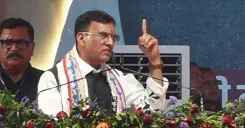
CM Rekha Gupta Demands Congress Apology for 1984 Sikh Massacre
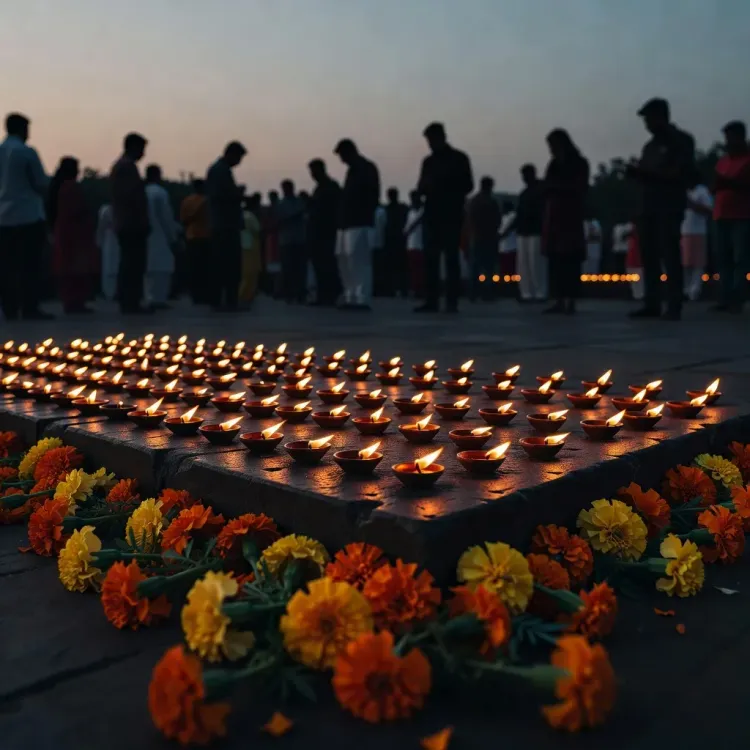
Synopsis
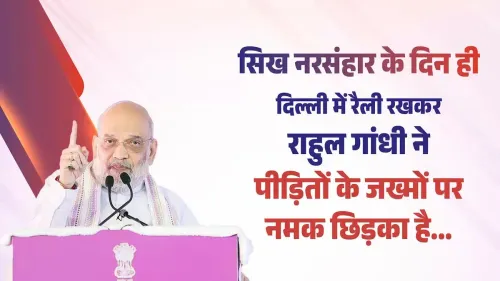
On the 42nd anniversary of the 1984 anti-Sikh riots, Delhi CM Rekha Gupta challenged Rahul Gandhi to apologise for Congress's 'bloodstained legacy' instead of staging political drama, invoking unresolved grief of Sikh families still awaiting justice.
Key Takeaways
Delhi Chief Minister Rekha Gupta issued a sharp statement on 1 November 2026 , the anniversary of the 1984 anti-Sikh riots .
She demanded Rahul Gandhi and the Indian National Congress offer a genuine apology to victims' families rather than engage in 'political drama.' The 1984 riots erupted after the assassination of Prime Minister Indira Gandhi on 31 October 1984 and killed thousands of Sikhs, primarily in Delhi .
The Nanavati Commission (2000–2005) examined Congress leaders' roles in the violence; full accountability has remained a contested issue for over four decades.
Gupta's Hindi closing — 'ज़ख्म पुराने हैं, मगर दर्द आज भी बाकी है' — acknowledged that victim families continue to wait for justice.
The post used hashtags #SaveDemocracyRemoveAnarchy and #लोकतंत्र_बचाओ_अराजकता_हटाओ , signalling a coordinated BJP messaging campaign.
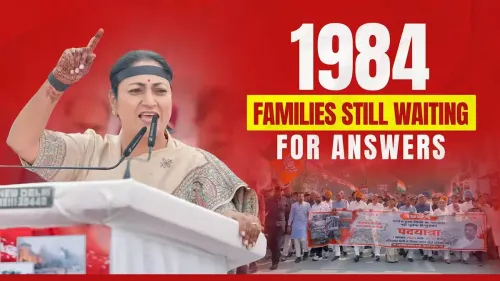
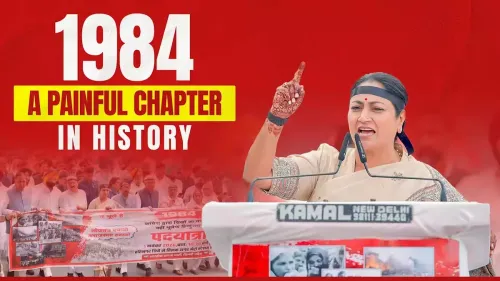
On the 42nd anniversary of the 1984 anti-Sikh riots, Delhi Chief Minister Rekha Gupta turned the day into a sharp political reckoning — demanding that Congress leader Rahul Gandhi stop the 'political drama' and instead offer a genuine apology to the thousands of Sikh families still waiting for accountability. The post, published on Sunday, 1 November 2026, lands on the exact calendar date the violence erupted in 1984, making its timing pointed and deliberate.
The Charge: Constitution Without Conscience
Rekha Gupta's message cuts straight at Rahul Gandhi's long-running practice of publicly carrying a copy of the Constitution as a symbol of democratic commitment. 'Merely carrying a copy of the Constitution means little if its values are not upheld,' she wrote — a line that reframes the prop as an indictment rather than a credential. The implication is blunt: the Constitution's values of equality, dignity, and justice were violated in 1984 on Congress's watch, and no symbolic gesture repairs that without remorse.
She described what she believed the day demanded: 'Today was a day to express remorse, apologise to the victims' families and acknowledge the horrors of 1984.' Instead, she charged, Gandhi chose 'political drama, a politics of anarchy and a desperate pursuit of power.' The specific action by Gandhi that drew this response on 1 November 2026 has not been independently confirmed.
What Happened in 1984 — and Why It Still Burns
The fires of October–November 1984 broke out within hours of the assassination of Prime Minister Indira Gandhi on 31 October. The violence, concentrated heavily in Delhi, killed thousands of Sikhs in days of organised mob attacks. It remains one of independent India's most grievous episodes of communal violence, and the question of political culpability has never been fully resolved.
The Nanavati Commission, constituted in 2000 and reporting in 2005, examined the role of Congress leaders in either instigating or failing to stop the riots. Convictions have been few and sentences debated as inadequate by survivors and rights groups alike. Victim families, many of them elderly now, have described decades of deferred justice. Rekha Gupta's closing Hindi lines capture that grief precisely: 'ज़ख्म पुराने हैं, मगर दर्द आज भी बाकी है। कई परिवारों की आँखों में इंतज़ार आज भी बाकी है।' ('The wounds are old, but the pain persists even today. In the eyes of many families, the wait still continues.')
BJP's Recurring Invocation of Congress's 1984 Record
This post is the latest move in a well-established pattern of political combat. The BJP has made the 1984 riots a recurring counter-argument whenever Congress frames itself as the guardian of secularism or constitutional values. The logic is adversarial but consistent: Congress cannot claim the mantle of democracy while leaving one of India's worst anti-minority pogroms insufficiently answered. Congress, for its part, has pointed to subsequent judicial processes and the passage of time.
What sharpens the exchange today is the setting — the anniversary itself — and the hashtags Gupta deployed: #SaveDemocracyRemoveAnarchy and #लोकतंत्र_बचाओ_अराजकता_हटाओ. They signal a coordinated messaging push, not a solo statement. The language of 'anarchy' directed at Congress is a deliberate echo of the BJP's broader political framing in the current confrontational moment.
For the families of 1984 riot victims, the anniversary is not a political talking point — it is a date that reopens every loss. Whether today's exchange generates any fresh momentum on pending legal cases or compensation remains the question worth watching.
Point of View
She attempts to collapse the symbolic distance between gesture and accountability. The timing — the precise anniversary — is designed to maximise emotional resonance and maximise political pressure. The broader pattern suggests that as long as legal closure on 1984 remains incomplete, the BJP will keep this wound open as a counter-narrative tool against Congress's democratic positioning.
NationPress
1 Nov 2026
Frequently Asked Questions
What did Delhi CM Rekha Gupta say about the 1984 anti-Sikh riots?
Rekha Gupta demanded on 1 November 2026 that Rahul Gandhi and Congress apologise to the families of 1984 anti-Sikh riot victims, calling their political behaviour on the anniversary 'drama' and a 'desperate pursuit of power' rather than genuine remorse.
What were the 1984 anti-Sikh riots?
The 1984 anti-Sikh riots broke out on 31 October 1984 immediately after the assassination of Prime Minister Indira Gandhi , with mobs killing thousands of Sikhs, primarily in Delhi . They remain one of India's most unresolved episodes of mass communal violence.
What was the Nanavati Commission?
The Nanavati Commission was set up in 2000 and submitted its report in 2005 to examine the role of Congress leaders in the 1984 anti-Sikh riots . Its findings have been disputed, and convictions have been limited.
Why does the BJP keep raising 1984 against Congress?
The BJP consistently invokes 1984 to counter Congress's claims of being India's foremost secular and constitutional party, arguing that Congress has never fully accepted responsibility for the violence that occurred under its government's watch.
What do the hashtags SaveDemocracyRemoveAnarchy mean?
#SaveDemocracyRemoveAnarchy and its Hindi equivalent #लोकतंत्र_बचाओ_अराजकता_हटाओ are BJP-aligned hashtags used to frame Congress's political actions as a threat to democratic order, part of a coordinated messaging campaign.