CM Rekha Gupta: Congress rally on Nov 1 insults 1984 Sikh victims
Synopsis
Delhi Chief Minister Rekha Gupta has condemned Congress and the INDIA alliance for scheduling a 'Save Democracy' rally at Ramlila Maidan on November 1 — the anniversary of the 1984 anti-Sikh riots — calling it political insensitivity and accusing the opposition of disrupting Delhi's traders during the festival season.
Key Takeaways
Delhi CM Rekha Gupta posted a sharp attack on Congress and the INDIA alliance on November 1, 2026 .
She linked the Congress rally at Ramlila Maidan to the anniversary of the 1984 anti-Sikh riots , calling it 'the peak of political insensitivity.' Gupta accused the opposition of disrupting Delhi traders, small shopkeepers, and street vendors during peak festival-season commerce.
She outlined what she called Rahul Gandhi's political model : spreading misinformation, discrediting electoral mandates, and creating street disorder.
The post reflects BJP's recurring counter-narrative tying Congress democracy rhetoric to its historical accountability for the 1984 violence.
On the same date that Delhi witnessed the worst communal carnage in its modern history, Delhi Chief Minister Rekha Gupta has charged that the Indian National Congress chose November 1, 2026, to hold a political rally at Ramlila Maidan — a date she calls the 'peak of political insensitivity.'
November 1 and the shadow of 1984
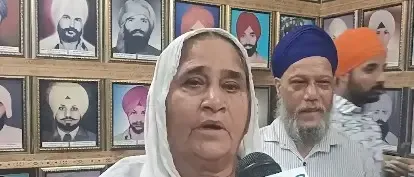
The date is not incidental. On 1 November 1984, in the days following the assassination of Prime Minister Indira Gandhi, mobs tore through Delhi's streets in an anti-Sikh pogrom that killed thousands of innocent civilians. The wounds, as Gupta put it, 'aaj bhi hare hain' — 'are still raw today.' Holding a rally billed as a 'Save Democracy' event on this specific anniversary, the Chief Minister argued, is not coincidence but contempt.
Gupta, a BJP leader, addressed the Congress and the INDIA alliance — the opposition coalition formed in 2023 — directly: 'Congress cannot erase the stain of 1984 by invoking democracy.' The framing is a well-established BJP counter-narrative: whenever Congress-led formations organise protests under the banner of democratic rights, BJP leaders anchor the response to the party's culpability in the 1984 riots, where thousands of Sikh families were killed and displaced in the capital.
Traders and festival commerce pulled into the political crossfire
Beyond the historical charge, Gupta layered in an economic argument aimed squarely at Delhi's traders, small shopkeepers, and street vendors. The festival season — with its compressed windows of peak commerce — is when these businesses make a disproportionate share of their annual earnings. A large political mobilisation that clogs arterial roads and chokes footfall, she argued, amounts to 'staking the livelihoods of Delhi's traders on the altar of political frustration.'
The accusation follows a pattern: BJP-run Delhi governments have increasingly framed opposition street protests as economically disruptive events that punish ordinary residents rather than the political establishment. Whether the November 1 rally materially affected trade activity in central Delhi remains unverified.
The 'Rahul Gandhi model' — Gupta's political diagnosis
Gupta outlined what she described as a four-step cycle: 'Spread lies, discredit the electoral mandate, create anarchy on the streets, then extract the cost of your political frustration from the nation and Delhi's people.' She named Rahul Gandhi, the Congress leader, as the architect of this 'model,' warning him that 'the defeat delivered by the people's mandate cannot be avenged against the country, and the price of political failure cannot be collected from Delhiites.'
The sharpness of the language reflects the high political temperature in Delhi ahead of what political observers have been watching as an ongoing contest between the newly returned BJP state government and a Congress-INDIA bloc seeking to rebuild its presence in the capital.
A party that seeks moral authority on democratic norms, Gupta's post implies, cannot simultaneously claim to have no role in one of independent India's darkest chapters — and the calendar, on this particular Sunday, made that tension impossible to ignore.
Point of View
Designed to isolate Congress on both moral and practical grounds with a single news cycle. The choice to name Rahul Gandhi personally, rather than just the party, signals that the BJP sees him as the opposition's most polarising figure in the capital and wants to keep his brand tied to what they frame as both historical shame and current chaos. With Congress attempting to rebuild in Delhi after its near-absence in the 2020 and 2025 assembly cycles, BJP-run state government pushback of this intensity suggests the ruling party views any opposition momentum — however early — as worth countering hard and fast.
NationPress
1 Nov 2026
Frequently Asked Questions
Why did Delhi CM Rekha Gupta criticise the Congress rally on November 1?
Gupta said holding a political rally on November 1 — the anniversary of the 1984 anti-Sikh riots in Delhi — is 'the peak of political insensitivity,' as thousands of innocent Sikh families were killed on this date in 1984 and their wounds remain raw.
What happened on November 1, 1984 in Delhi?
On November 1, 1984, large-scale anti-Sikh violence erupted across Delhi following the assassination of Prime Minister Indira Gandhi, resulting in the killing of thousands of Sikh civilians in one of independent India's worst communal tragedies.
Where did Congress hold its rally on November 1, 2026?
According to Rekha Gupta's post, Congress organised the political rally at Ramlila Maidan in Delhi, a historic public ground frequently used for large gatherings and protests.
What is the INDIA alliance that Rekha Gupta criticised?
The INDIA alliance (also written as INDI गठबंधन) is an opposition coalition formed in 2023, grouping Congress and several other parties, aimed at contesting the BJP-led government at the national level.
What did Rekha Gupta say about Delhi traders and the festival season?
Gupta argued that the Congress rally disrupts Delhi's traders, small shopkeepers, and street vendors during the festival season — when they depend on peak commerce to support their families — accusing the opposition of sacrificing ordinary livelihoods for political point-scoring.