Nadda fires at Congress over judiciary, CAG and Article 356 record
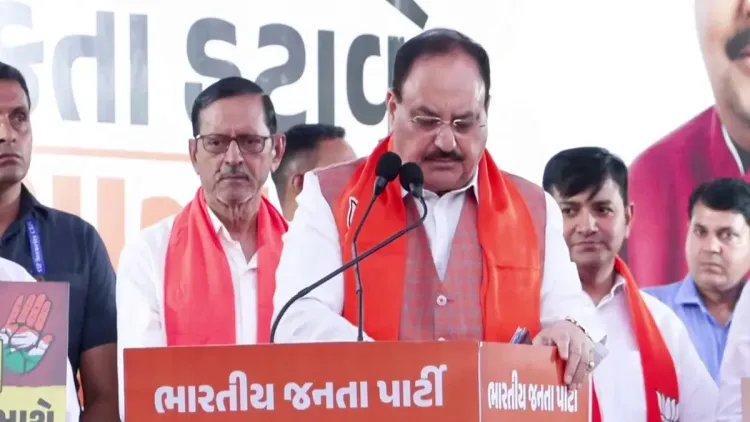
Synopsis
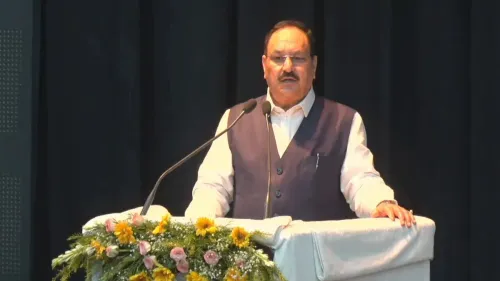
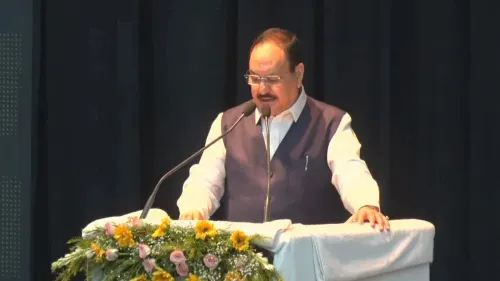
Union Health Minister and BJP president J. P. Nadda accused Congress on X of a decades-long record of challenging judiciary, pressuring the CAG during 2G and coal scams, and toppling state governments under Article 356 — calling out the party's current democratic posturing as hypocritical.
Key Takeaways
Nadda posted a sharp Hindi-language indictment of Congress on 27 October 2026 , targeting its institutional record.
He cited Congress's historical use of Article 356 to dissolve elected state governments, a practice curbed by the Supreme Court's 1994 S.
The CAG's 2010 report on 2G spectrum estimated a presumptive loss of ₹1.76 lakh crore ; the 2012 coal-block report pegged losses at ₹1.86 lakh crore — both drawn into the BJP's political narrative.
Nadda framed Congress's current democracy rhetoric as contradicted by its own UPA-era (2004–2014) record of institutional pressure.
The post carried the hashtag #SaveDemocracyRemoveAnarchy , indicating it is part of a coordinated political messaging push.
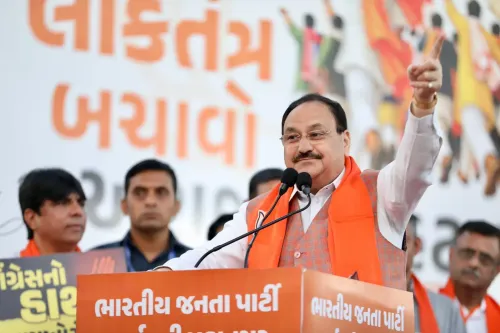
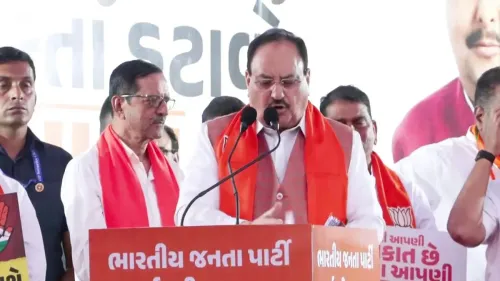
The party that once governed India for decades is now lecturing the nation on democracy — and Union Health Minister J. P. Nadda is not letting that pass quietly. On Tuesday, 27 October 2026, the BJP national president turned to X to confront the Indian National Congress with a pointed historical charge sheet, citing judicial interference, pressure on constitutional auditors, and the systematic toppling of elected state governments.
Nadda's post, written in Hindi, delivered the indictment in three blunt strokes: 'Congress's history has been one of challenging judicial decisions, pressuring judges, and toppling elected governments under Article 356. During the 2G and coal scams, questions were even raised against the Comptroller and Auditor General (CAG). The Congress, which violated constitutional proprieties, is today speaking of democracy and the Constitution.' The post carried the hashtag #SaveDemocracyRemoveAnarchy.
The Article 356 weapon and the Bommai guardrail
The Article 356 charge carries the heaviest constitutional weight. The provision — which allows the Centre to impose President's Rule in a state — was invoked scores of times by Congress-led governments over the decades, routinely dissolving opposition-held assemblies. The Supreme Court's landmark S. R. Bommai judgment of 1994 finally drew a hard line, ruling that such dismissals were subject to judicial review and effectively ending the era of casual floor-sweeping. The ruling is widely regarded as one of the most consequential defences of Indian federalism.
Nadda's invocation of this history lands in the middle of an ongoing BJP argument: that Congress, now in opposition, frames itself as the guardian of institutions it spent years bending to its will. The contrast is the argument.
The CAG reports Congress did not want read aloud
The 2G and coal-block controversies are the other pillar of his case — and they come with numbers that still sting. The CAG's November 2010 report on 2G spectrum allocation under the UPA government estimated a presumptive revenue loss of ₹1.76 lakh crore, indicting the first-come-first-served licensing policy. Less than two years later, the CAG's August 2012 coal-block report flagged undue benefits to private firms and pegged losses at ₹1.86 lakh crore. The Supreme Court subsequently cancelled the bulk of those allocations.
Both reports triggered fierce pushback from senior Congress figures at the time — pushback Nadda now holds up as evidence of institutional pressure. The CAG is a constitutionally independent body; questioning its methodology in Parliament is legitimate oversight, but questioning its very mandate crosses a line that the BJP has long argued Congress crossed.
A familiar BJP playbook, sharpened for the current moment
The post fits a well-worn strategic groove: whenever Congress raises alarms about democratic backsliding, BJP leaders pivot to the UPA decade (2004–2014) and replay its institutional controversies. What makes this iteration notable is its timing. The #SaveDemocracyRemoveAnarchy hashtag suggests Congress has recently mounted a fresh campaign — the exact trigger is not confirmed — and Nadda's response is calibrated to reframe who, historically, poses the real threat to constitutional norms.
Whether Congress responds with a counter-narrative pointing to more recent institutional tensions, or whether the exchange escalates into parliamentary debate, will determine if this is a single volley or the opening of a sustained political skirmish. Either way, Nadda has set the terms: if Congress wants a conversation about the Constitution, it must answer for its own record first.
Point of View
Redirect the audience to its own institutional track record. By anchoring the attack in specific constitutional mechanisms — Article 356, CAG autonomy, judicial independence — rather than vague accusations, the BJP elevates the exchange from mudslinging to a structured argument about governance history. The S. R. Bommai and CAG audit references give the charge factual spine that is difficult to simply dismiss. The real political test is whether Congress can offer a credible rebuttal that addresses the UPA era's institutional controversies while simultaneously pressing its current critique — a dual burden that opposition parties rarely manage cleanly.
NationPress
28 Oct 2026
Frequently Asked Questions
What did J. P. Nadda say about Congress and Article 356?
Nadda accused Congress of repeatedly using Article 356 to dissolve democratically elected state governments, a practice that the Supreme Court curbed through its landmark 1994 S. R. Bommai judgment which made such dismissals subject to judicial review.
What is the CAG and why did Congress face criticism over it during the 2G and coal scams?
The Comptroller and Auditor General (CAG) is a constitutional body that audits government finances. Its 2010 report on 2G spectrum allocation estimated a ₹1.76 lakh crore revenue loss, and its 2012 coal-block report flagged a ₹1.86 lakh crore loss — both reports drew fierce pushback from UPA-era Congress figures, which Nadda frames as institutional pressure.
What is the S. R. Bommai judgment and what did it decide?
The S. R. Bommai case (1994) was a Supreme Court ruling that restricted the arbitrary use of Article 356 (President's Rule) by the Centre to dismiss state governments, holding that such decisions are subject to judicial review. It is considered a milestone in protecting Indian federalism.
What does the hashtag #SaveDemocracyRemoveAnarchy mean in this context?
The hashtag indicates a BJP-backed political campaign framing Congress's current opposition messaging as anarchic while positioning the ruling party as the defender of democratic and constitutional norms — Nadda's post is part of that coordinated push.
Why does the BJP keep raising 2G and coal scams against Congress?
The UPA-era 2G and coal-block controversies involved CAG reports estimating combined presumptive losses of over ₹3.5 lakh crore and led to Supreme Court cancellations of coal block allotments. BJP leaders consistently cite them to counter Congress's criticism of the current government on institutional and governance issues.