Kishan Reddy at IMARC 2026: Mining Partnerships in Sydney

Synopsis
Union Coal and Mines Minister G. Kishan Reddy attended IMARC 2026 in Sydney, holding key meetings with Australia's federal and NSW resources ministers, technology firm Metso and a CII industry delegation — deepening India's push to secure critical minerals for its clean-energy transition under the National Critical Mineral Mission.
Key Takeaways
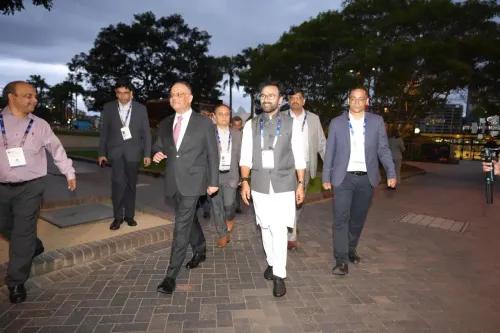
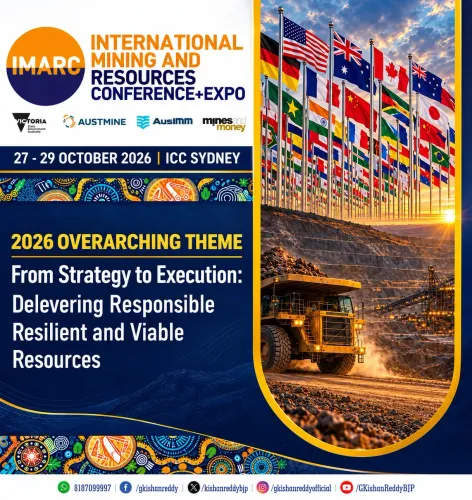
Kishan Reddy attended the International Mining and Resources Conference (IMARC) 2026 in Sydney on 27 October 2026 .
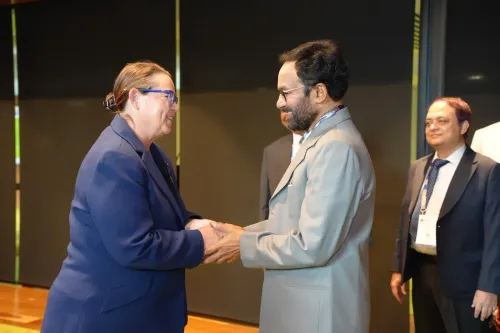
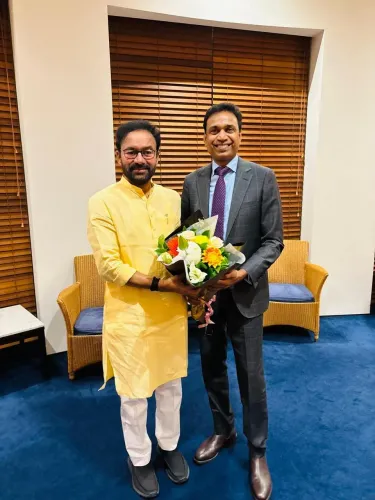
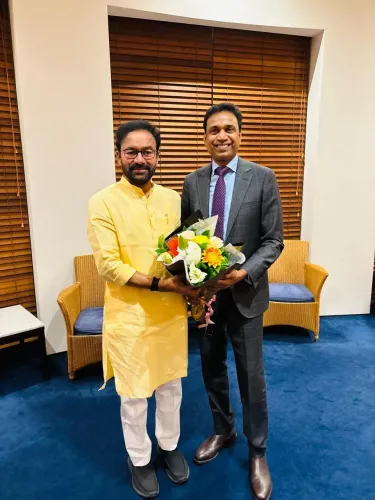
He held bilateral talks with Australia's Minister for Resources Madeleine King and NSW Minister Courtney Houssos on mining cooperation.
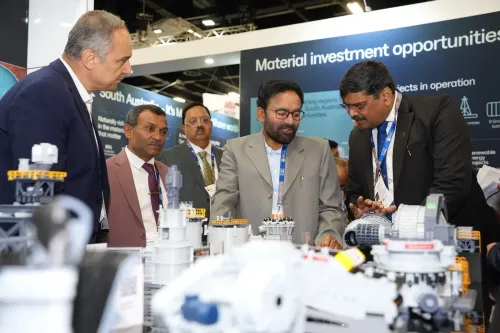
Reddy explored technology partnerships with Metso , a global leader in mineral-processing equipment and solutions.
The day concluded with a working dinner with the CII Mining Delegation to discuss investment flows and industry partnerships.
The engagements build on the India-Australia Critical Minerals Partnership MoU signed in 2023 and India's National Critical Mineral Mission launched via Union Budget 2024 .
Potential follow-on steps include joint working groups, investment MoUs and updates to India's Mines and Minerals Act .
From a dinner table in Sydney to the floor of the world's premier mining forum, Union Coal and Mines Minister G. Kishan Reddy spent Tuesday, 27 October 2026 weaving together a web of partnerships that could reshape where India sources the minerals powering its electric-vehicle and clean-energy revolution.
What Reddy was doing at IMARC 2026
The International Mining and Resources Conference (IMARC), held annually in Sydney, is the southern hemisphere's largest gathering of mining executives, policymakers and technology companies — and one of the most consequential deal-making floors in the global resources calendar. Reddy arrived as part of an Indian ministerial push to use the forum not just for optics but for structured, bilateral conversations on critical minerals supply chains.
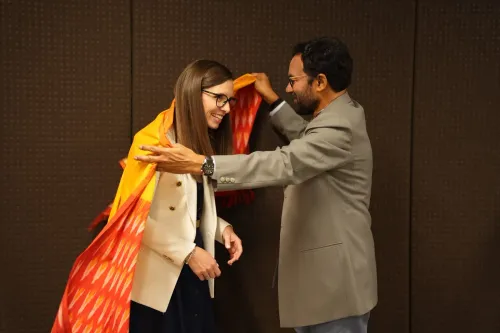
His engagements read like a full diplomatic sprint. He met Australia's Minister for Resources, Madeleine King, who holds federal authority over the country's vast lithium, cobalt and rare-earth reserves. He then sat down with NSW Minister Courtney Houssos, whose portfolio covers state-level mining regulation and investment facilitation — the nuts-and-bolts approvals that determine whether projects move from MoU to machinery. The day closed over dinner with the Confederation of Indian Industry (CII) Mining Delegation, where industry leaders exchanged views on investment flows and new opportunities.
Why Metso and technology transfers matter here
One of the sharper signals of the day was Reddy's exploration of technology partnerships with Metso, the Finland-headquartered company that supplies advanced equipment and processing solutions to mines worldwide. India's mining sector has historically lagged on mechanisation and ore-processing efficiency — sectors where Metso's expertise is globally recognised. Bringing that kind of innovation closer to Indian operations is precisely what India's National Critical Mineral Mission, announced in Union Budget 2024, is designed to catalyse.
That mission targets a hard structural problem: India imports significant quantities of the minerals essential for EV batteries, solar panels and semiconductors, with supply chains concentrated in ways that carry strategic risk. The government's answer has been to build relationships with resource-rich democracies — Australia at the top of that list — and to attract capital and technology simultaneously.
The India-Australia minerals axis deepens
The foundation for Tuesday's conversations was laid with the India-Australia Critical Minerals Partnership MoU signed in 2023, which set the framework for joint exploration, processing and supply-chain cooperation. What Reddy was doing in Sydney was effectively the follow-through — converting a signed document into sectoral relationships, investment intent and technology pipelines.
Australia holds some of the world's largest reserves of lithium and cobalt, alongside a mature regulatory regime that Indian policymakers cite as a model. For Viksit Bharat — the government's long-horizon vision of a developed India — securing reliable, diversified mineral supply is not an option; it is the base layer on which the green-energy transition is built. Every handshake at IMARC is, in that frame, an infrastructure decision.
What to watch coming out of Sydney
The conversations at IMARC rarely produce signed agreements on the spot. The forum's value lies in creating the conditions for follow-through: joint working groups, investment facilitation frameworks and, eventually, amendments to India's Mines and Minerals Act that could make the country a more attractive destination for the global capital circling the sector. Watch for any announcements from the Ministry of Mines in the weeks ahead on joint exploration agreements or updated guidelines for critical mineral concessions.
India is no longer a passive buyer in the global minerals story. It is at the table, in Sydney, making the case — and the deals.
Point of View
And close the processing and technology gap through commercial partnerships. For BJP's 'Viksit Bharat' narrative, landing visible mineral security agreements ahead of domestic policy milestones strengthens the government's claim that India is graduating from a passive raw-material importer to an active participant in the global clean-energy supply chain.
NationPress
28 Oct 2026
Frequently Asked Questions
What is IMARC and why did India's mines minister attend?
IMARC — the International Mining and Resources Conference — is the world's largest annual mining forum, held in Sydney. India's Mines Minister G. Kishan Reddy attended in 2026 to strengthen bilateral partnerships on critical minerals, attract global mining technology and deepen the India-Australia resources relationship.
What is India's National Critical Mineral Mission?
India's National Critical Mineral Mission was announced in Union Budget 2024 to boost domestic exploration, reduce dependence on imports and build resilient supply chains for minerals essential to EVs, renewable energy and electronics.
What did Kishan Reddy discuss with Australia's Resources Minister Madeleine King?
Reddy and Australia's federal Resources Minister Madeleine King held discussions focused on strengthening bilateral mining cooperation, critical mineral supply chains and advancing the India-Australia Critical Minerals Partnership MoU signed in 2023.
What is the India-Australia Critical Minerals Partnership MoU?
The India-Australia Critical Minerals Partnership MoU, signed in 2023, is a bilateral agreement facilitating joint exploration, processing and supply-chain cooperation for minerals including lithium, cobalt and rare earths — key inputs for India's clean-energy transition.
What role does Metso play in India's mining plans?
Metso is a Finland-based company supplying advanced mining equipment and mineral-processing technology. Kishan Reddy explored technology partnership opportunities with Metso at IMARC 2026, reflecting India's aim to close its mechanisation and processing efficiency gap under the National Critical Mineral Mission.