Ramaswamy Frames Local Governance as a Binary Voter Choice
Synopsis
Entrepreneur Vivek Ramaswamy, former DOGE co-lead, posted a sharp three-part binary on October 28, 2026 — property taxes, electric bills, urban crime — framing each as a direct voter choice and invoking democratic self-determination as the closing argument.
Key Takeaways
Entrepreneur Vivek Ramaswamy posted a binary-choice message on October 28, 2026 contrasting higher versus lower property taxes, electric bills, and crime.
The post carries no specific policy name or opponent but deploys a classic Republican municipal-governance frame.
Ramaswamy's co-leadership of the DOGE federal efficiency advisory effort gives cost-reduction messaging at the local level added credibility with his base.
The closing line — 'the choice is up to you' — assigns democratic accountability to voters rather than attacking a named rival.
The three issues named — property taxes, energy costs, urban crime — rank consistently among top kitchen-table concerns for US homeowners and urban residents.
The frame is geographically elastic, applicable across high-tax metros and lower-tax exurbs alike as state and local ballot measures approach.
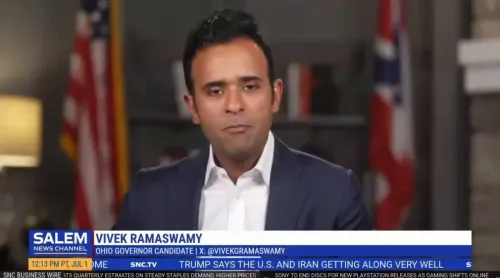
Three choices. One message. Entrepreneur Vivek Ramaswamy — founder and executive chairman of Strive Asset Management and former co-lead of the US Department of Government Efficiency (DOGE) advisory effort — distilled the stakes of American local governance into a blunt, three-part contrast on Wednesday, October 28, 2026: property taxes, electric bills, and crime rates, all framed as decisions that ultimately rest with voters.
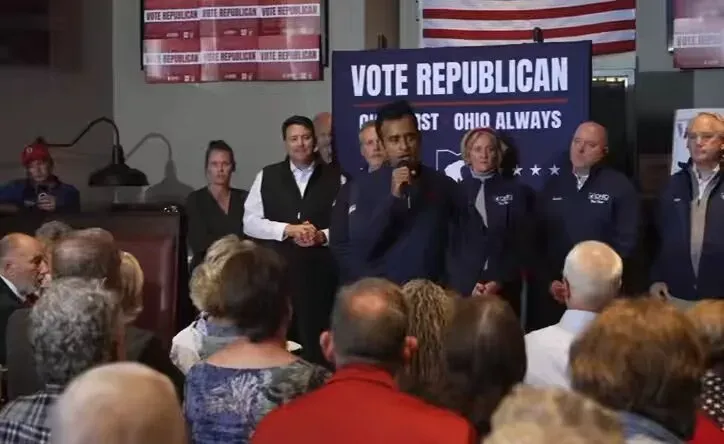
Ramaswamy's post reads: 'It's a binary choice: higher or lower property taxes. Higher or lower electric bills. Higher or lower crime in our cities. The beauty of our nation is that the choice is up to you.' The statement carries the compact logic of a campaign closing argument — no policy name, no opponent named, just a ledger of kitchen-table costs laid against the premise of democratic self-determination.
The three pressure points Ramaswamy chose to name
Property taxes, electricity costs, and urban crime are not random. These three issues consistently rank among the highest-stress financial and safety concerns for American homeowners and urban residents. Property tax burdens have climbed sharply across major metros over the past decade as municipal spending expanded and assessed valuations surged. Electric bills became a flashpoint as state-level clean-energy mandates accelerated grid transitions, with some utility customers absorbing higher per-kilowatt costs during the shift. Crime — specifically the public perception of safety in large cities — became one of the most potent mobilising issues in post-2020 US municipal politics.
By bundling all three into a single 'higher or lower' frame, Ramaswamy deploys a rhetorical structure long favoured in Republican messaging: convert complex, multi-variable policy debates into a direct-debit question that every household can answer from their own monthly budget.
Standard GOP playbook, but the DOGE pedigree sharpens the edge
The framing echoes decades of conservative messaging on state and local elections — the argument that Democratic-led city and state governments tend to raise taxes, expand regulatory mandates that lift energy costs, and pursue policing reforms that correlate with rising crime. The counter-argument from progressives holds that property-tax hikes often fund schools and infrastructure, that clean-energy investment reduces long-run costs, and that policing reform addresses systemic inequities. Ramaswamy's post does not engage that counter — it plants a flag and invites voters to choose sides.
What gives the post a particular edge in October 2026 is Ramaswamy's recent institutional identity. His work co-leading the DOGE advisory effort — a high-visibility push to audit and cut federal spending — positioned him as the face of aggressive cost-reduction politics at the national level. Extending that logic to municipal taxes and utility bills is a natural downstream move: the same voter who applauded federal efficiency cuts can now apply the same frame to their next property-tax bill or power statement.
Why 'the choice is up to you' is doing serious work
The closing line is the argument. By attributing the outcome to voters rather than to any specific party or candidate, Ramaswamy sidesteps the attack-ad register entirely. The implicit logic: if your city has higher crime and rising bills, that is not bad luck — it is a choice your community made at the ballot box, and it can be unmade the same way. It is an empowerment frame that simultaneously assigns accountability. Clean, durable, and reusable across any local election cycle.
With state and local ballot measures on tax caps, utility regulation, and policing budgets typically crowding American ballots in odd-year and mid-cycle elections, messaging this compact travels fast — and lands differently in a high-property-tax suburb of Chicago or New York than it does in a low-cost exurb of Texas. That geographic elasticity is precisely the point.
The real test of rhetoric this stripped-down is not the applause it earns today — it is whether the voters it targets show up and act on it.
Point of View
He now redirects the same cost-reduction logic downward to property taxes and utility bills, broadening his political relevance beyond Washington. The 'binary choice' construct is a deliberate simplification — it strips away policy nuance to force an emotional commitment, a technique that performs well in low-information, high-turnout local election environments. Notably, the message carries no partisan label, which makes it shareable across ideological lines among voters experiencing genuine cost-of-living pressure. If Ramaswamy harbours further political ambitions, this kind of issue-agnostic, voter-empowerment framing is the infrastructure you build well before an announcement.
NationPress
28 Oct 2026
Frequently Asked Questions
What did Vivek Ramaswamy post about local governance?
Ramaswamy posted a three-part binary choice on October 28, 2026, asking voters to choose between higher or lower property taxes, electric bills, and urban crime, closing with the line 'the choice is up to you.'
What is Vivek Ramaswamy's role in DOGE?
Ramaswamy served as co-lead of the US Department of Government Efficiency (DOGE) advisory effort alongside Elon Musk, a high-profile initiative focused on identifying federal spending cuts and efficiency improvements.
Why are property taxes and electric bills major US political issues?
Property taxes have risen sharply in major US metros over the past decade, and electricity costs have climbed in several states due to clean-energy transition mandates, making both issues central to household budget concerns and local election debates.
Is Ramaswamy running for office in 2026?
No confirmed candidacy has been announced by Ramaswamy for 2026. He remains executive chairman of Strive Asset Management and a prominent Republican commentator after his 2024 presidential campaign.
What state and local issues does Ramaswamy's post reference?
The post implicitly references debates over municipal tax policy, utility rate regulation tied to energy mandates, and urban policing budgets — all issues commonly decided through state legislatures, city councils, and ballot initiatives.