Ramaswamy Vows to Fix Property Tax Crisis by 2027
Synopsis
Entrepreneur Vivek Ramaswamy on July 2, 2026 pledged on X that spiraling US property taxes — which he called a crisis — would be fixed 'on his watch' within a year. The bold claim, unaccompanied by a specific mechanism or jurisdiction, signals a possible policy or political move ahead of 2027 state budget cycles.
Key Takeaways
Vivek Ramaswamy posted on July 2, 2026 that he would fix the US property tax crisis 'by this time next year.' Property taxes in the United States are administered at the state and local level, making a federal fix structurally complex.
Rising home valuations post-pandemic have pushed property tax bills higher across multiple states, squeezing homeowners on fixed incomes.
Ramaswamy served as co-lead of the Department of Government Efficiency (DOGE) under the second Trump administration.
No specific jurisdiction, legislative mechanism, or policy instrument was named in the post.
Analysts will watch 2026-2027 state budget cycles and any executive actions linked to DOGE efficiency recommendations for follow-through.
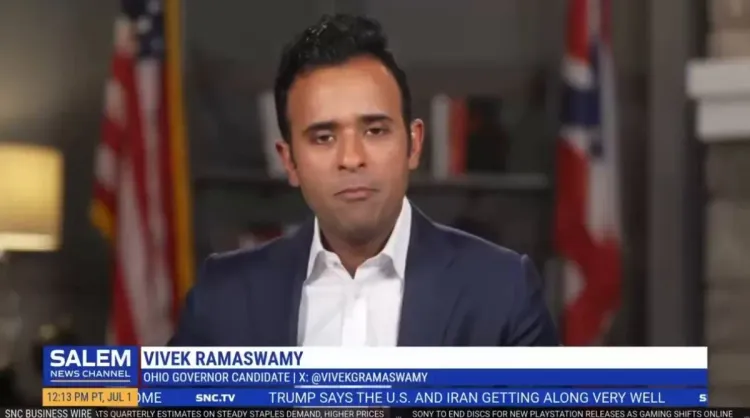
Entrepreneur and former DOGE co-lead Vivek Ramaswamy on Thursday, July 2, 2026, posted a direct pledge on X, declaring that spiraling property taxes — which he called an ongoing crisis — would be resolved 'on his watch' within the next year.
Context
In his post, Ramaswamy stated: 'Property taxes are spiraling and it's been a crisis. By this time next year, it'll be fixed on my watch.' The statement is notable for its directness and its implicit claim of executive or policy authority over a tax category that is, in the United States, almost entirely administered at the state and local level.
Ramaswamy is the founder of Strive Asset Management and a former co-lead of the Department of Government Efficiency (DOGE), the advisory body associated with the second Trump administration that focused on reducing federal bureaucracy and spending. He ran for the Republican presidential nomination in 2024 on a platform centred on slashing government expenditure and regulatory burdens on American households.
Policy Backdrop
Property tax burdens across multiple US states have risen sharply in recent years, driven primarily by surging home valuations and growing fiscal pressures on local governments. As assessed values climbed post-pandemic, many homeowners — particularly those on fixed incomes — found their annual tax bills increasing faster than their incomes.
The Republican party has consistently positioned itself as an advocate for restraining sub-federal tax burdens, and Ramaswamy's 2024 campaign explicitly linked government efficiency to household cost relief. His involvement with DOGE extended that argument into the machinery of the executive branch, even as property taxes remain constitutionally a local and state matter.
Stakeholders and Impact
The primary stakeholders in any property tax reform effort are American homeowners, particularly middle-class families in high-valuation markets, and the local governments that depend on property tax revenues to fund schools, emergency services, and infrastructure. Any significant reduction in property tax collections would require either alternative revenue sources or cuts to municipal services.
The pledge, while sweeping in tone, does not specify a jurisdiction, a legislative mechanism, or a policy instrument. That ambiguity leaves open the question of whether Ramaswamy is signalling a future political role — such as a gubernatorial bid or a federal advisory push — or articulating a broader policy aspiration tied to efficiency recommendations in 2026-2027 state budgets.
What's Next
Observers will watch for any concrete legislative proposals or executive actions at the state level that carry Ramaswamy's backing or align with DOGE-linked efficiency recommendations. The 2026 midterm cycle and 2027 state budget seasons will be the most immediate windows in which such a pledge could be tested. If no mechanism emerges, the statement is likely to be revisited by political opponents as an unfulfilled promise ahead of any future campaign.
Point of View
Light on mechanism — which is consistent with his broader political brand of disruption-first messaging. The structural problem is real: property taxes have become a genuine affordability flashpoint for middle-class homeowners across high-valuation US states. However, since property taxation sits almost entirely within state and local jurisdiction, any federal efficiency advisory push would face significant constitutional and political constraints. The statement is best read as an early positioning signal — either for a gubernatorial race, a federal legislative push, or continued influence within the Republican efficiency orbit — rather than a concrete policy announcement.
NationPress
30 Sept 2026
Frequently Asked Questions
What did Vivek Ramaswamy say about property taxes?
On July 2, 2026, Ramaswamy posted on X that property taxes are 'spiraling' and constitute a crisis, pledging that the issue would be fixed 'on his watch' by the following year.
Does Vivek Ramaswamy have authority over property taxes in the US?
Property taxes in the United States are set and collected by state and local governments, not the federal government, so Ramaswamy holds no direct statutory authority over them in his current roles.
What is DOGE and what is Ramaswamy's connection to it?
The Department of Government Efficiency (DOGE) is an advisory body linked to the second Trump administration focused on reducing federal spending and bureaucracy; Ramaswamy served as its co-lead before departing.
Why are US property taxes rising in 2026?
Property taxes have risen primarily because home valuations surged after the pandemic, causing assessed values — and therefore tax bills — to climb faster than household incomes in many states.
What should I watch for to see if Ramaswamy follows through on this pledge?
Watch for state-level property tax legislation, executive actions in 2026-2027 budget cycles, or any formal policy role Ramaswamy assumes that would give him direct influence over tax policy.