Ramaswamy Lays Out Three-Point Cost Relief Plan

Synopsis
Entrepreneur Vivek Ramaswamy posted a three-point cost-relief agenda on June 5, 2026, linking lower electric bills to more energy production, lower healthcare costs to crushing Medicaid fraud, and lower property taxes to fighting government waste — promising action 'in January after we win.'
Key Takeaways
Vivek Ramaswamy posted a three-point economic agenda on June 5, 2026 , covering energy, healthcare, and property taxes.
He proposes cutting electric bills through increased energy production, not subsidies.
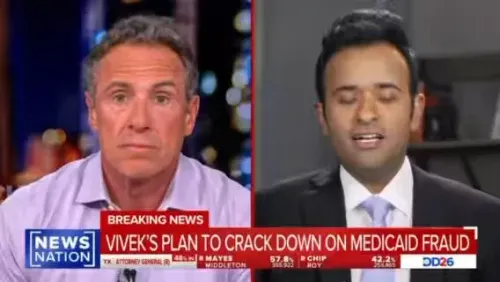
He targets Medicaid fraud as the primary lever to reduce healthcare costs.
Property tax relief is framed around fighting government waste at multiple levels.
The agenda is explicitly tied to an election win, with implementation promised from January .
All three planks mirror the stated mandate of the DOGE advisory body he co-led in 2024 .
Entrepreneur and former DOGE co-lead Vivek Ramaswamy posted a three-point economic agenda on X on Friday, June 5, 2026, outlining prescriptions to reduce electric bills, healthcare costs, and property taxes — each tied to a specific policy lever he says will be activated 'in January after we win.'
Context
In the post, Ramaswamy draws a direct line between consumer costs and government policy failures: lower energy bills through increased energy production, lower healthcare costs by crushing Medicaid fraud, and lower property taxes by fighting government waste. The framing is supply-side and enforcement-driven — no new spending programs are proposed.
The phrase 'starts in January after we win' signals an electoral context, suggesting the agenda is tied to an anticipated election victory and a subsequent January administration or legislative session.
Policy Backdrop
The three planks directly mirror the stated mandate of the Department of Government Efficiency (DOGE), the advisory body that Ramaswamy co-led alongside Elon Musk following Donald Trump's announcement in November 2024. DOGE was tasked with identifying up to $2 trillion in federal spending cuts, regulatory rollbacks, and waste reduction measures.
Medicaid, the joint federal-state health coverage programme for low-income Americans, has been a recurring target in Republican fiscal arguments, frequently cited in audits of improper payments and fraud. On energy, the Republican platform has long emphasised deregulation and expanded domestic production — oil, gas, and nuclear — as the primary mechanism to suppress consumer prices.
The property tax plank is less conventionally federal, as property taxes are primarily a state and local matter. Ramaswamy's framing links them to broader government waste, suggesting the argument is about fiscal discipline at multiple levels of government rather than a specific federal intervention.
Stakeholders and Impact
The constituencies most directly addressed are energy consumers facing high utility bills, low- and middle-income households burdened by healthcare costs, and homeowners squeezed by rising property tax assessments. Each group has been a focal point of Republican electoral messaging since the 2024 election cycle.
Medicaid recipients and state administrators would be most directly affected by any fraud-enforcement push, which could tighten eligibility verification and audit cycles. Energy producers, particularly in fossil fuel and nuclear sectors, stand to benefit from any permitting or regulatory rollback that expands domestic output.
What's Next
The post does not specify legislative vehicles, executive orders, or timelines beyond the January reference. Observers will watch for whether Ramaswamy translates these three points into formal policy proposals, campaign commitments, or DOGE-style recommendations tied to a future administration. Early executive actions on permitting reform and Medicaid integrity audits had been anticipated as first-order priorities following the 2024 transition, and this post suggests those priorities remain central to his public positioning.
Point of View
Anti-waste playbook that defined DOGE's public identity — and a signal that he is positioning himself as a policy protagonist rather than a post-DOGE footnote. By anchoring consumer cost relief to enforcement and production rather than transfers or subsidies, he stakes out ground that differentiates him from both traditional Republican spending hawks and progressive cost-of-living interventionists. The 'January after we win' framing is the most politically loaded element: it presupposes an electoral contest and a transition, keeping his name attached to executive-branch ambition. Whether this represents a formal campaign posture or sustained policy advocacy, it reinforces a broader pattern of Republican politicians using DOGE's efficiency brand as an electoral asset well beyond the advisory body's original mandate.
NationPress
21 Oct 2026
Frequently Asked Questions
What is Vivek Ramaswamy's plan to reduce electric bills?
Ramaswamy proposes increasing domestic energy production as the primary mechanism to bring down electric bills, consistent with the Republican deregulation and expanded-output approach he advocated during his time co-leading DOGE.
How does Ramaswamy plan to lower healthcare costs?
He specifically targets Medicaid fraud, the joint federal-state health programme for low-income Americans that has been repeatedly flagged in improper payment reviews, as the key lever to reduce healthcare costs.
What is DOGE and what was Ramaswamy's role?
The Department of Government Efficiency is an advisory body announced by Donald Trump in November 2024 and co-led by Ramaswamy and Elon Musk, tasked with identifying up to $2 trillion in federal spending cuts and regulatory rollbacks.
What does 'starts in January after we win' mean?
The phrase signals that Ramaswamy's three-point agenda is contingent on an election victory, with implementation planned from the following January — implying a future administration or legislative session.
How does Ramaswamy propose to lower property taxes?
He links property tax relief to fighting government waste broadly, framing it as a fiscal discipline issue across multiple levels of government rather than a specific federal programme.