Ramaswamy Backs Medicaid Fraud Crackdown to Benefit Ohioans
Synopsis
Entrepreneur Vivek Ramaswamy, former DOGE co-lead and 2024 Republican presidential candidate, declared on May 27, 2026 that he had found 'common ground' to crush Medicaid fraud and return recovered funds to Ohio residents, linking federal efficiency goals to direct state-level taxpayer relief.
Key Takeaways
Ramaswamy posted on May 27, 2026 that he had found 'common ground over common sense' to crack down on Medicaid fraud.
He framed the recovered funds as money to be returned directly to Ohio residents rather than absorbed into federal spending.
The post aligns with the mandate of the Department of Government Efficiency (DOGE) advisory effort, which Ramaswamy co-led after the 2024 election.
Federal audits have historically estimated Medicaid improper payments in the tens of billions of dollars annually across the United States .
The phrase 'common ground' implies cross-aisle or cross-stakeholder alignment, though specific partners were not named in the post.
Concrete legislative or executive follow-through in Ohio will determine whether the stated agreement translates into enforceable policy.
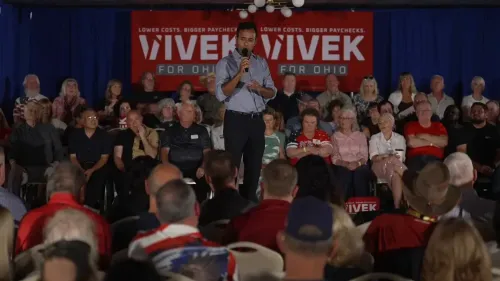
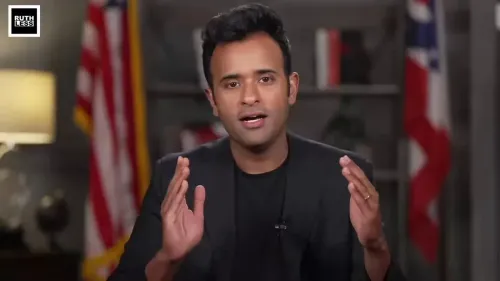
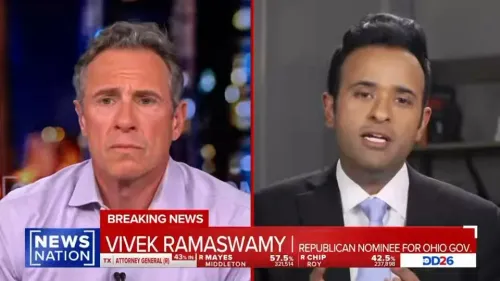
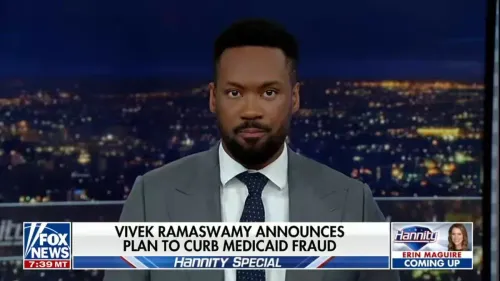
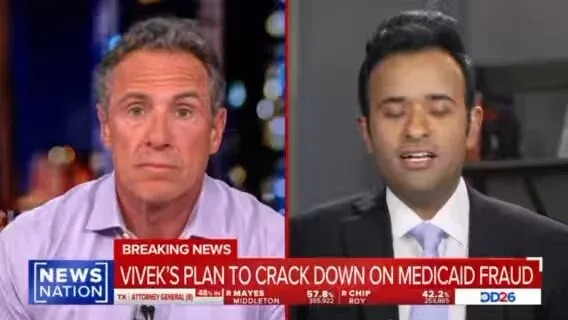
Entrepreneur Vivek Ramaswamy — founder and executive chairman of Strive Asset Management, former co-lead of the Department of Government Efficiency (DOGE) advisory effort, and 2024 Republican presidential candidate — on Wednesday, May 27, 2026, declared that he had found 'common ground over common sense' in pushing to crush Medicaid fraud and return recovered funds directly to Ohio residents.
Context
In his post on X, Ramaswamy wrote: 'Found some common ground over common sense: crush Medicaid fraud and put that money back in Ohioans' pockets.' The statement signals a bipartisan or cross-aisle alignment — implied by the phrase 'common ground' — around a specific fiscal-integrity goal tied to the Medicaid program. Medicaid is the joint federal-state health coverage scheme for low-income Americans and has long been identified by federal auditors as one of the programmes most vulnerable to improper payments, with estimates historically running into tens of billions of dollars annually.
Ramaswamy's framing is notable for its dual emphasis: cracking down on fraud on one side, and channelling recovered money back to state residents — specifically Ohioans — on the other. This positions the initiative not merely as a cost-cutting exercise but as a taxpayer-dividend argument.
Policy Backdrop
The Department of Government Efficiency (DOGE) advisory effort, co-led by Ramaswamy following the 2024 election, was established with a mandate to identify waste, fraud, and abuse across federal programmes, including large entitlement schemes such as Medicaid. The effort has consistently argued that programme-integrity savings should flow back to taxpayers rather than be absorbed into general federal expenditure.
Republican administrations and state officials across the United States have pursued Medicaid integrity initiatives for years, with recurring debates over how aggressively to audit providers, verify beneficiary eligibility, and prosecute fraudulent billing. Ohio, as a state that expanded Medicaid under the Affordable Care Act, has a particularly large programme footprint, making fraud-recovery efforts consequential for its budget.
Stakeholders and Impact
Ohio taxpayers stand as the primary intended beneficiaries in Ramaswamy's framing, with the suggestion that recovered funds would be returned to residents rather than redirected to expanded government spending. Medicaid providers — hospitals, clinics, and home-care agencies — would face the most direct scrutiny under any intensified fraud-enforcement regime.
Beneficiaries of the programme itself could also be affected if enforcement actions result in stricter eligibility verification or provider withdrawals from the scheme. Advocates for low-income healthcare access have historically cautioned that aggressive fraud crackdowns can sometimes disrupt legitimate beneficiaries if implementation is poorly calibrated.
What's Next
Attention will now turn to whether Ramaswamy's stated 'common ground' translates into concrete Ohio legislative or executive action — such as enhanced state-level audits, new data-matching protocols, or a formal DOGE-linked federal-state implementation framework. Any specific recovered-funds figure or formal agreement would clarify the scale of the initiative.
If the model is adopted more broadly, it could serve as a template for other states where DOGE advisory recommendations intersect with large Medicaid programme footprints, reinforcing the broader Republican fiscal-conservatism argument that government efficiency and direct taxpayer relief are two sides of the same coin.
Point of View
Voter-legible state benefits — in this case, money back in Ohioans' pockets. The 'common ground' framing is politically deliberate, suggesting he is building coalitions beyond the Republican base, which could matter if he pursues elected office in Ohio or at the federal level. Medicaid fraud enforcement is one of the few fiscal issues with genuine bipartisan appeal, making it a relatively low-risk but high-visibility issue to champion. Whether this translates into durable policy or remains a rhetorical positioning exercise will depend on the specifics of any formal agreement that follows.
NationPress
23 Sept 2026
Frequently Asked Questions
What did Vivek Ramaswamy say about Medicaid fraud?
Ramaswamy posted on May 27, 2026 that he had found 'common ground over common sense' to crush Medicaid fraud and return recovered funds to Ohio residents, linking the effort to his broader government-efficiency agenda.
What is DOGE and what does it have to do with Medicaid?
The Department of Government Efficiency (DOGE) was an advisory effort co-led by Ramaswamy after the 2024 election, tasked with cutting waste, fraud, and abuse across federal programmes including Medicaid.
How much Medicaid fraud occurs in the United States each year?
Federal audits have historically estimated Medicaid improper payments — including fraud, billing errors, and eligibility mistakes — in the tens of billions of dollars annually, though exact figures vary by year and audit methodology.
How would recovered Medicaid fraud money be returned to Ohioans?
Ramaswamy's post did not specify a mechanism; the phrase 'put that money back in Ohioans' pockets' implies taxpayer relief or reinvestment at the state level, but concrete details of any agreement had not been publicly disclosed at the time of the post.
Is Medicaid fraud a bipartisan issue in the United States?
Yes, Medicaid programme integrity has historically attracted support from both Republican and Democratic officials, as improper payments divert resources from legitimate beneficiaries and burden state and federal budgets alike.