Ramaswamy: Medicaid Waste in Ohio Runs Into Billions
Synopsis
Vivek Ramaswamy, former DOGE co-lead and Ohio gubernatorial aspirant, publicly challenged journalist Chris Cuomo's scepticism about Medicaid fraud, asserting that waste in Ohio alone runs into the billions and rightfully belongs to law-abiding Ohioans.
Key Takeaways
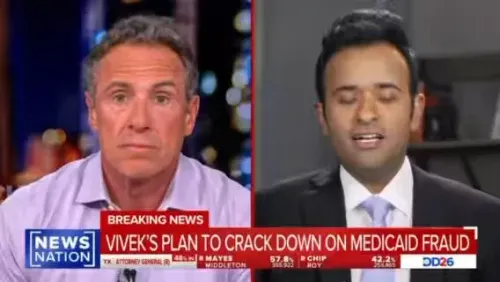
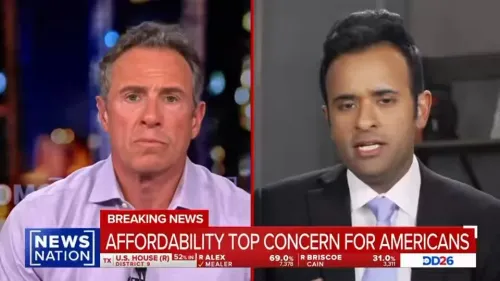
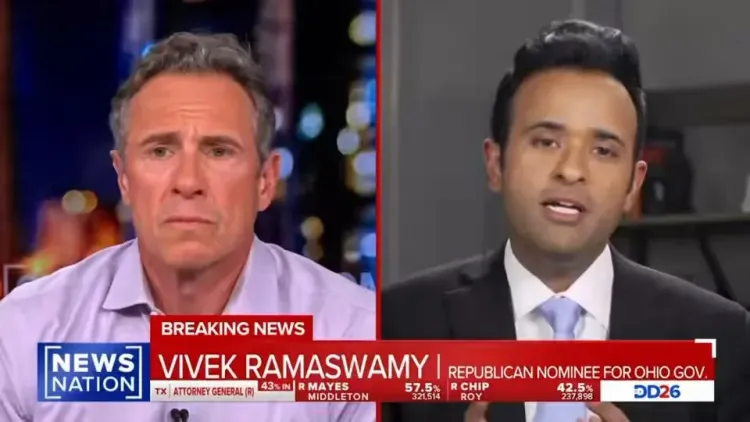
Vivek Ramaswamy stated on May 27, 2026 that Medicaid waste, fraud, and abuse in Ohio alone runs 'undoubtedly into the billions.' The remarks came during a televised exchange with journalist Chris Cuomo , who expressed scepticism about the scale of the problem.
Ramaswamy framed the lost funds as money that 'belongs in the pockets of law-abiding Ohioans.' The HHS Office of Inspector General has repeatedly flagged improper payments in Medicaid nationally, though specific Ohio figures are subject to audit methodology.
DOGE , which Ramaswamy co-led in late 2024 , was mandated to identify waste across federal and state-administered spending programmes.
No independently audited figure confirming the billions-in-Ohio claim has been publicly released as of the date of this post.
Entrepreneur Vivek Ramaswamy, founder of Strive Asset Management and former co-lead of the Department of Government Efficiency (DOGE), on Wednesday, May 27, 2026, publicly clashed with American journalist Chris Cuomo over the scale of waste, fraud, and abuse inside the Medicaid programme, asserting that the figure runs 'undoubtedly into the billions' in Ohio alone.
Context
Ramaswamy shared the exchange on X, writing that Cuomo 'was skeptical of the extent of waste, fraud, and abuse in Medicaid,' but that he pushed back firmly, arguing the money lost to improper payments 'belongs in the pockets of law-abiding Ohioans.' The post was accompanied by a video of the conversation. While Ramaswamy did not cite a specific audited figure, his claim reflects a position he has advanced consistently since entering the national policy debate.
Medicaid is a joint federal-state health insurance programme covering low-income individuals, families, and vulnerable populations across the United States. Ohio's Medicaid programme is one of the largest in the Midwest, serving millions of residents and drawing significant federal co-financing.
Policy Backdrop
Ramaswamy's remarks sit squarely within a years-long Republican effort to tighten eligibility verification and recover improper payments in large entitlement programmes. The HHS Office of Inspector General has, across multiple reports in the 2010s and 2020s, flagged elevated rates of improper payments and eligibility errors in Medicaid nationally — though the precise quantum attributable to any single state varies by audit cycle and methodology.
The Department of Government Efficiency, announced in late 2024 by then President-elect Donald Trump with Ramaswamy and Elon Musk as co-leads, was explicitly mandated to identify and quantify waste across federal and state-administered spending. Ramaswamy stepped back from that role earlier in 2025 to mount a gubernatorial campaign in Ohio, giving his comments on Ohio's Medicaid programme a direct political dimension.
Critics of the 'waste, fraud, and abuse' framing argue that the vast majority of Medicaid expenditure reaches intended beneficiaries and that broad characterisations of systemic abuse can be used to justify cuts that harm vulnerable populations. Supporters of stricter oversight counter that even a small percentage of improper payments in a programme of Medicaid's scale translates to enormous sums that could be redirected to taxpayers or higher-priority services.
Stakeholders and Impact
Ohio taxpayers and Medicaid recipients are the two groups most directly affected by this debate. If audits substantiate significant improper payments, recovered funds could in principle reduce state or federal deficits or be redirected to verified beneficiaries. Conversely, aggressive eligibility purges — a common policy response to fraud concerns — risk disenrolling eligible low-income residents.
Cuomo's scepticism in the exchange mirrors a broader media and advocacy-community concern that unverified claims of billion-dollar fraud can set the political stage for programme cuts rather than targeted integrity measures. Ramaswamy's framing, by contrast, positions fiscal discipline as a matter of fairness to working Ohioans.
What's Next
Attention will now turn to whether Ohio state auditors or the federal HHS Office of Inspector General release updated Medicaid integrity reviews that could either substantiate or complicate Ramaswamy's claims. Any congressional or Ohio state legislative proposals to strengthen fraud-prevention requirements — such as more frequent eligibility re-verification or enhanced data-matching with income records — are likely to cite this public debate as political backdrop.
With Ramaswamy positioning himself as a watchdog voice on government spending in Ohio, his ability to back his 'billions in waste' assertion with audited evidence will be a key test of his credibility on the issue heading into the state's political cycle.
Point of View
He ties his DOGE credentials directly to his home-state political ambitions. The tension between his assertion and the absence of a publicly audited Ohio-specific figure is precisely the kind of gap that opponents will exploit. More broadly, the episode reflects a durable fault line in American fiscal politics: whether 'waste, fraud, and abuse' rhetoric leads to genuine programme integrity or becomes a pretext for benefit cuts. For Indian observers, it illustrates how anti-waste narratives in large welfare programmes can simultaneously energise a political base and invite scrutiny over evidentiary standards.
NationPress
19 Sept 2026
Frequently Asked Questions
What did Vivek Ramaswamy say about Medicaid waste in Ohio?
Ramaswamy said that waste, fraud, and abuse in Ohio's Medicaid programme runs 'undoubtedly into the billions' and that the money belongs to law-abiding Ohioans, pushing back against journalist Chris Cuomo's scepticism.
Who is Chris Cuomo and why was he debating Ramaswamy?
Chris Cuomo is an American journalist and television host who questioned the scale of Medicaid fraud during an on-air exchange with Ramaswamy, arguing scepticism about the billions-level claim.
What is DOGE and what is Ramaswamy's connection to it?
The Department of Government Efficiency (DOGE) was an advisory initiative announced in late 2024 by President-elect Donald Trump; Ramaswamy served as its co-lead alongside Elon Musk before stepping back in 2025.
Has Ohio's Medicaid fraud actually been confirmed to be in the billions?
No independently audited figure confirming billions in Ohio-specific Medicaid fraud has been publicly released; the HHS Office of Inspector General has flagged improper payments nationally, but Ohio-specific totals vary by audit cycle.
Why does Medicaid fraud matter to Ohio taxpayers?
Medicaid is jointly funded by federal and state governments, so improper payments draw on Ohio tax revenues; if substantiated, recovered funds could reduce deficits or be redirected to verified beneficiaries.