Ramaswamy Flags $1.1 Trillion in Medicaid Improper Payments
Synopsis
Vivek Ramaswamy has flagged independent estimates of $1.1 trillion in improper Medicaid payments over a decade, citing Ohio's near-doubling of programme spending as evidence of systemic fiscal mismanagement. The post reignites debate over eligibility verification, managed-care oversight, and entitlement sustainability in the United States.
Key Takeaways
Independent estimates cited by Ramaswamy put improper Medicaid payments at $1.1 trillion over the past decade.
Ohio 's Medicaid enrolment grew from 2.9 million to 3 million , while spending jumped from $27 billion to $47 billion .
CMS improper payment reports have flagged Medicaid error rates above 10 percent for much of the past two decades.
The Affordable Care Act of 2010 expanded Medicaid eligibility, accelerating both enrolment and spending growth across participating states.
Pandemic-era continuous enrolment ended in 2023 , yet spending growth has continued to outpace enrolment reductions in several states.
The next official CMS Medicaid improper payment report and upcoming congressional hearings will be key milestones to watch.
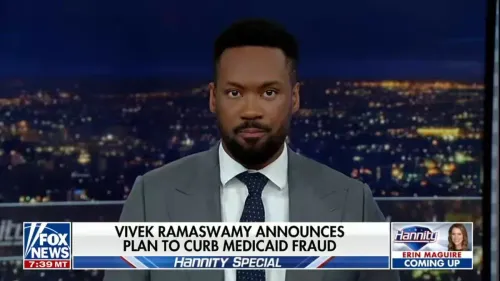
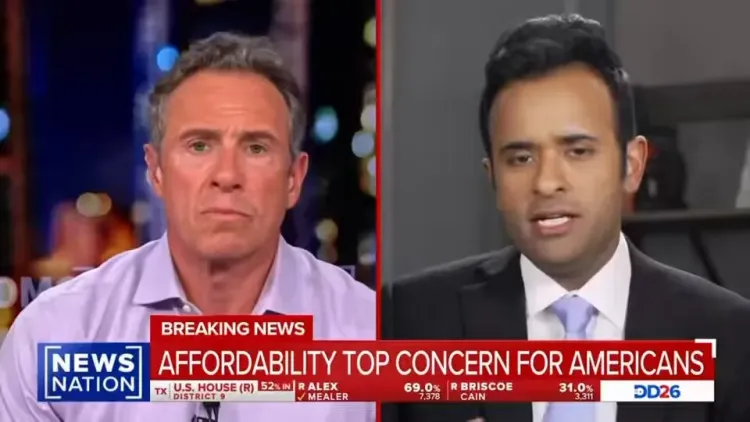
Entrepreneur and former DOGE co-lead Vivek Ramaswamy on Wednesday, 27 May 2026 called out what independent estimates describe as $1.1 trillion in improper Medicaid payments over the past decade, singling out Ohio as a case study in runaway programme spending.
Context
In his post, Ramaswamy cited figures showing Ohio's Medicaid enrolment rose from 2.9 million to 3 million beneficiaries while spending in the state ballooned from $27 billion to $47 billion — a near-doubling of costs against a comparatively modest rise in enrolment. 'That's unacceptable,' he wrote, framing the gap as evidence of systemic fiscal mismanagement rather than demographic need. The post arrives as federal and state governments face intensifying scrutiny over entitlement programme integrity.
Policy Backdrop
Medicaid, created under the Social Security Amendments of 1965, is jointly funded by the federal government's Centers for Medicare and Medicaid Services (CMS) and individual states. The Affordable Care Act of 2010 significantly expanded eligibility, drawing millions of additional Americans into the programme and accelerating both enrolment and spending curves. Annual CMS improper payment reports have consistently flagged Medicaid error rates above 10 percent for much of the past two decades, a figure that has drawn repeated congressional oversight hearings but limited structural reform.
The end of pandemic-era continuous enrolment requirements in 2023 was expected to trigger large-scale eligibility redeterminations and trim rolls, but spending growth has continued to outpace enrolment reductions in several states. The aggregate $1.1 trillion figure Ramaswamy cites — attributed to independent estimates — encompasses improper payments flagged over a full decade, reflecting cumulative concerns about eligibility verification gaps, managed-care oversight failures, and documented waste, fraud, and abuse across state programmes.
Stakeholders and Impact
US taxpayers, who jointly fund Medicaid through federal and state appropriations, bear the direct fiscal cost of improper payments. State governments, including Ohio's administration, face pressure to demonstrate tighter eligibility controls without cutting coverage for genuinely eligible low-income residents. Medicaid beneficiaries — the programme's approximately 80 million enrolees nationally — stand at the centre of any reform debate, as eligibility redetermination processes can result in coverage loss for vulnerable populations even when errors are unintentional.
Ramaswamy's profile as a former co-lead of the Department of Government Efficiency (DOGE) advisory effort and founder of Strive Asset Management gives his commentary on federal spending a political weight beyond that of a typical commentator. His focus on Ohio — his home state — adds a local accountability dimension to what is otherwise a national fiscal argument.
What's Next
Attention will turn to the release of the next CMS Medicaid improper payment report, which will provide the most authoritative official accounting of error rates and aggregate sums. Congressional committees with jurisdiction over health spending are expected to hold further hearings on eligibility redetermination and managed-care oversight in the coming months. Any state-level budget proposals from Ohio or other high-spending states that address Medicaid programme integrity will be closely watched as a gauge of whether political pressure translates into policy action.
Point of View
Timed to keep government efficiency concerns in the public conversation after his DOGE tenure. By anchoring the argument in Ohio-specific numbers, he shifts the frame from abstract federal statistics to tangible state-level accountability — a rhetorical move that is harder to dismiss. The spending-versus-enrolment gap he highlights is a genuine policy concern that has persisted across both Republican and Democratic administrations, lending the critique bipartisan credibility even if the messenger is partisan. The post signals that Medicaid programme integrity will remain a live political issue heading into the next federal budget cycle.
NationPress
19 Sept 2026
Frequently Asked Questions
What are improper Medicaid payments?
Improper Medicaid payments are disbursements made in error — including payments for ineligible beneficiaries, duplicate claims, or services not rendered — as identified in annual CMS audits. These do not always represent fraud; many are administrative errors in eligibility determination or billing.
Why has Ohio's Medicaid spending increased so sharply?
Ohio expanded Medicaid under the Affordable Care Act, which broadened eligibility to more low-income adults. Spending has grown faster than enrolment partly due to rising healthcare costs, managed-care contract structures, and the inclusion of higher-cost beneficiaries added during the expansion.
Who is Vivek Ramaswamy and why does his opinion on Medicaid matter?
Vivek Ramaswamy is an entrepreneur, founder of Strive Asset Management, and former co-lead of the DOGE advisory effort under the second Trump administration. His background in government efficiency and his Ohio roots give his critique of Medicaid spending particular political resonance.
What is the $1.1 trillion Medicaid improper payment figure based on?
Ramaswamy attributes the figure to independent estimates covering a decade of Medicaid improper payments. CMS publishes annual improper payment rates; the cumulative figure aggregates those yearly totals, though the specific $1.1 trillion sum has not been confirmed by official government records available in public training data.
What reforms are being considered to fix Medicaid waste?
Proposed reforms include stricter eligibility redetermination processes, enhanced managed-care oversight, expanded data-matching with other federal databases, and revised state-federal funding formulas. Congressional hearings and the next CMS improper payment report are expected to shape the reform agenda.