DR Congo Ebola outbreak: Vaccination reaches Ituri, 3,771 doses given
Synopsis
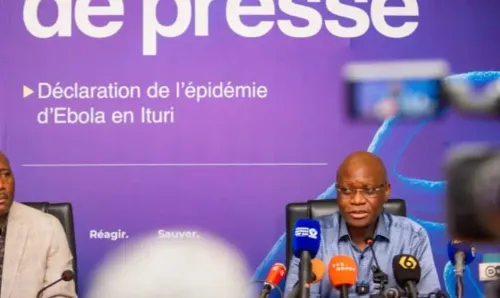
The DRC's Ebola outbreak — already the deadliest in the country's history at 3,639 deaths and a 48.3% fatality rate — just entered a new phase: vaccination has reached Ituri, the epicentre, alongside a landmark study testing whether the Ervebo vaccine actually works against the Bundibugyo strain driving the crisis. The answer could reshape global outbreak response.
Key Takeaways
Ebola vaccination expanded to Ituri Province , the outbreak's epicentre, on 19 September 2026 .
A total of 3,771 people have been vaccinated in the DRC as of 17 September , including 3,063 in Tshopo and 708 in Bas-Uele provinces.
The BRAVO study, launched in Bunia by MSF and partners, aims to vaccinate 20,000 frontline workers across Ituri and North Kivu to assess Ervebo's effectiveness against the Bundibugyo virus .
The DRC has recorded 7,541 confirmed cases and 3,639 deaths , with a case fatality rate of 48.3% .
This outbreak is the largest and deadliest ever in DRC history, and the second-largest globally after the 2014–2016 West Africa epidemic.
The International Coordinating Group approved 70,000 doses of Ervebo for the DRC; 16,520 doses had been received as of mid-September.
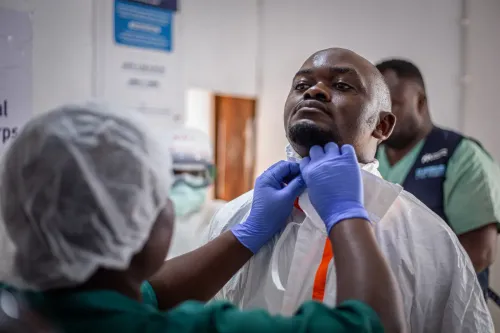
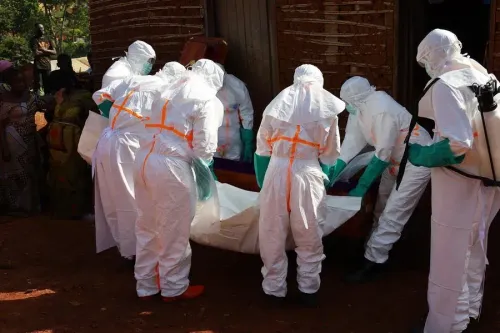
Ebola vaccination was expanded on Saturday, 19 September 2026 to Ituri Province, the epicentre of the ongoing outbreak in eastern Democratic Republic of the Congo (DRC), as cumulative doses administered in the country crossed 3,771. The move marks a critical escalation in the international response to what has become the deadliest Ebola outbreak in DRC history.
BRAVO Study Launched in Bunia
The expansion coincides with the launch of a vaccination study called BRAVO in Bunia, the capital of Ituri Province. The study is being conducted by Médecins Sans Frontières (MSF) in collaboration with Congolese health authorities, the Africa Centres for Disease Control and Prevention (Africa CDC), and other scientific partners. BRAVO aims to vaccinate approximately 20,000 frontline workers across Ituri and North Kivu — the two provinces hardest hit by the outbreak — and will follow participants over time to evaluate whether the Ervebo vaccine can protect against the Bundibugyo virus driving this outbreak.
Why the Vaccine Question Matters
Ervebo was originally developed and licensed to counter the Zaire Ebola virus, not the Bundibugyo strain responsible for the current surge. Whether it offers meaningful protection against Bundibugyo has not yet been scientifically established in humans, making the BRAVO study and a parallel Phase 3 randomised ring-vaccination trial of considerable global public health importance. The study is expected to run for nine to 12 months, comprising three months of vaccination and at least six months of participant follow-up.
Vaccine Supply and Deployment Timeline
The International Coordinating Group on Vaccine Provision approved an initial allocation of 70,000 doses of Ervebo to the DRC in August 2026. Of these, 50,000 doses were designated for health and frontline workers, while 20,000 doses were reserved for the Phase 3 clinical trial. According to the Africa CDC, 16,520 doses had been received in the DRC as of mid-September. Vaccination under a protocol-governed programme targeting high-risk individuals began on 27 August. As of 17 September, the 3,771 people vaccinated included 3,063 in Tshopo Province and 708 in Bas-Uele Province, according to the DRC government's latest epidemiological update.
Scale of the Outbreak
The DRC government has reported 7,541 confirmed cases and 3,639 deaths, putting the overall case fatality rate at a stark 48.3%. A total of 1,823 patients have recovered. Declared in May 2026, this outbreak has surpassed all previous DRC Ebola episodes to become the largest and deadliest ever recorded in the country. Globally, it ranks as the second-largest Ebola outbreak in history, behind only the 2014–2016 West Africa epidemic. Notably, the speed at which this outbreak has grown — reaching over 7,500 confirmed cases within months — has drawn urgent comparisons to that earlier humanitarian catastrophe.
What Comes Next
The BRAVO study's results will be pivotal in shaping future vaccine strategy not just for the DRC but for any future Bundibugyo outbreaks globally. Simultaneously, the randomised Phase 3 trial is expected to provide more rigorous efficacy data. With Ituri Province now formally integrated into the vaccination programme, health authorities will be watching closely whether coverage among frontline workers in the region can be scaled fast enough to contain transmission ahead of the study's data-readout phase.
Point of View
The entire vaccination strategy collapses and the world will have spent months deploying a vaccine that does not match the pathogen. With a 48.3% fatality rate and over 7,500 confirmed cases, the DRC cannot afford that answer to come late. The parallel Phase 3 randomised trial adds scientific rigour, but its timeline — nine to twelve months — means the outbreak could peak and recede before efficacy data is available to guide a real-time response. The global health architecture's chronic lag between outbreak declaration and fit-for-purpose vaccine deployment remains the unresolved structural problem here.
NationPress
20 Sept 2026
Frequently Asked Questions
What is the current status of the Ebola outbreak in DR Congo?
The DRC has reported 7,541 confirmed cases and 3,639 deaths as of 19 September 2026, with a case fatality rate of 48.3%. The outbreak, declared in May 2026, is the largest and deadliest ever recorded in the DRC and the second-largest globally after the 2014–2016 West Africa epidemic.
What is the BRAVO vaccination study in DRC?
BRAVO is a vaccination study launched in Bunia, Ituri Province, by Médecins Sans Frontières in collaboration with Congolese health authorities and Africa CDC. It aims to vaccinate about 20,000 frontline workers in Ituri and North Kivu to assess whether the Ervebo vaccine can protect against the Bundibugyo virus driving the current outbreak.
Can the Ervebo vaccine protect against the Bundibugyo Ebola virus?
It has not yet been established whether Ervebo, which was licensed against the Zaire Ebola virus, can protect humans against the Bundibugyo strain responsible for the current DRC outbreak. The BRAVO study and a separate Phase 3 randomised ring-vaccination trial have been designed specifically to generate that evidence.
How many Ervebo doses have been allocated to the DRC, and how many administered?
The International Coordinating Group approved 70,000 Ervebo doses for the DRC in August 2026 — 50,000 for frontline workers and 20,000 for clinical trials. As of mid-September, 16,520 doses had been received, and 3,771 people had been vaccinated as of 17 September.
Which provinces in DRC are most affected by the Ebola outbreak?
Ituri and North Kivu are the two provinces most affected by the current Ebola outbreak. Earlier vaccination efforts covered Tshopo Province (3,063 vaccinated) and Bas-Uele Province (708 vaccinated), with Ituri now formally added to the vaccination programme.