Bundibugyo Ebola vaccine trial Tumaini launches in DR Congo amid record outbreak
Synopsis
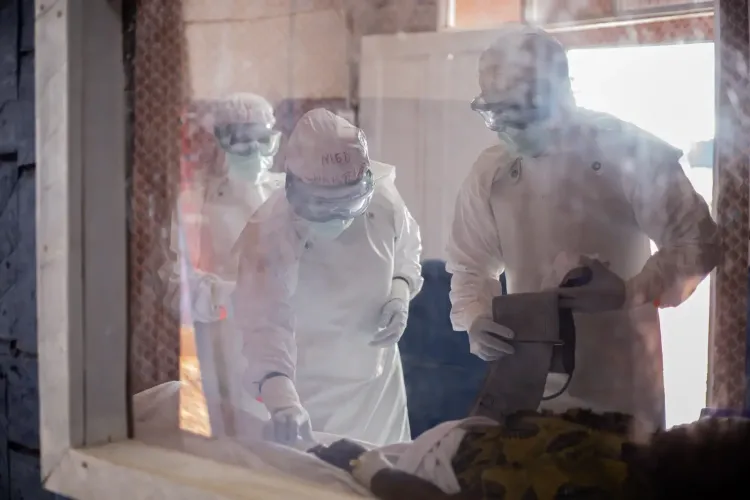
With 4,687 deaths and a 48.3% fatality rate, the DRC's Bundibugyo Ebola outbreak is the worst in the country's history — and the world still has no approved vaccine against this specific strain. The Tumaini trial, launched 23 October in the epicentre, brings together Moderna and Oxford-Serum Institute candidates in a single adaptive study that could change that, and reshape global preparedness for Ebola variants.
Key Takeaways
The Tumaini Phase 2/3 vaccine trial was launched on 23 October in Bunia, Ituri Province , DRC, funded by CEPI .
The DRC has recorded 9,704 confirmed Ebola cases and 4,687 deaths as of 20 October , with a 48.3% case fatality rate.
No vaccine is currently approved specifically against the Bundibugyo Ebola virus .
Three candidates are being evaluated: Ervebo (already licensed for Zaire strain), plus candidates from Moderna and University of Oxford with the Serum Institute of India .
The outbreak, declared on 15 May , is the largest ever in the DRC and the second-largest globally after the 2014–2016 West Africa epidemic.
WHO designated the outbreak a public health emergency of international concern ; Africa CDC declared it a continental security emergency.
A landmark Phase 2/3 clinical trial to evaluate vaccines against the Bundibugyo Ebola virus was launched on Friday, 23 October 2026, in Bunia, the capital of the hardest-hit Ituri Province in eastern Democratic Republic of the Congo (DRC). The trial, named Tumaini — meaning 'hope' in Swahili — comes as the DRC battles its largest and deadliest recorded Ebola outbreak, with the country having logged 9,704 confirmed cases and 4,687 deaths as of 20 October, according to DRC health authorities.
What the Tumaini Trial Involves
The trial is funded and supported by the Coalition for Epidemic Preparedness Innovations (CEPI) and employs an adaptive platform design, enabling multiple vaccine candidates to be assessed within a single study. It uses a ring vaccination approach, targeting individuals who have been in direct contact with confirmed Ebola patients and therefore face a significantly elevated risk of infection.
The first vaccine entering the trial is Ervebo, already licensed for prevention of disease caused by the Zaire Ebola virus, though it has not been proven effective against the Bundibugyo strain. Two additional candidates developed specifically against the Bundibugyo virus — one by Moderna and another by the University of Oxford in collaboration with the Serum Institute of India — are expected to join the trial 'shortly,' according to CEPI.
Why No Approved Vaccine Exists Yet
Despite the DRC suffering repeated and devastating Ebola outbreaks over decades, no vaccine has yet been approved specifically against the Bundibugyo Ebola virus. The Bundibugyo strain, first identified in Uganda in 2007, is distinct from the Zaire strain, against which Ervebo provides protection. This gap has left frontline health workers and high-risk communities without a proven targeted shield — a vulnerability that the Tumaini trial is designed to address.
Scale of the Current Outbreak
The epidemic was officially declared in the DRC on 15 May and was designated a public health emergency of international concern by the World Health Organisation (WHO) just two days later. The Africa CDC subsequently declared it a public health emergency of continental security. The current outbreak has recorded a case fatality rate of 48.3% — among the highest seen in any major Ebola episode — and has surpassed all previous DRC outbreaks in scale. It now ranks as the second-largest Ebola outbreak globally, behind only the 2014–2016 West Africa epidemic which killed more than 11,000 people.
What Global Health Authorities Said
Chikwe Ihekweazu, Executive Director of the WHO's Health Emergencies Programme, said the launch 'marks a critical step towards establishing whether candidate vaccines can effectively protect people against the Bundibugyo virus.' Mohamed Janabi, WHO Regional Director for Africa, also welcomed the launch, stating that the trial would 'generate crucial evidence on candidate vaccines while strengthening the response to the ongoing outbreak and preparedness for future epidemics.'
What Happens Next
With Moderna and Oxford-Serum Institute candidates set to join the trial in the near term, researchers hope the adaptive design will allow faster head-to-head comparisons than traditional sequential trials. The DRC's health ministry, WHO, and CEPI are expected to provide regular updates on enrolment figures and early immunogenicity data. A proven Bundibugyo vaccine would mark a historic milestone in global epidemic preparedness — and could reshape how the world responds to Ebola variants beyond the dominant Zaire strain.
Point of View
And that gap is now costing lives at a 48.3% fatality rate. The inclusion of Oxford-Serum Institute alongside Moderna in a single adaptive trial is a structural improvement over the fragmented vaccine landscape of past outbreaks, but the critical question is speed: with nearly 5,000 deaths already recorded, the humanitarian clock is running well ahead of the regulatory one. If the trial succeeds, it will also test whether lessons from this outbreak are institutionalised — or quietly shelved until the next Bundibugyo flare-up.
NationPress
24 Oct 2026
Frequently Asked Questions
What is the Tumaini Ebola vaccine trial in DR Congo?
The Tumaini trial is a Phase 2/3 clinical study launched on 23 October in Bunia, Ituri Province, DRC, to evaluate multiple vaccine candidates against the Bundibugyo Ebola virus. It is funded by the Coalition for Epidemic Preparedness Innovations (CEPI) and uses an adaptive platform design with ring vaccination targeting contacts of confirmed cases.
How serious is the current Ebola outbreak in the DRC?
The DRC has recorded 9,704 confirmed cases and 4,687 deaths as of 20 October, with a case fatality rate of 48.3%. It is the largest Ebola outbreak in the DRC's history and the second-largest globally, after the 2014–2016 West Africa epidemic.
Why is no vaccine yet approved against the Bundibugyo Ebola virus?
Unlike the Zaire strain, which has an approved vaccine (Ervebo), the Bundibugyo strain has not had a dedicated licensed vaccine due to historically limited research investment and fewer large-scale outbreak events. The Tumaini trial is the first major effort to fill that gap.
Which vaccines are being tested in the Tumaini trial?
The trial begins with Ervebo, already licensed against the Zaire Ebola strain but unproven against Bundibugyo. Two candidates specifically targeting Bundibugyo — developed by Moderna and by the University of Oxford in collaboration with the Serum Institute of India — are expected to join the trial shortly.
What international body declared the DRC Ebola outbreak an emergency?
The WHO declared the outbreak a public health emergency of international concern on 17 May, two days after the DRC's own declaration on 15 May. The Africa CDC subsequently declared it a public health emergency of continental security.