Rijiju Invokes Emergency, Targets Gehlot Over Congress Legacy
Synopsis
Union Parliamentary Affairs Minister Kiren Rijiju on June 15, 2026, accused Congress leader Ashok Gehlot of channelling the authoritarian legacy of Indira Gandhi, invoking the 1975 Emergency to renew BJP's attack on what it calls the dynastic nature of the Congress party.
Key Takeaways
Union Minister Kiren Rijiju posted on June 15, 2026 , directly targeting Congress leader Ashok Gehlot .
Rijiju accused Gehlot of reminding Indians of Indira Gandhi's alleged dictatorial tendencies and disregard for democracy.
The post explicitly warned voters to 'beware of dynastic Congress Party.' The 1975–77 Emergency — a 21-month suspension of constitutional rights under Indira Gandhi — is the historical anchor of the BJP's anti-Congress democratic critique.
BJP leaders have deployed this Emergency-and-dynasty narrative consistently since 2014 to challenge Congress's democratic legitimacy.
Congress rebuttals and potential parliamentary or Rajasthan-level escalation are expected in the coming days.
Union Parliamentary Affairs Minister Kiren Rijiju on Monday, June 15, 2026, launched a sharp political attack on senior Congress leader Ashok Gehlot, accusing him of echoing the authoritarian tendencies of former Prime Minister Indira Gandhi and warning voters against what he called the 'dynastic Congress Party.'
Context
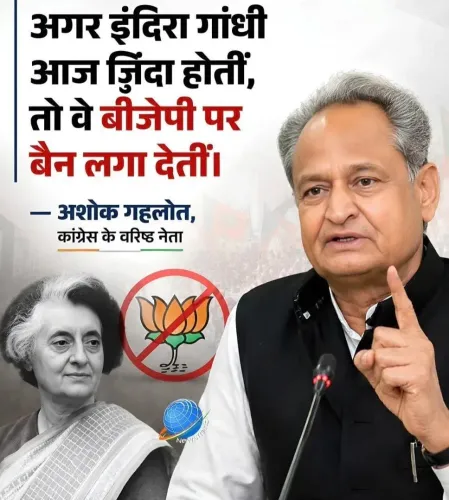
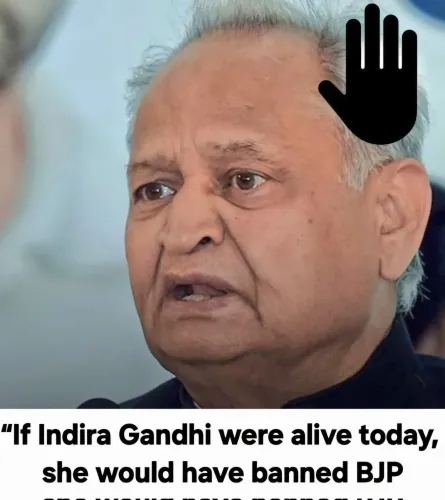
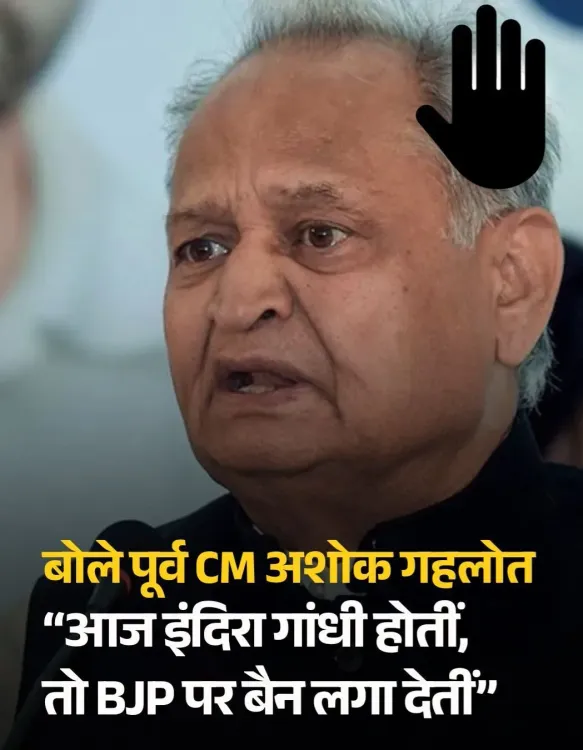
Rijiju's post stated that Gehlot 'is reminding us of how dictatorial Smt Indira Gandhi Ji was, who didn't believe in democracy,' and closed with a direct advisory: 'Beware of dynastic Congress Party.' The remarks were accompanied by an image, though the specific Gehlot statement that prompted the post could not be independently verified at the time of publication.
The attack places Gehlot — a multiple-term Chief Minister of Rajasthan and a senior Congress strategist — at the centre of a broader BJP narrative that frames the Congress party as structurally undemocratic due to its family-centred leadership model.
Policy Backdrop
The reference to Indira Gandhi is a well-worn but potent rhetorical device in Indian politics. Gandhi imposed the Emergency from 1975 to 1977, a 21-month period during which the Constitution was suspended, the press was censored, and thousands of political opponents were jailed without trial. The episode remains the most contested chapter in post-Independence democratic history.
Since 2014, BJP leaders have systematically invoked the Emergency to question the Congress party's democratic credentials. The argument is twofold: that the party's leadership has remained within the Nehru-Gandhi family across generations, and that this concentration of power mirrors the centralising instincts that produced the Emergency itself. Rijiju's post follows this established template precisely.
Stakeholders and Impact
Ashok Gehlot has been among the Congress party's most vocal critics of the BJP-led central government, frequently challenging its policies on federalism, welfare spending, and minority rights. By naming him specifically, Rijiju elevates the exchange beyond routine inter-party sparring and signals a targeted effort to undercut one of Congress's most experienced political operators.
For ordinary voters — particularly in Rajasthan, where Gehlot retains significant influence — the invocation of the Emergency carries emotional and historical weight. Opposition parties are likely to counter that invoking a five-decade-old event deflects from present-day governance questions. The exchange also feeds into a broader contest over which party can claim the mantle of India's democratic tradition.
What's Next
Congress is expected to issue a rebuttal, likely defending Gehlot's record and reframing the Emergency narrative to highlight subsequent democratic consolidation under Congress governments. Watch for any escalation of this exchange in Parliament or in Rajasthan's political arena, where both parties maintain active organisational networks.
With national and state electoral cycles continuing to shape the political calendar, attacks of this nature are likely to intensify. Rijiju's post underscores that the BJP intends to keep the Emergency and the question of dynastic politics as live issues in public discourse well into 2026.
Point of View
And dynastic succession as proof of structural anti-democracy. By naming Gehlot specifically rather than targeting Congress in the abstract, the party appears to be working to diminish one of its most effective state-level operators ahead of future electoral contests. The framing also allows BJP to occupy the moral high ground on democratic values without engaging the substance of whatever Gehlot actually said. This pattern — historical delegitimisation over policy rebuttal — has defined BJP-Congress exchanges since 2014 and shows no sign of abating.
NationPress
26 Sept 2026
Frequently Asked Questions
Why did Kiren Rijiju attack Ashok Gehlot on June 15 2026?
Rijiju said Gehlot's remarks were reminding Indians of how dictatorial Indira Gandhi was and that she did not believe in democracy, though the specific Gehlot statement that triggered the post was not independently verified at publication.
What was the 1975 Emergency that BJP leaders keep referring to?
The Emergency was a 21-month period from 1975 to 1977 when Prime Minister Indira Gandhi suspended the Constitution, censored the press, and jailed thousands of political opponents without trial — it remains the most contested episode in India's post-Independence democratic history.
What does 'dynastic Congress' mean in Indian politics?
The term refers to the fact that the Indian National Congress party's leadership has remained within the Nehru-Gandhi family across multiple generations; BJP leaders use this to argue that Congress is structurally undemocratic and prioritises family over merit.
Who is Ashok Gehlot?
Ashok Gehlot is a senior Congress leader and multiple-term Chief Minister of Rajasthan , widely regarded as one of the party's most experienced political managers and a frequent critic of BJP governance.
Who is Kiren Rijiju?
Kiren Rijiju is a senior BJP leader from Arunachal Pradesh serving as Union Minister of Parliamentary Affairs and Minister of Minority Affairs in the central government.