Rijiju: Indira Gandhi owned her actions, today's Congress won't
Synopsis
Union Parliamentary Affairs Minister Kiren Rijiju on August 8 drew a pointed contrast between Indira Gandhi's willingness to own her decisions — including the 1975 Emergency — and what he called the current Congress party's refusal to acknowledge its own errors and shortcomings.
Key Takeaways
Union Minister Kiren Rijiju posted on August 8, 2026 , distinguishing Indira Gandhi's candour from the current Congress party's posture.
Rijiju acknowledged that BJP disagrees with Indira Gandhi's policies but credited her with being 'blunt in admitting the actions she had taken.' The implicit reference is to the National Emergency of June 1975 , which suspended fundamental rights and lasted until March 1977 .
Rijiju accused the Indian National Congress of failing to recognise its own errors and shortcomings today.
The post continues a sustained BJP pattern of invoking the Emergency to challenge Congress on historical accountability.
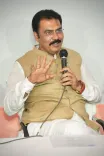
A sharp distinction between a former Prime Minister's candour and her party's present-day posture — that is the charge Union Parliamentary Affairs Minister Kiren Rijiju levelled on Saturday, August 8, 2026, in a pointed post that cut straight to the heart of a long-running political argument.
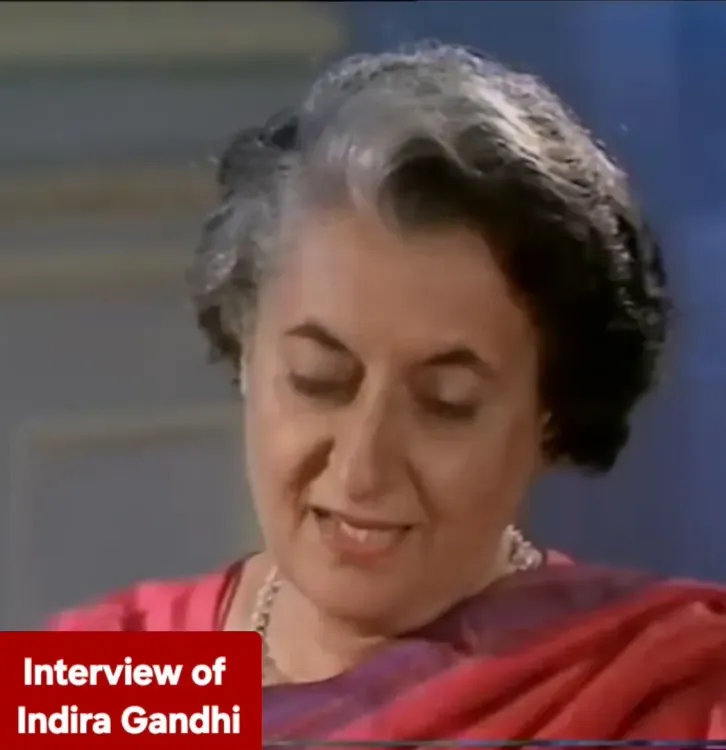
Rijiju's words were precise: 'Although we do not agree with the policies and the steps taken by the former Prime Minister Smt. Indira Gandhi ji, she was blunt in admitting the actions that she had taken. Now, Congress party is not even realising their own errors and shortcomings.' The concession about Indira Gandhi is notable — a senior BJP leader acknowledging a political adversary's directness, even while condemning her decisions.
The Emergency shadow that never fully lifts
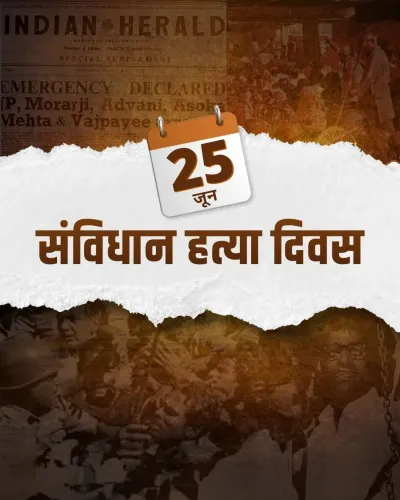
The reference anchors immediately to the darkest chapter in post-Independence Indian democracy: the National Emergency of June 1975, declared by Prime Minister Indira Gandhi, which suspended fundamental rights, muzzled the press, and resulted in the detention of thousands of political opponents. It lasted until March 1977. The Emergency remains the sharpest weapon in the BJP's rhetorical arsenal against the Congress — a wound the opposition has never fully reckoned with publicly.
Rijiju's framing is deliberate. By crediting Indira Gandhi with a kind of blunt ownership of her choices, he draws a contrast that is more damaging than a direct attack: the Congress of today, he implies, lacks even the hard-edged accountability of its own most controversial leader.
BJP's accountability narrative — and why Congress finds it hard to answer
BJP leaders have returned to the Emergency well repeatedly — in Parliament, on campaign trails, and in public messaging — as a symbol of what they call Congress's authoritarian instinct. What Rijiju adds here is a new layer: not just that the Emergency was wrong, but that the Indian National Congress has failed to honestly confront it across the decades since.
For the Congress, any engagement with this framing is a lose-lose proposition. Defending the Emergency is politically toxic. Fully repudiating it means repudiating one of the party's most towering figures. The result, critics argue, is the silence and evasion that Rijiju is now publicly naming.
The timing — outside an active parliamentary session — suggests this is calibrated political messaging rather than a legislative move, keeping a pressure point alive in the public discourse ahead of electoral cycles.
Accountability, Rijiju is arguing, is not just about what you do — it is about whether you can look the country in the eye and say you did it. On that count, he says, today's Congress falls short of even its own history.
Point of View
He makes the attack on today's Congress sharper than a straightforward condemnation would. It fits a broader BJP strategy of separating Congress's iconic past leaders from the current party leadership, framing the organisation as a diminished institution that cannot even live up to its own history. The Emergency remains a potent touchstone because Congress has never issued a formal, unambiguous apology for it — leaving the flank permanently exposed. With electoral cycles never far away in Indian politics, keeping this accountability narrative active in public discourse costs the BJP nothing and keeps Congress on the defensive.
NationPress
22 Sept 2026
Frequently Asked Questions
What did Kiren Rijiju say about Indira Gandhi?
Rijiju said that while the BJP disagrees with Indira Gandhi's policies, she was 'blunt in admitting the actions that she had taken' — a contrast he drew against today's Congress, which he accused of not recognising its own errors.
What is the 1975 Emergency that BJP often references?
The National Emergency was declared by Prime Minister Indira Gandhi in June 1975 , suspending fundamental rights, censoring the press, and detaining political opponents. It was lifted in March 1977 and remains the most controversial episode of Congress rule.
Why does BJP keep bringing up the Emergency?
The Emergency is the BJP's most potent historical argument against Congress, representing what the party frames as Congress's authoritarian instinct and lack of accountability. It resonates with voters because it is a documented, undisputed episode of democratic suspension.
What is Rijiju's current role in the government?
Kiren Rijiju is the Union Minister of Parliamentary Affairs and Minister of Minority Affairs , and a senior BJP leader from Arunachal Pradesh .
Has Congress ever apologised for the Emergency?
Congress has never issued a formal, unambiguous public apology for the 1975 Emergency, which is the core of the BJP's recurring accountability argument against the party.