Rijiju Invokes George Fernandes, Demands Congress Answer
Synopsis
Union Parliamentary Affairs Minister Kiren Rijiju invoked the late socialist leader George Fernandes on June 16, 2026, demanding that the Congress party answer for what he called the 'sins' of its six decades in power, with an implicit reference to the 1975 Emergency.
Key Takeaways
Union Parliamentary Affairs Minister Kiren Rijiju posted a bilingual message on X on June 16, 2026 , demanding accountability from the Indian National Congress .
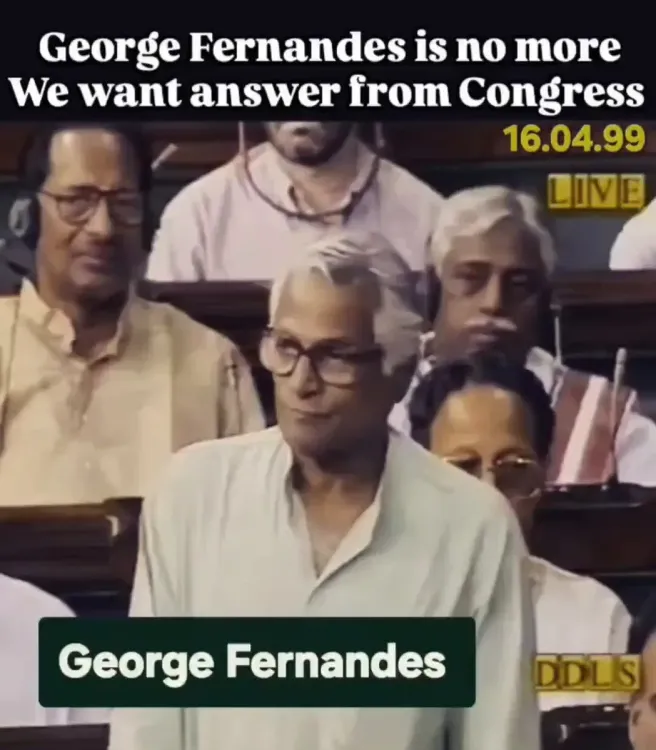
Rijiju invoked George Fernandes , the socialist leader and former Defence Minister who organised the 1974 railway strike and was jailed during the 1975–77 Emergency .
The post states: 'Congress party ruled for six decades.
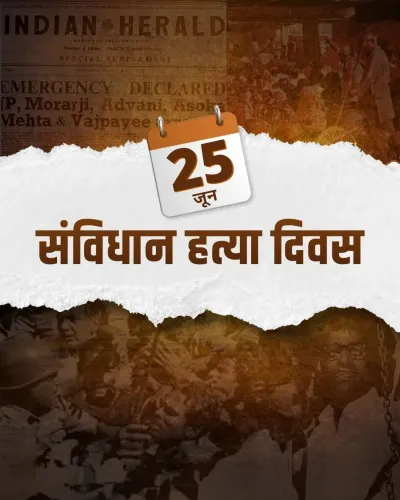
They can not run away from the sins they committed.' The Emergency , declared on June 25, 1975 , saw mass arrests of opposition leaders including Fernandes and remains a central BJP talking point against Congress.
The post comes close to the June 25 anniversary of the Emergency's declaration, a date BJP leaders routinely mark with criticism of Congress.
A Congress response and potential parliamentary debate during the upcoming Monsoon Session are anticipated.
Union Parliamentary Affairs Minister Kiren Rijiju on Tuesday, June 16, 2026, invoked the legacy of socialist leader and former Defence Minister George Fernandes to demand accountability from the Indian National Congress, posting a sharp bilingual message on X that accused the party of evading responsibility for its six decades in power.
Writing in Hindi and English, Rijiju said: 'जॉर्ज फर्नांडीस अब हमारे बीच नहीं रहे लेकिन हम कांग्रेस पार्टी से जवाब चाहते हैं' ('George Fernandes is no longer with us, but we want answers from the Congress party'). He added in English: 'Congress party ruled for six decades. They can not run away from the sins they committed.'
Context
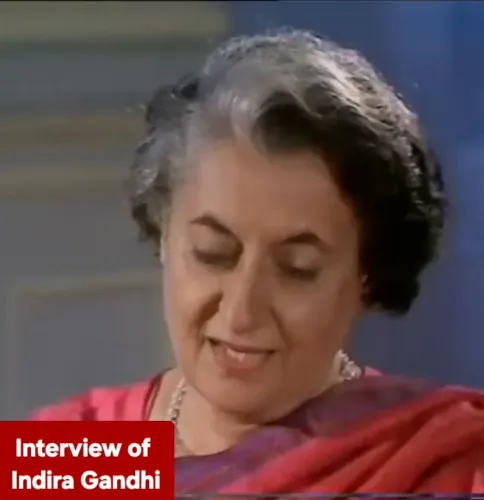
George Fernandes, who passed away in January 2019, was one of the most prominent faces of opposition to Congress rule across several decades. A firebrand trade unionist and socialist, he organised the nationwide railway strike of May 1974 against the Congress government of Prime Minister Indira Gandhi — one of the largest industrial actions in Indian history.
Fernandes was subsequently arrested during the Emergency (1975–77), the period in which the Congress government suspended civil liberties and detained thousands of opposition leaders. His trial became a symbol of resistance to authoritarian rule. Rijiju's post draws a direct line between Fernandes's suffering and what the BJP frames as Congress's historical 'sins.'
Policy Backdrop
The Emergency, declared on June 25, 1975 by the Congress government, remains one of the most contested chapters in Indian democratic history. Opposition figures including Fernandes were jailed, the press was censored, and fundamental rights were curtailed for nearly two years. The period ended with the 1977 general elections, in which Congress was voted out of power.
BJP and its predecessors in the Janata coalition have long positioned themselves as the inheritors of the anti-Emergency resistance. Senior BJP leaders periodically invoke this history — particularly around the anniversary of the Emergency's imposition in late June — to contrast what they describe as Congress's authoritarian past with the present administration's record.
Stakeholders and Impact
Rijiju's post directly challenges Congress leadership to respond to historical grievances associated with the party's long tenure in government. By naming Fernandes — a socialist who was never a BJP member but became a significant ally in opposition coalitions — Rijiju broadens the political tent of those portrayed as victims of Congress rule.
For the Congress party, such messaging presents a recurring communications challenge: the party must balance defending its post-independence governance record while distancing itself from the Emergency-era decisions of the Indira Gandhi government. Congress spokespersons have in the past described the Emergency as a 'mistake' while arguing that BJP selectively weaponises history.
What's Next
A formal response from Congress spokespersons is likely, given the pointed nature of the charge. The timing — close to the June 25 anniversary of the Emergency's declaration — suggests this exchange could intensify as the date approaches. The issue may also surface in the floor debates of the upcoming Monsoon Session of Parliament, where Rijiju, as Parliamentary Affairs Minister, plays a central role in managing legislative business.
The post signals that the BJP intends to keep the Emergency's legacy alive as a political reference point, using figures like Fernandes to underscore the human cost it associates with Congress governance — a pattern likely to persist through the election cycle.
Point of View
Using George Fernandes — a socialist outsider to the BJP's own tradition — as a cross-ideological symbol of Congress's authoritarian past. By framing the demand for accountability in Fernandes's name rather than a BJP leader's, the post attempts to widen the moral indictment beyond partisan lines. This fits a well-established BJP communications pattern of keeping the Emergency as a live political wound ahead of parliamentary sessions and electoral cycles. Congress's challenge remains that any rebuttal risks re-opening a chapter its own leaders have at times acknowledged as a 'mistake.'
NationPress
17 Sept 2026
Frequently Asked Questions
Why did Kiren Rijiju mention George Fernandes in his post?
Rijiju invoked George Fernandes to highlight the suffering of opposition leaders under Congress rule, particularly during the 1975–77 Emergency when Fernandes was arrested. The reference is intended to demand historical accountability from the Congress party.
What did George Fernandes do against the Congress government?
George Fernandes organised the nationwide railway strike of May 1974 against the Congress government of Indira Gandhi and was subsequently arrested during the Emergency (1975–77), becoming a prominent symbol of resistance to authoritarian rule.
What is the Emergency that BJP leaders refer to?
The Emergency refers to the period from June 25, 1975 to March 1977, when the Congress government under Indira Gandhi suspended civil liberties, censored the press, and detained thousands of opposition leaders across India.
When did George Fernandes pass away?
George Fernandes passed away in January 2019. Despite his death, his legacy continues to be invoked in political debates about the Congress party's governance record.
What is Kiren Rijiju's role in the government?
Kiren Rijiju is the Union Minister of Parliamentary Affairs and Minister of Minority Affairs, and is a senior BJP leader from Arunachal Pradesh. As Parliamentary Affairs Minister, he manages legislative business in both Houses of Parliament.