Rijiju Asks: Dialogue or Emergency to Handle Protesters?
Synopsis
Union Parliamentary Affairs Minister Kiren Rijiju on July 31, 2026 posed a direct public challenge: is talking to protesters and passing a Bill better than imposing emergency to crush them? The pointed question invokes India's 1975 Emergency and frames the BJP's preferred approach to dissent as democratic negotiation over authoritarian suppression.
Key Takeaways
Union Parliamentary Affairs Minister Kiren Rijiju publicly posed a binary question on July 31, 2026 : dialogue and legislation versus emergency powers to suppress protesters.
The post explicitly references 'imposing emergency to crush protesters,' invoking the shadow of India's 1975-77 national Emergency under Article 352 .
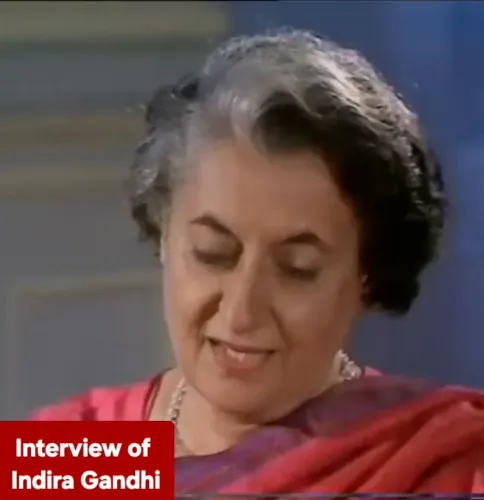
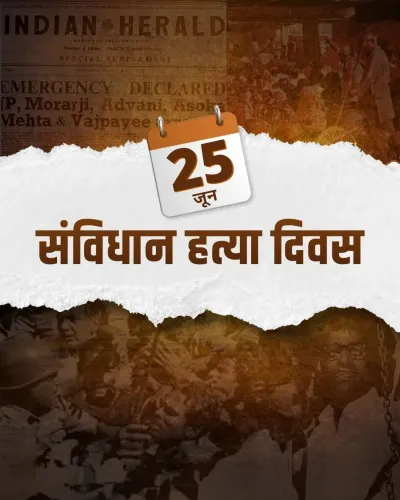
India's last nationwide Emergency, declared by Indira Gandhi in 1975 , suspended civil liberties and ended in electoral defeat for her government in 1977 .
The most recent precedent for legislative retreat over force: the Union government repealed three farm laws in 2021 after sustained protests and dialogue with farmer unions.
Post-1977 constitutional amendments have made repeated emergency imposition procedurally harder, reinforcing the norm of negotiation.
The specific bill or protest triggering Rijiju's exchange has not been identified in the public record.
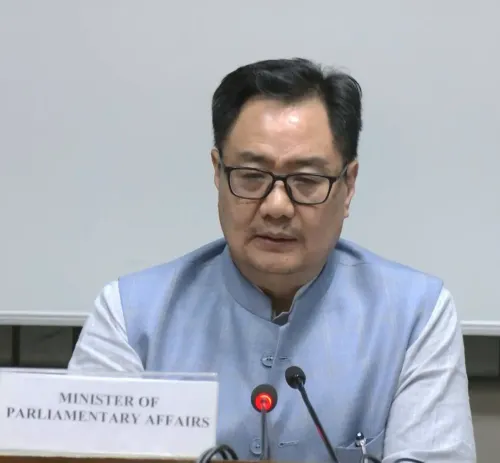
A pointed question about the limits of state power landed on Indian political discourse on Friday, July 31, 2026, when Union Parliamentary Affairs Minister Kiren Rijiju posed a stark, binary challenge in a public exchange on X — demanding a straight answer on whether democratic negotiation beats emergency-era suppression.
Rijiju's post cut through the noise with deliberate bluntness: 'This does not answer my question. Just tell me in simple words — whether talking to protesters and bringing a Bill is better or imposing emergency to crush the protesters is better?' The framing was unmistakable — a senior BJP minister invoking the ghost of India's 1975 Emergency to draw a sharp contrast between legislative dialogue and authoritarian overreach.
The Emergency Shadow Rijiju Is Deliberately Casting
The reference to 'imposing emergency to crush protesters' is not accidental political rhetoric. Article 352 of the Indian Constitution grants the Union government sweeping powers during a national emergency — including the suspension of fundamental rights. The last nationwide invocation, under Prime Minister Indira Gandhi from 1975 to 1977, remains the most contested chapter in India's democratic history: civil liberties suspended, press censored, political opponents jailed. The backlash was so severe it swept Gandhi out of power and triggered constitutional amendments designed to make future misuse harder. By framing his question around that specific instrument, Rijiju is anchoring his argument in a moment every Indian political actor treats as a cautionary tale.When Governments Have Chosen Bills Over Barricades
India's more recent record on handling sustained protests has leaned toward legislative retreat rather than extraordinary powers. The most prominent example: after more than a year of farmer protests that drew international attention, the Union government in 2021 repealed all three contentious farm laws following multiple rounds of dialogue with farmer unions. No emergency was declared. The political cost of the laws was judged higher than the cost of withdrawal. That precedent — talking, negotiating, legislating — is precisely the model Rijiju appears to be championing, though the specific bill or protest he is responding to in this exchange remains unspecified in the public record. The question Rijiju has posed is deceptively simple. But its answer carries the full weight of India's constitutional history — and every future government that faces a restless street will have to answer it too.Point of View
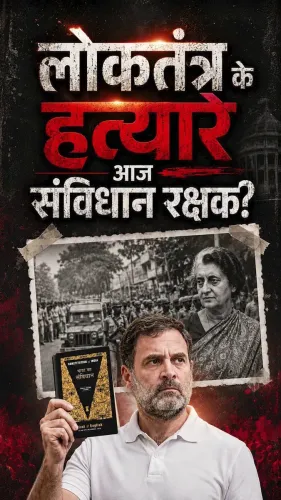
He positions the BJP as the party of constitutional restraint and implicitly tags opponents with the legacy of 1975. The binary he constructs is rhetorically clean but politically loaded: it forces any respondent to either defend emergency-era tactics or concede the government's negotiation-first approach. This fits a broader BJP pattern of using the Emergency as a recurring contrast point in debates about democratic governance. What makes this post notable is that it comes from the minister who manages the government's relationship with Parliament itself — making his public endorsement of the 'bill over barricade' model a signal about the administration's stated posture toward dissent.
NationPress
15 Sept 2026
Frequently Asked Questions
What did Kiren Rijiju say about protesters and emergency powers?
On July 31, 2026 , Rijiju asked publicly whether talking to protesters and bringing a Bill is better than imposing emergency to crush them, framing dialogue as the preferable democratic response.
What is Article 352 and India's Emergency history?
Article 352 of the Indian Constitution allows the Union government to declare a national emergency during internal or external threats. The last nationwide use was by Indira Gandhi from 1975 to 1977 , during which civil liberties were suspended and dissent was suppressed — it ended with her electoral defeat.
Has India's government ever repealed a law after protests instead of using force?
Yes. In 2021 , the Union government repealed all three farm laws after more than a year of sustained farmer protests and multiple rounds of dialogue, choosing legislative withdrawal over extraordinary powers.
What is Kiren Rijiju's role in the Indian government?
Kiren Rijiju is the Union Minister of Parliamentary Affairs and Minister of Minority Affairs , a senior BJP leader representing Arunachal Pradesh .
Can India's government impose emergency to deal with internal protests?
Constitutionally, Article 352 permits an emergency declaration for internal disturbances, but post-1977 amendments made the process more stringent. Successive governments have preferred negotiation and legislation over invoking emergency powers to handle protests.