Rijiju Slams Congress Over 1975 Emergency Legacy
Synopsis
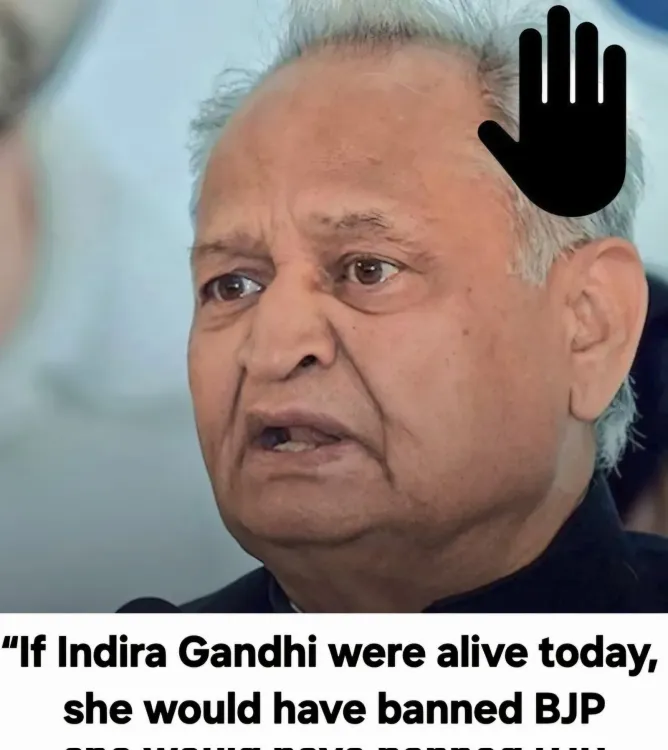
Union Parliamentary Affairs Minister Kiren Rijiju on June 15, 2026, attacked Congress as a 'dynastic one family party,' invoking the 1975-77 Emergency. The remark revives BJP's long-standing narrative questioning Congress's democratic credentials ahead of the Emergency's 51st anniversary on June 25.
Key Takeaways
Union Parliamentary Affairs Minister Kiren Rijiju posted a sharp attack on Congress on June 15, 2026 , calling it a 'dynastic one family Congress Party.' The post invokes the national Emergency of 1975–77 , declared on 25 June 1975 by President Fakhruddin Ali Ahmed on the advice of PM Indira Gandhi.
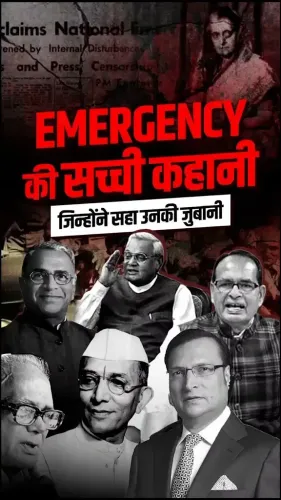
The Emergency lasted 21 months , during which fundamental rights were suspended, the press was censored, and opposition leaders were jailed.
BJP leaders routinely cite the Emergency to question Congress's democratic credentials in Parliament and election campaigns.
The 51st anniversary of the Emergency declaration falls on 25 June 2026 , making the timing of Rijiju's post politically significant.
The remark is expected to feature in upcoming monsoon session parliamentary exchanges and state election campaign messaging.
Union Parliamentary Affairs Minister Kiren Rijiju on Monday, June 15, 2026, launched a sharp attack on the Indian National Congress, saying that imposing the Emergency on the country was 'not enough for the dynastic one family Congress Party,' reviving a long-running BJP critique of the opposition's democratic record.
Context
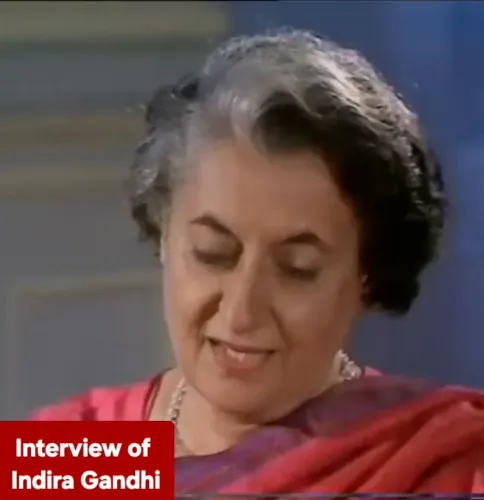
Rijiju's post alludes directly to the national Emergency of 1975–77, a 21-month period widely regarded as one of the darkest chapters in independent India's democratic history. The Emergency was declared on 25 June 1975 by President Fakhruddin Ali Ahmed on the advice of then Prime Minister Indira Gandhi, suspending fundamental rights, imposing press censorship, and enabling the mass arrest of opposition leaders.
The phrase 'dynastic one family Congress Party' is a reference to the Nehru-Gandhi family's multi-generational hold over the Congress organisation — a charge the BJP has consistently levelled to question the party's internal democratic character.
Policy Backdrop
The Emergency was invoked under Article 352 of the Constitution on the grounds of 'internal disturbance.' It remained in force until March 1977, when Indira Gandhi called general elections and the Congress was voted out of power in a historic verdict widely seen as a popular rejection of authoritarian rule.
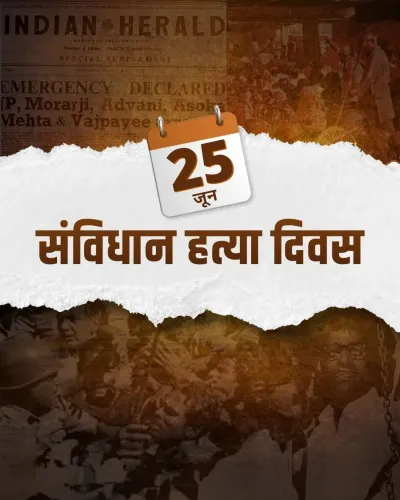
Since then, June 25 has been observed annually by the BJP and affiliated organisations as 'Samvidhaan Hatya Diwas' — a day to mark what they describe as the murder of the Constitution. Senior BJP leaders regularly invoke the Emergency in parliamentary debates, election campaigns, and public addresses to draw a contrast between Congress-era governance and their own record on democratic institutions.
Stakeholders and Impact
Rijiju's remarks are aimed squarely at the Congress and, by extension, the broader INDIA bloc opposition. The BJP's repeated invocation of the Emergency is part of a calculated political strategy to frame the Congress as a party with an authoritarian legacy, particularly effective with younger voters who did not live through the period but have encountered it in political discourse.
Civil society groups and constitutional scholars have long argued that the Emergency episode must be remembered as a cautionary lesson for all parties in power, not merely as a partisan talking point. Opposition leaders have in the past countered BJP's Emergency rhetoric by pointing to what they describe as contemporary threats to press freedom and institutional independence.
What's Next
With the monsoon session of Parliament approaching, Rijiju's post signals that the Emergency's legacy is likely to feature prominently in parliamentary exchanges and party political communication. The reference is also expected to be amplified in any upcoming state assembly election campaigns where the BJP seeks to highlight its democratic credentials against the Congress. The 51st anniversary of the Emergency declaration falls on 25 June 2026, and larger commemorative events or political programmes around that date remain a strong possibility.
Point of View
Timed close to the 51st anniversary of the Emergency declaration on June 25. By labelling Congress a 'dynastic one family party' in the same breath as the Emergency, he fuses two distinct BJP attack lines — authoritarianism and dynasty — into a single, shareable message. This dual framing has proven durable across election cycles because it simultaneously targets the Congress organisation's structure and its most controversial exercise of state power. With the monsoon session of Parliament imminent, the post likely previews the rhetorical ground BJP intends to hold on the floor of the House.
NationPress
15 Sept 2026
Frequently Asked Questions
What did Kiren Rijiju say about Congress and the Emergency?
On June 15, 2026, Rijiju posted on X that 'imposing emergency on the Country was not enough for the dynastic one family Congress Party,' attacking Congress by invoking the 1975-77 national Emergency.
When was the Emergency declared in India and by whom?
The national Emergency was declared on 25 June 1975 by President Fakhruddin Ali Ahmed on the advice of Prime Minister Indira Gandhi, and it lasted until March 1977.
Why does BJP keep bringing up the 1975 Emergency?
BJP regularly invokes the 1975-77 Emergency to question Congress's democratic credentials, framing it as evidence of the party's authoritarian tendencies, especially during Parliament sessions and election campaigns.
What is 'Samvidhaan Hatya Diwas'?
BJP and affiliated organisations observe June 25 as 'Samvidhaan Hatya Diwas' — marking the anniversary of the Emergency declaration — to highlight what they call Congress's assault on the Constitution.
What is the significance of Rijiju's post timing in June 2026?
The post comes just ten days before June 25, 2026, the 51st anniversary of the Emergency declaration, suggesting it is part of broader BJP communication around the anniversary.