CM Bhajan Lal Marks 1975 Emergency Anniversary, Calls It Dark Chapter
Synopsis
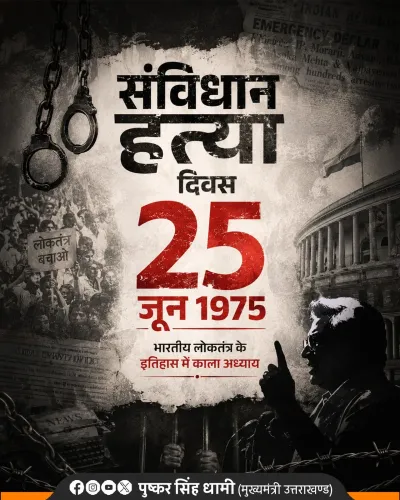
On the 51st anniversary of the 1975 Emergency, Rajasthan Chief Minister Bhajan Lal Sharma condemned the period as a dark chapter that suppressed fundamental rights and press freedom, continuing the BJP's established practice of marking 25 June as a reminder of constitutional violations.
Key Takeaways
Rajasthan CM Bhajan Lal Sharma posted on 25 June 2026 , the 51st anniversary of the 1975 Emergency .
He described the Emergency as a period when 'the arrogance of power' dealt a deep blow to Indian democracy and the Constitution.
The national Emergency was proclaimed on 25 June 1975 and lasted 21 months , ending on 21 March 1977 .
During the Emergency, fundamental rights were suspended, press freedom was curtailed, and opposition leaders were detained.
The 1977 elections following the Emergency's revocation led to the first non-Congress government at the Centre.
BJP leaders across states and the national leadership routinely mark 25 June each year to recall this period.
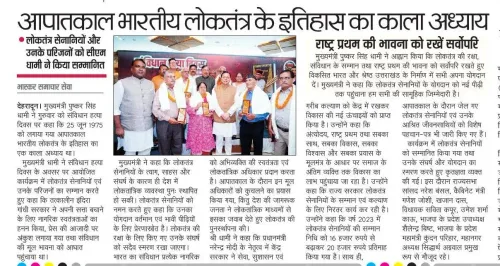
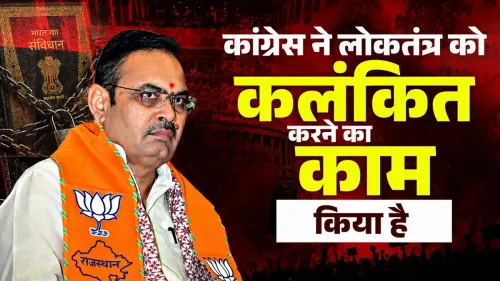
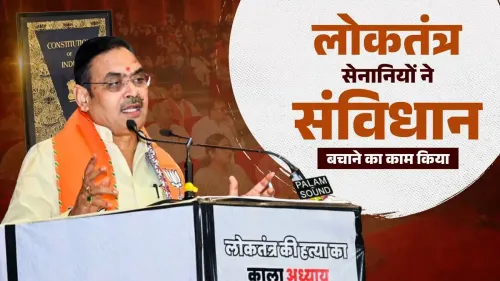
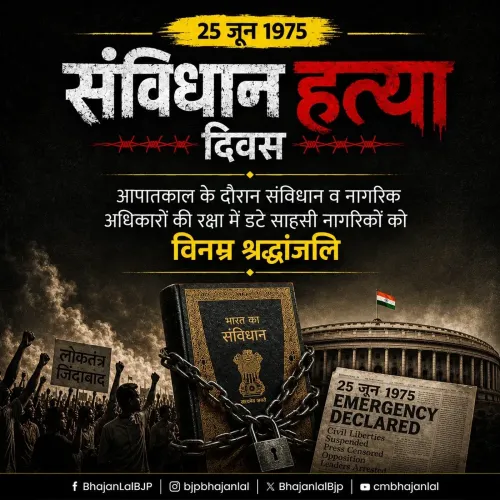
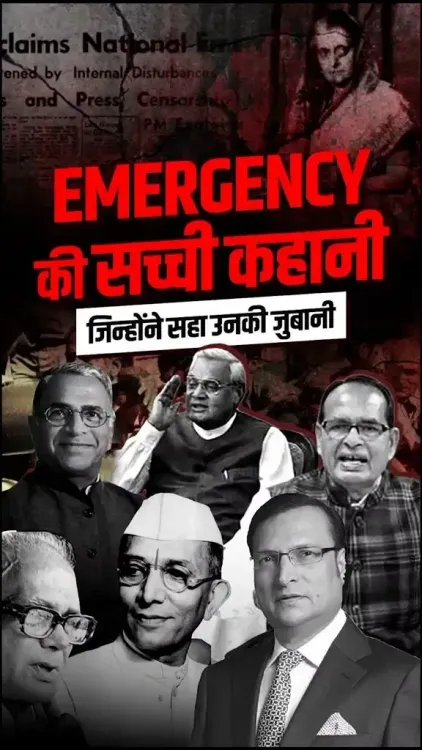
Rajasthan Chief Minister Bhajan Lal Sharma on Thursday, 25 June 2026, marked the 51st anniversary of the imposition of the 1975 Emergency, calling it a period when the arrogance of power dealt a severe blow to Indian democracy and the spirit of the Constitution.
Context
In his post, Sharma wrote: 'आज ही के दिन वर्ष 1975 में सत्ता के अहंकार ने देश पर आपातकाल थोपकर भारतीय लोकतंत्र और संविधान की मूल भावना को गहरा आघात पहुंचाया था' ['On this very day in 1975, the arrogance of power imposed an Emergency on the country, dealing a deep blow to Indian democracy and the fundamental spirit of the Constitution']. He further noted that during this dark chapter, fundamental rights were violated, freedom of the press was shackled, and a brazen attempt was made to silence the voice of democracy.
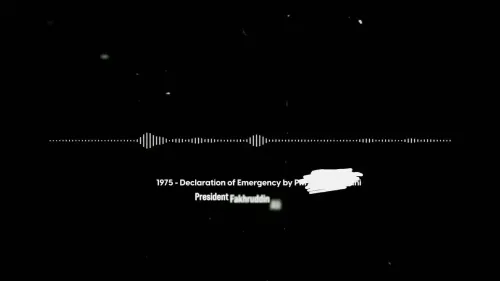
The national Emergency was proclaimed on 25 June 1975 by President Fakhruddin Ali Ahmed on the advice of Prime Minister Indira Gandhi. It remained in force for 21 months, until 21 March 1977, when it was revoked ahead of general elections.
Policy Backdrop
During the Emergency, fundamental rights guaranteed under the Indian Constitution were suspended. Opposition leaders were arrested under preventive detention laws, and the press operated under strict government censorship, effectively silencing independent reporting.
The 1977 general elections, held immediately after the Emergency was lifted, resulted in a historic defeat for the Indian National Congress and the formation of the first non-Congress government at the Centre. The period remains one of the most contested episodes in post-Independence Indian political history.
Stakeholders and Impact
The Emergency's impact was felt most acutely by journalists, civil society organisations, and opposition political leaders, many of whom were detained without trial. Citizens saw the suspension of their constitutional right to move courts for enforcement of fundamental rights.
Sharma's statement is part of a consistent annual practice among Bharatiya Janata Party leaders — at both the state and national level — of marking 25 June as a reminder of constitutional violations and as a contrast to what the party describes as its own governance record. Similar statements are typically issued by BJP chief ministers and central leadership on this date each year.
What's Next
Responses from Congress spokespersons and coordinated statements from other BJP-governed states are expected in the hours and days following the anniversary. The Congress has historically contested the BJP's framing of the Emergency, arguing that constitutional safeguards have since been strengthened. The annual exchange underscores how the 1975 Emergency continues to serve as a live fault line in Indian political discourse, with both parties drawing on its legacy to shape their contemporary electoral narratives.
Point of View
The party attempts to keep the Emergency's memory active as an electoral liability for its principal opponent. The consistency of this messaging across BJP-ruled states signals a top-down communications strategy rather than individual political commentary. How the Congress responds — whether with silence, counter-framing, or its own historical revisionism — will indicate how much electoral salience the Emergency still carries with younger voters who have no living memory of it.
NationPress
23 Sept 2026
Frequently Asked Questions
What did Rajasthan CM Bhajan Lal Sharma say about the 1975 Emergency?
Sharma called the 1975 Emergency a 'dark chapter' in which the arrogance of power dealt a deep blow to Indian democracy, fundamental rights were violated, press freedom was curtailed, and the voice of democracy was suppressed.
When was the Emergency imposed in India and who imposed it?
The national Emergency was proclaimed on 25 June 1975 by President Fakhruddin Ali Ahmed on the advice of Prime Minister Indira Gandhi of the Indian National Congress.
How long did the 1975 Emergency last?
The Emergency lasted 21 months, from 25 June 1975 until it was revoked on 21 March 1977, just before the general elections.
Why do BJP leaders mark 25 June every year?
BJP leaders at the state and national level annually mark 25 June as a reminder of the constitutional violations during the 1975 Emergency, using the occasion to contrast the Congress's governance record with their own.
What happened after the Emergency was lifted in 1977?
The 1977 general elections, held immediately after the Emergency was revoked, resulted in the defeat of the Congress and the formation of the first non-Congress government at the Centre.