CM Saini Marks Emergency Anniversary, Calls 1975 a Dark Chapter
Synopsis
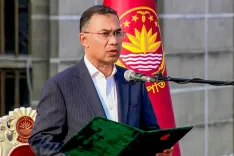
Haryana Chief Minister Nayab Singh Saini marked the 51st anniversary of India's 1975 Emergency on 25 June 2026, condemning the Congress-led government's suspension of fundamental rights as a dark chapter in Indian democratic history.
Key Takeaways
Haryana CM Nayab Singh Saini posted on 25 June 2026 to mark the 51st anniversary of the Emergency.
He called 25 June 1975 a 'dark chapter' in Indian democratic history, attributing it to the arrogance of power of the Congress government under Indira Gandhi .
The Emergency was proclaimed under Article 352 and lasted 21 months , from 25 June 1975 to 21 March 1977 .
During the Emergency, citizens' fundamental rights were suspended and opposition leaders were detained.
The statement is part of an annual BJP political narrative contrasting Congress-era executive overreach with constitutional restoration in 1977.
Congress rebuttals and BJP state-level commemorative events are expected to follow.
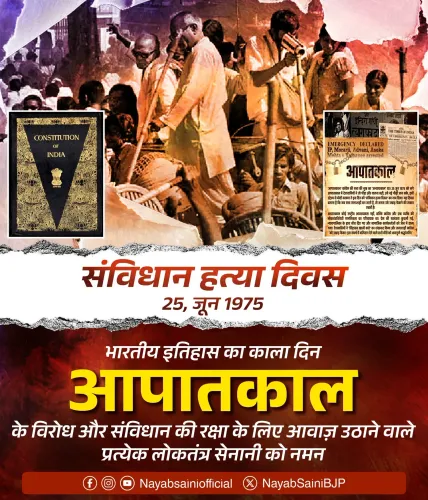
Haryana Chief Minister Nayab Singh Saini on Thursday, 25 June 2026 marked the 51st anniversary of the Emergency by condemning the 1975 suspension of constitutional rights, calling it a dark chapter in Indian democratic history driven by the arrogance of power.
Context
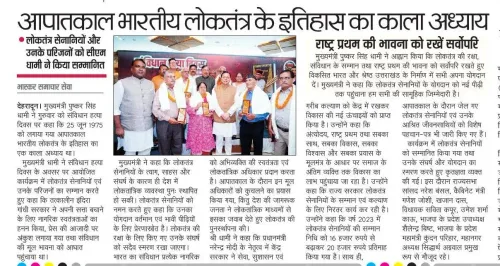
In his post, CM Saini wrote that '25 जून 1975 भारतीय लोकतंत्र के इतिहास का वह काला अध्याय है' — '25 June 1975 is that dark chapter in the history of Indian democracy' — when the then Congress government led by Prime Minister Indira Gandhi imposed the Emergency on the entire country, attempting to crush the soul of the Constitution in the arrogance of power. He noted that the fundamental rights of citizens were snatched away.
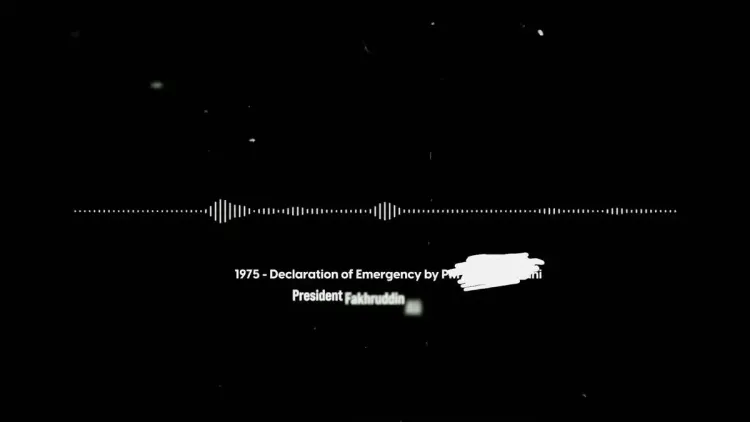
The post was accompanied by a video and was shared in the early hours of the anniversary, signalling a deliberate, timed statement on a politically significant date.
Policy Backdrop
The Emergency was proclaimed on 25 June 1975 under Article 352 of the Constitution by the Indian National Congress government headed by Prime Minister Indira Gandhi. It remained in force for 21 months, until it was revoked on 21 March 1977 ahead of national elections.
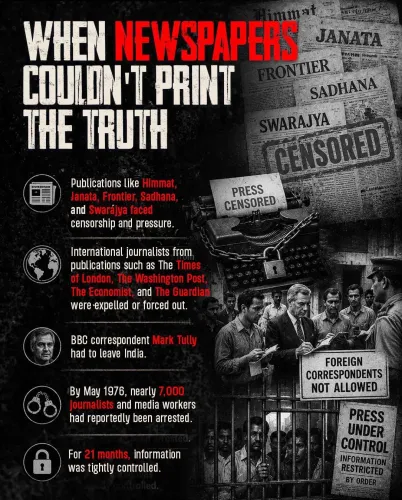
During this period, fundamental rights of citizens were suspended, the press was censored, and opposition leaders were detained without trial. The revocation of the Emergency and the subsequent 1977 general elections — which the Congress lost — are widely regarded as a defining moment in the restoration of Indian constitutional democracy.
Stakeholders and Impact
The BJP has consistently used the 25 June anniversary to draw a political contrast between what it frames as Congress-era executive overreach and its own constitutional record. Statements from BJP chief ministers and central leaders on this date form part of a sustained annual political narrative.
Civil liberties advocates and opposition parties — particularly the Congress — typically respond to such statements, often offering alternative readings of the Emergency's causes and legacy. The anniversary thus functions as a recurring flashpoint in the broader contest over India's democratic memory.
What's Next
State-level commemorative events organised by BJP-governed states around the anniversary are expected to amplify the messaging further. A rebuttal from the Congress party is anticipated, as it has historically contested the BJP's framing of the Emergency as solely an act of authoritarian excess, pointing instead to the political circumstances of the time.
As the 51st anniversary passes, the Emergency debate continues to serve as a live fault line between India's two largest national parties — a reminder that the politics of historical memory remain as consequential as current policy.
Point of View
' 'fundamental rights' — the BJP positions itself as the custodian of democratic norms, a framing that gains particular traction ahead of any electoral cycle. The Emergency debate has proven durable precisely because it offers both parties a morally charged historical battlefield: the BJP uses it to define Congress as inherently authoritarian, while Congress contests that narrative with arguments about judicial and political context. For state-level BJP leaders like Saini, participating in this annual commemoration is also a signal of ideological alignment with the central party leadership.
NationPress
23 Sept 2026
Frequently Asked Questions
What is the Emergency of 1975 that CM Saini is referring to?
The Emergency refers to the 21-month period from 25 June 1975 to 21 March 1977 during which Prime Minister Indira Gandhi's Congress government suspended fundamental rights and curtailed civil liberties under Article 352 of the Constitution.
Why does the BJP mark 25 June every year?
The BJP marks 25 June annually as a reminder of what it calls Congress-era executive overreach, using the Emergency anniversary to contrast the suspension of democratic norms in 1975 with the constitutional restoration that followed the 1977 elections.
What did Nayab Singh Saini say about the 1975 Emergency?
CM Saini said that 25 June 1975 is a dark chapter in Indian democratic history, when the Congress government led by Indira Gandhi imposed the Emergency out of arrogance of power, attempting to crush the soul of the Constitution and snatching away citizens' fundamental rights.
How long did the 1975 Emergency last in India?
The Emergency lasted 21 months, proclaimed on 25 June 1975 under Article 352 and revoked on 21 March 1977 ahead of national elections.
Who is Nayab Singh Saini?
Nayab Singh Saini is the Chief Minister of Haryana and a senior leader of the Bharatiya Janata Party (BJP).