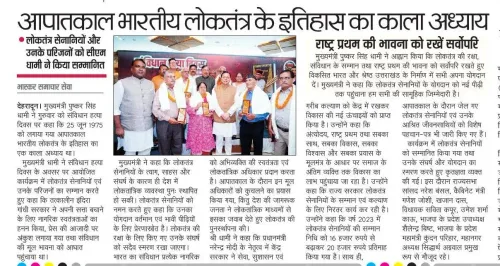
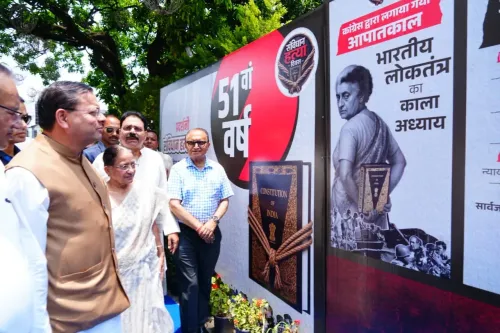
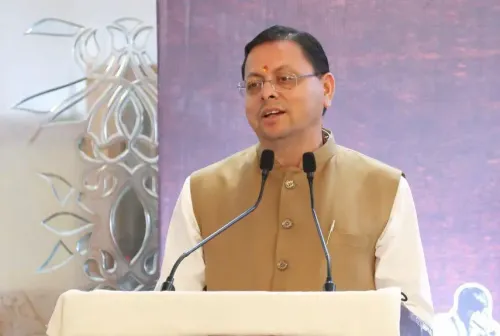
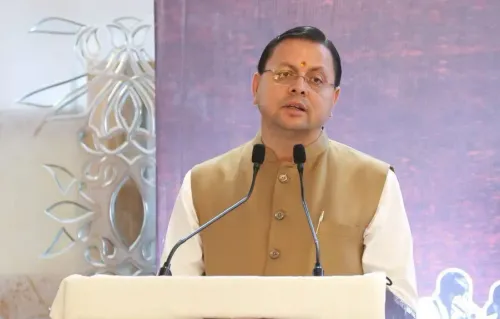
CM Dhami marks 1975 Emergency as dark chapter in democracy
Synopsis
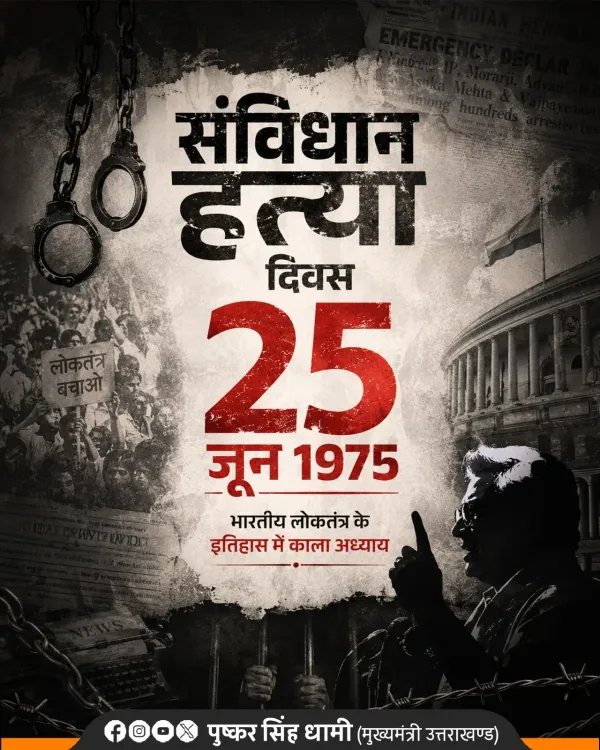
On the 51st anniversary of India's Emergency, Uttarakhand CM Pushkar Singh Dhami condemned the 1975 Congress government's proclamation as an assault on democracy, honouring citizens and political workers who resisted the suspension of fundamental rights and press freedom.
Key Takeaways
Uttarakhand CM Pushkar Singh Dhami posted on 25 June 2026 to mark the 51st anniversary of the Emergency proclaimed in 1975 .
He described the Emergency as 'a dark chapter in the history of Indian democracy' and a 'deep blow to democratic values and constitutional dignity.' The post highlighted suppression of freedom of expression , silencing of the press, and imprisonment of lakhs of citizens and political workers without trial.
The Emergency was proclaimed under Article 352 on 25 June 1975 and lasted until 21 March 1977 , a period of 21 months .
Dhami paid tribute to all 'guardians of democracy' whose resistance he credited with keeping India a 'vibrant democracy' today.
BJP leaders mark 25 June annually as part of a sustained political narrative contrasting their governance with the Congress-era Emergency period.
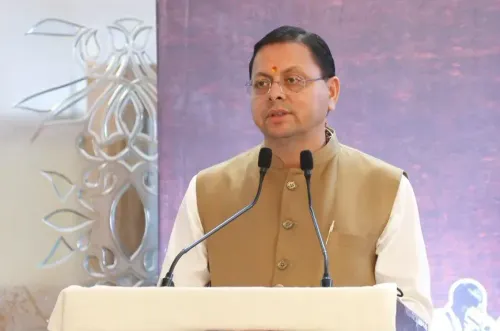
Uttarakhand Chief Minister Pushkar Singh Dhami on Thursday, 25 June 2026, marked the 51st anniversary of the proclamation of the Emergency by condemning the 1975 Congress government's decision as a direct assault on India's constitutional order and democratic values. Posting on X, he paid tribute to all those who resisted authoritarian rule during the 21-month Emergency period.
Context
In his post, CM Dhami wrote that on this day in 1975, the then Congress government, 'satta ke ahankaar mein doobee' (drowned in the arrogance of power), imposed the Emergency on the country, writing, in his words, 'a dark chapter in the history of Indian democracy.' He noted that freedom of expression was suppressed, the press was silenced, and lakhs of citizens and political workers were imprisoned without trial. He further stated that fundamental rights guaranteed by the Constitution were severely curtailed.
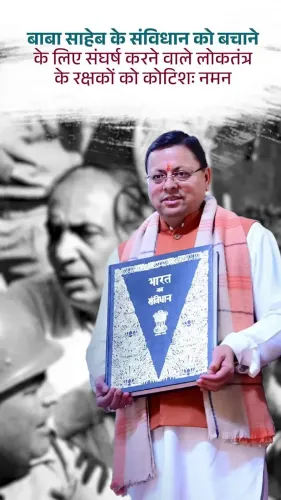
Dhami described the Emergency not merely as a political decision but as 'a deep blow to democratic values and constitutional dignity.' He offered his salutations — 'kotishaḥ naman' (countless salutes) — to all guardians of democracy who resisted oppression even in those adverse circumstances, crediting their 'indomitable courage' for India remaining a 'vibrant democracy' today.
Policy Backdrop
The Emergency was proclaimed on 25 June 1975 by the government of then Prime Minister Indira Gandhi under Article 352 of the Constitution, and remained in force until 21 March 1977. During this period, civil liberties were suspended, the press was placed under censorship, and prominent opposition leaders — including Jayaprakash Narayan, who had led a nationwide movement against the government — were detained.
The general elections of March 1977 resulted in a decisive defeat for the Indian National Congress and the formation of the first non-Congress central government under the Janata Party. The subsequent 44th Constitutional Amendment of 1978 narrowed the grounds on which Emergency could be declared and strengthened judicial review, reflecting the political consensus that the 1975 proclamation had been an abuse of constitutional provisions.
Stakeholders and Impact
The Emergency's most direct victims were journalists, opposition politicians, trade unionists, and ordinary citizens who were detained under the Maintenance of Internal Security Act (MISA) and other preventive detention laws. Press censorship effectively muzzled independent reporting for the duration of the period, a fact that Dhami specifically highlighted in his post.
BJP leaders have consistently marked 25 June each year as a reminder of Congress-era authoritarianism, framing it as a cautionary moment in India's democratic history. The annual commemoration forms part of a broader political narrative contrasting the BJP's governance record with the 1975–77 period, and such statements tend to intensify during election cycles or when constitutional debates resurface in Parliament.
What's Next
The Congress party is expected to respond to statements made by BJP leaders on the Emergency anniversary, as it has in previous years. Any such exchange could spill into the upcoming monsoon session of Parliament, where constitutional and civil liberties issues are likely to feature in debates. State-level political campaigns in Uttarakhand and other BJP-governed states may also see the Emergency narrative deployed as a contrast point against the opposition.
As India continues to debate the health of its democratic institutions, annual commemorations like this one serve as a recurring flashpoint between the ruling party and the Congress, keeping the memory of 1975–77 alive in contemporary political discourse.
Point of View
Keeping the memory of the Emergency embedded in public consciousness. By framing the 1975 proclamation as rooted in 'arrogance of power' rather than a constitutional response to a political crisis, the statement positions the BJP as the inheritor of the democratic resistance led by figures like Jayaprakash Narayan. The tribute to unnamed 'guardians of democracy' is deliberately broad, allowing the party to claim a lineage that extends beyond its own cadre to the wider Janata-era coalition. With the monsoon session of Parliament approaching, such statements also serve as pre-emptive framing ahead of debates on civil liberties and constitutional governance.
NationPress
23 Sept 2026
Frequently Asked Questions
Why is 25 June significant in Indian political history?
25 June 1975 is the date on which then Prime Minister Indira Gandhi advised the proclamation of a national Emergency under Article 352 of the Constitution, suspending fundamental rights and press freedom for 21 months until March 1977 .
What did CM Dhami say about the 1975 Emergency?
Uttarakhand CM Pushkar Singh Dhami called the Emergency 'a dark chapter in the history of Indian democracy,' stating that freedom of expression was suppressed, the press was silenced, and lakhs of citizens were jailed without trial. He paid tribute to all who resisted the authoritarianism of that period.
How long did the Emergency of 1975 last?
The Emergency lasted 21 months , from 25 June 1975 to 21 March 1977 , ending after the Congress party's defeat in the general elections of March 1977.
Why do BJP leaders mark 25 June every year?
BJP leaders annually commemorate 25 June to highlight what they describe as the Congress party's authoritarian record during the 1975–77 Emergency , contrasting it with their own governance and positioning the BJP as a defender of democratic and constitutional values.
What constitutional changes followed the 1975 Emergency?
The 44th Constitutional Amendment of 1978 , passed after the Janata government came to power, narrowed the grounds on which Emergency could be proclaimed and strengthened judicial review, to prevent a repeat of the 1975 situation.