CM Dhami marks Samvidhan Hatya Diwas, slams Emergency
Synopsis
Uttarakhand Chief Minister Pushkar Singh Dhami marked 25 June 2026 as Samvidhan Hatya Diwas, accusing the Congress of crushing democracy, imprisoning voices, and wounding the Constitution during the 21-month Emergency proclaimed in 1975.
Key Takeaways
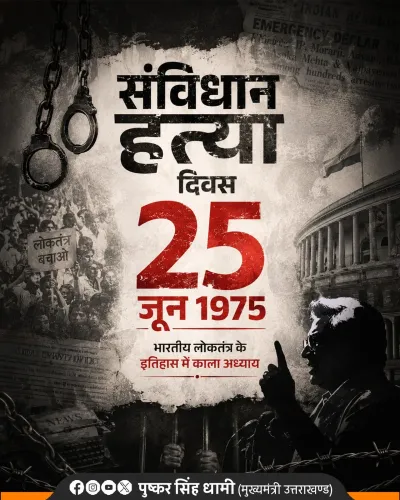
Uttarakhand CM Pushkar Singh Dhami posted on X on 25 June 2026 condemning the Congress over the 1975 Emergency .
He used the hashtag #SamvidhanHatyaDiwas , calling the day the 'Day of Constitutional Murder.' The Emergency lasted 21 months from 25 June 1975 , during which fundamental rights were suspended under Article 352 .
The BJP has observed 25 June as Samvidhan Hatya Diwas annually since 2014 to contrast its record with the Congress era.
Congress spokespersons and other BJP chief ministers are expected to respond and amplify the narrative respectively through the day.
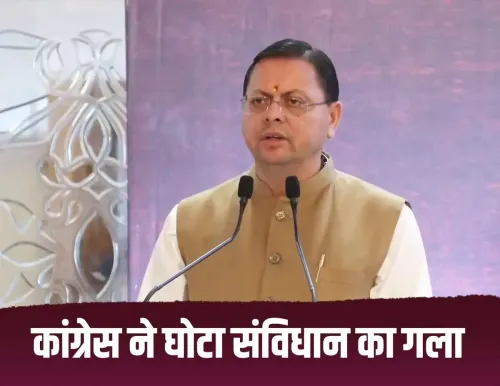
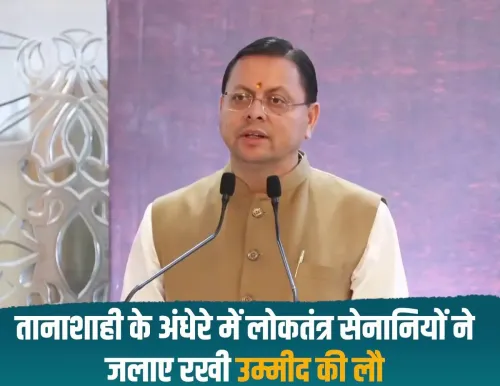
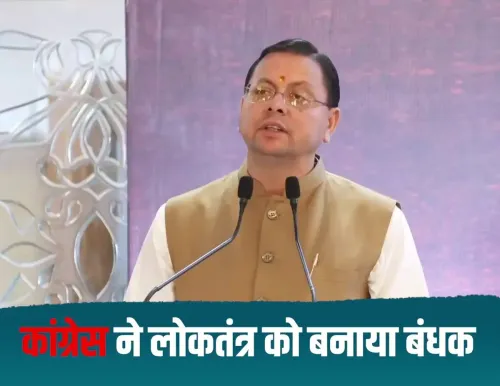
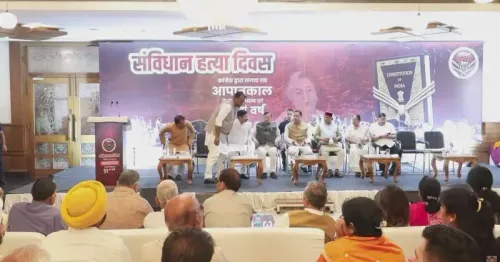
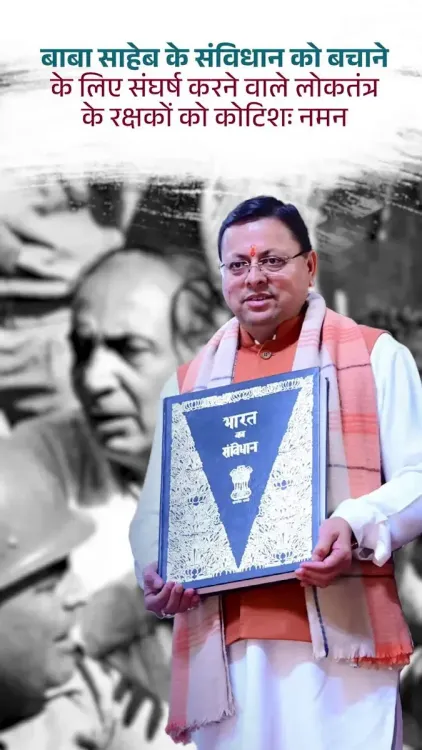
Uttarakhand Chief Minister Pushkar Singh Dhami on Thursday, 25 June 2026 marked the 51st anniversary of the declaration of the Emergency of 1975 by condemning the Indian National Congress, accusing the party of crushing democracy to cling to power. Dhami posted on X, calling the day Samvidhan Hatya Diwas — the Day of Constitutional Murder — and charged that voices were imprisoned and the soul of the Constitution was wounded.
In his post, Dhami wrote: 'Aapatkal ke bahane Congress ne satta bachane ki zid mein loktantra ko kuchhal diya, aawazein qaid kar di gayin aur Samvidhan ki aatma ko aahat kiya gaya' — translated: 'Using the Emergency as a pretext, Congress, in its desperation to retain power, crushed democracy, imprisoned voices, and wounded the soul of the Constitution.'
Context
On 25 June 1975, the government of then Prime Minister Indira Gandhi advised the President of India to proclaim a national Emergency under Article 352 of the Constitution, citing internal disturbance. The proclamation ushered in a 21-month period during which fundamental rights were suspended, press freedom curtailed, and thousands of political opponents detained without trial. The Emergency was lifted in March 1977 after elections were called and the Congress was voted out of power.
Policy Backdrop
Since 2014, the Bharatiya Janata Party (BJP) has institutionalised 25 June as Samvidhan Hatya Diwas — a day to publicly recall what it describes as the Congress's assault on constitutional democracy. The observance is deployed in election cycles and parliamentary debates to draw a sharp contrast between the BJP's stated commitment to constitutional governance and what it frames as the Congress's historical record of authoritarian rule. Dhami's post is part of this coordinated annual political messaging.
The hashtag #SamvidhanHatyaDiwas accompanying the post is a recurring BJP campaign marker, typically trending on social media on this date as party leaders across states issue similar statements. The framing positions the Emergency not merely as a historical episode but as a live political argument about which party can be trusted with democratic institutions.
Stakeholders and Impact
The statement is directed primarily at Congress as an institution, invoking the memory of citizens, journalists, and opposition leaders who were detained or silenced during 1975–77. Civil liberties groups and constitutional scholars have long documented the Emergency's toll on press freedom and judicial independence, providing a factual foundation that the BJP draws upon for its annual commemorations.
For the Congress party, the anniversary is a recurring reputational challenge. The party has in past years acknowledged the Emergency as a 'mistake' while arguing that the current political climate poses its own threats to democratic norms — a counter-narrative that Congress spokespersons are expected to reiterate in response to statements like Dhami's.
What's Next
Responses from Congress spokespersons are expected within hours, and parallel statements from other BJP chief ministers and senior party leaders are likely to follow through the day, amplifying the Samvidhan Hatya Diwas narrative across states. The anniversary also tends to surface in parliamentary proceedings when in session, with BJP members raising the Emergency as a historical reference point in debates on civil liberties and constitutional values. How the Congress chooses to respond in 2026 — whether with a counter-offensive or relative silence — will shape the political news cycle heading into the weekend.
Point of View
' the party has transformed a historical grievance into a recurring electoral and rhetorical weapon, one that forces the Congress to either defend an indefensible episode or cede the constitutional-values argument. The framing is especially potent because it uses the Congress's own record to contest the party's self-image as the original guardian of the Constitution. As both parties increasingly fight over the symbolic ownership of constitutional democracy, anniversaries like this one are becoming as politically charged as any live policy dispute.
NationPress
24 Sept 2026
Frequently Asked Questions
What is Samvidhan Hatya Diwas?
Samvidhan Hatya Diwas, meaning 'Day of Constitutional Murder,' is observed by the BJP on 25 June each year to mark the anniversary of the Emergency proclaimed in 1975 by the Indira Gandhi government, during which fundamental rights and press freedom were suspended for 21 months.
Why did Pushkar Singh Dhami post about the Emergency on 25 June 2026?
25 June 2026 marks the 51st anniversary of the declaration of the 1975 Emergency. Dhami, as Uttarakhand Chief Minister and BJP leader, posted to condemn the Congress for what he called crushing democracy and wounding the Constitution, in line with the BJP's annual observance of Samvidhan Hatya Diwas.
What was the Emergency of 1975?
The Emergency was a 21-month period beginning 25 June 1975 when the Indira Gandhi government invoked Article 352 of the Constitution citing internal disturbance. Fundamental rights were suspended, thousands of political opponents were detained, and press freedom was curtailed until the Emergency was lifted in March 1977.
How has the BJP used the Emergency anniversary politically?
Since 2014, the BJP has annually marked 25 June as Samvidhan Hatya Diwas, issuing coordinated statements by party leaders and chief ministers to contrast its record with the Congress-era suspension of civil liberties. The narrative is regularly deployed in election campaigns and parliamentary debates.
What is the Congress party's response to Samvidhan Hatya Diwas?
The Congress has in past years acknowledged the Emergency as a mistake while arguing that current political conditions pose their own risks to democratic norms. Congress spokespersons are expected to issue counter-statements in response to BJP leaders' posts on the anniversary.