CM Dhami: Purnagiri Dham sees 6 lakh more pilgrims in a year
Synopsis
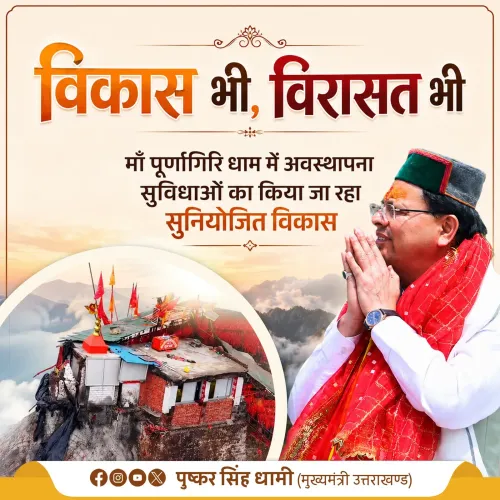
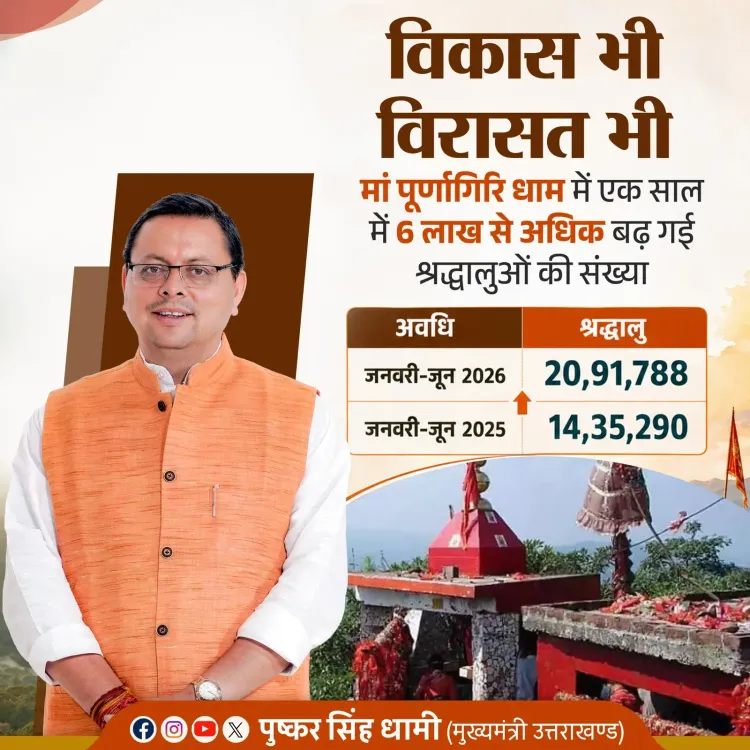
Uttarakhand CM Pushkar Singh Dhami credits upgraded temple facilities for a surge of over 6 lakh pilgrims at Maa Purnagiri Dham in a single year, framing it as proof of his government's 'development plus heritage' approach to religious tourism.
Key Takeaways
CM Pushkar Singh Dhami announced on 9 August 2026 that Maa Purnagiri Dham recorded a rise of over 6 lakh pilgrims in one year.
The government attributes the surge to expansion of basic amenities and improved pilgrim facilities at the shrine.
Purnagiri Dham is a Shakti Peeth dedicated to Goddess Durga, located in Champawat district, Uttarakhand .
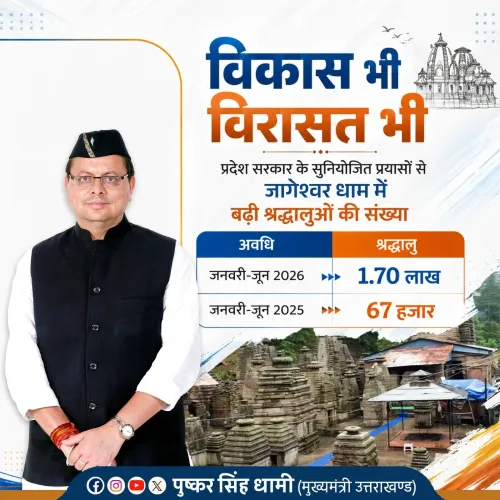
The Dhami government's guiding principle is 'Vikas bhi, Virasat bhi' — balancing development with cultural heritage at religious sites.
The approach is part of a broader BJP-led state strategy treating religious tourism as both a cultural priority and an economic driver.
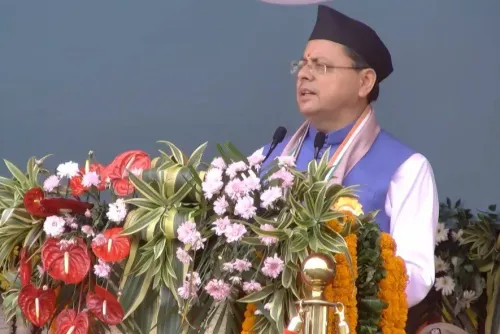
A 6-lakh surge in pilgrims at a single temple in a single year is not a coincidence — it is a policy result. Uttarakhand Chief Minister Pushkar Singh Dhami on Sunday, 9 August 2026, pointed to that number at Maa Purnagiri Dham as proof that the state's temple-infrastructure push is delivering on the ground.
Posting in Hindi, CM Dhami said his government is ensuring 'planned development of temples in Devbhoomi Uttarakhand' under the guiding principle of 'Vikas bhi, Virasat bhi' — 'Development as well as Heritage.' He credited the expansion of basic amenities and improved pilgrim facilities at shrines for the footfall jump at Purnagiri Dham, one of the state's most venerated Shakti Peethas.
What Purnagiri Dham's numbers signal
Maa Purnagiri Dham, nestled in Champawat district in the Kumaon hills, draws lakhs of devotees each year for its association with Goddess Durga. A rise of over 6 lakh visitors in one year is a meaningful jump for a site that already had a substantial pilgrim base — it speaks to both improved accessibility and growing interest in religious tourism across the region.
Uttarakhand has long carried the identity of Devbhoomi — the land of the gods — owing to its dense concentration of Hindu pilgrimage sites. The current BJP-led administration has leaned into that identity as a development lever, channelling infrastructure investment into temple corridors alongside the better-known Char Dham circuit. Purnagiri's numbers suggest that strategy is reaching beyond the headline sites.
The 'Vikas bhi, Virasat bhi' blueprint in practice
The phrase 'Vikas bhi, Virasat bhi' has functioned as the Dhami government's shorthand for a dual-track approach: modernise the pilgrim experience — parking, sanitation, pathways, connectivity — without disturbing the sanctity of the shrine. It mirrors a broader pattern visible across BJP-governed states, where religious tourism is treated as both a cultural obligation and an economic engine.
Uttarakhand's temple-infrastructure drive has roots going back to the early 2010s, when post-disaster rebuilding after the 2013 Kedarnath floods forced a rethink of how the state managed its pilgrimage economy. What began as reconstruction has since evolved into a systematic upgrade programme. Purnagiri's pilgrim surge is the latest data point in that longer arc.
With the state's annual pilgrim statistics for other major temples yet to be consolidated, Purnagiri's performance will set a benchmark — and a pressure test — for how the government measures the returns on its temple-development spending.
Point of View
Quantifiable win to anchor its 'Vikas bhi, Virasat bhi' narrative ahead of any electoral cycle — turning a cultural commitment into a measurable governance outcome. It also reflects a wider BJP playbook of using religious-tourism infrastructure as a proxy for development credentials in Hindi-heartland states. The risk in this framing is over-reliance on footfall as the sole metric: higher pilgrim volumes can strain local ecosystems and heritage sites if capacity planning does not keep pace. How Uttarakhand balances throughput with sustainability at Purnagiri and other shrines will define whether this is durable policy or a one-cycle headline.
NationPress
23 Sept 2026
Frequently Asked Questions
Why did pilgrim numbers increase at Purnagiri Dham?
Chief Minister Dhami attributes the rise of over 6 lakh pilgrims in one year to the Uttarakhand government's expansion of basic amenities and improved facilities at the shrine, part of its broader temple-development programme.
Where is Maa Purnagiri Dham located?
Maa Purnagiri Dham is a Shakti Peeth temple dedicated to Goddess Durga, situated in Champawat district in the Kumaon region of Uttarakhand.
What does 'Vikas bhi, Virasat bhi' mean?
It is the Dhami government's guiding principle, translating to 'Development as well as Heritage' — meaning the state aims to modernise pilgrim infrastructure at temples without compromising their cultural and religious sanctity.
What is Uttarakhand's temple development policy?
The BJP-led Uttarakhand government has been investing in infrastructure upgrades — roads, sanitation, pathways, and facilities — at major pilgrimage sites across the state, including the Char Dham circuit and Shakti Peethas like Purnagiri Dham.
Is Purnagiri Dham part of the Char Dham yatra?
Purnagiri Dham is not part of the Char Dham circuit but is one of Uttarakhand's most significant Shakti Peethas, drawing large independent pilgrim crowds, particularly from the Kumaon region and neighbouring states.