Rajnath Singh joins soldiers for Diwali Bada Khana at Sukna
Synopsis
Union Defence Minister Rajnath Singh visited Sukna Military Station on Diwali eve to participate in the Indian Army's traditional Bada Khana feast, sitting alongside troops deployed at the strategically vital Siliguri Corridor and saluting their sacrifice.
Key Takeaways
Rajnath Singh attended the traditional Bada Khana at Sukna Military Station , West Bengal, on the eve of Diwali, 7 November 2026 .
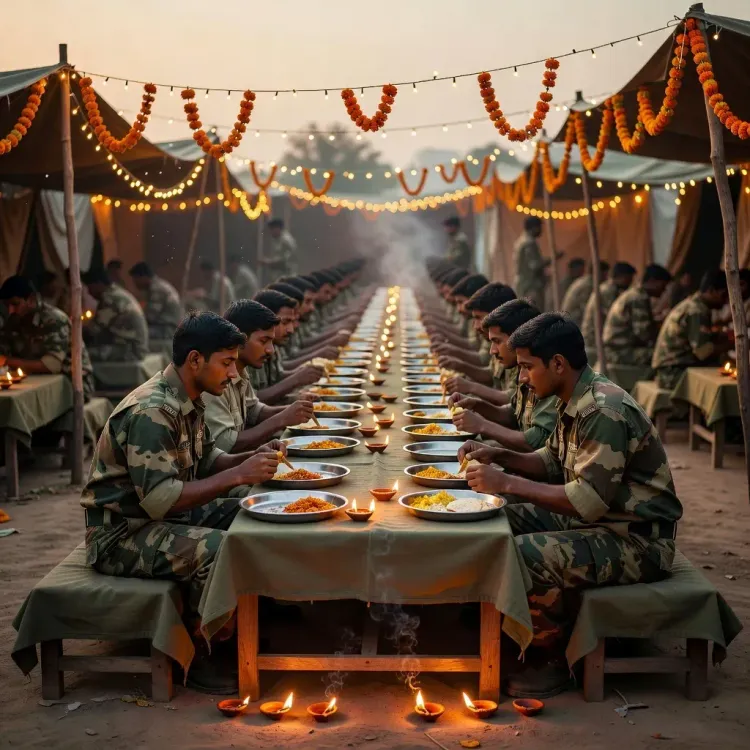
The Bada Khana is an Indian Army festival tradition where all ranks dine together as equals, reinforcing unit cohesion and morale.
Sukna Military Station is located near the Siliguri Corridor , a critical artery linking mainland India to the Northeast, bordering China, Bhutan, Nepal, and Bangladesh.
Singh reframed the Northeast as India's 'glorious beginning' — the first region to receive sunlight each day — pushing back against its characterisation as remote or peripheral.
The visit is part of a long-standing tradition of senior defence leadership spending festival eve with forward-deployed troops to sustain morale in isolated postings.
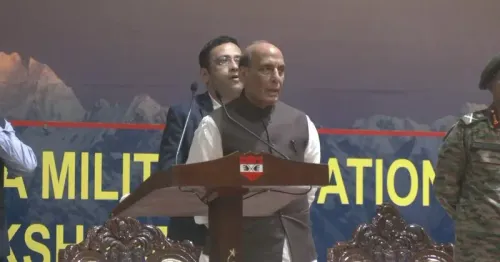
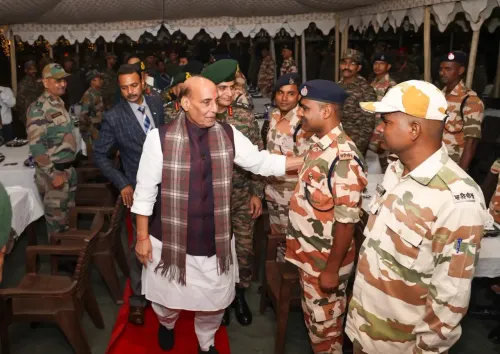
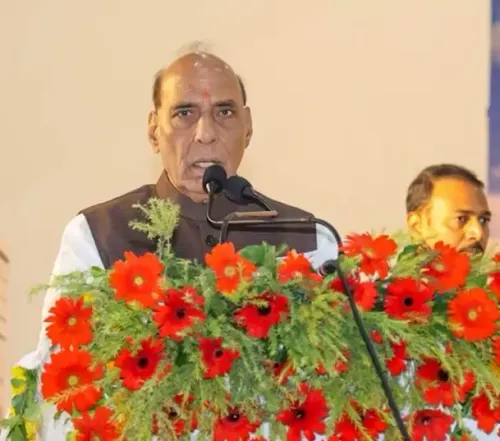
On the eve of Diwali, Union Defence Minister Rajnath Singh travelled to Sukna Military Station in West Bengal to sit down for the traditional Bada Khana — the Indian Army's time-honoured collective feast where rank dissolves and every soldier eats as one. The visit, on Saturday, 7 November 2026, placed the country's top civilian defence authority shoulder-to-shoulder with troops deployed at one of India's most strategically sensitive eastern stations.
Where rank fades and one family remains
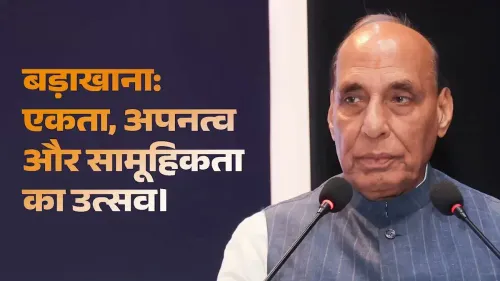
The Bada Khana — literally 'big meal' — is among the Indian Army's most cherished traditions. Held on the occasion of major festivals, it erases the hierarchy of uniform: generals and jawans share the same table, the same food, the same laughter. Singh described the gathering as 'a true celebration of collectiveness, where ranks fade and we all sit together as one family.' For personnel stationed far from home, the ritual carries weight that no ceremonial parade can replicate.
Sukna Military Station, nestled near the Siliguri Corridor — the narrow strip of land connecting the Northeast to the Indian mainland — is no ordinary posting. It sits at the nerve centre of India's eastern military operations, a forward node for logistics and security in a region that borders Bangladesh, Bhutan, Nepal, and China. The soldiers here do not merely guard a frontier; they hold the geographic hinge of the entire northeast.
The Northeast as India's 'glorious beginning'
Singh offered a reframe of geography that cuts against the old, dismissive shorthand of 'remote northeast.' 'The North East is not the far end of India,' he said, 'but its glorious beginning — the first region to witness the sunrise and touch the day's first light.' It is a line that lands with particular resonance at Sukna, where every dawn breaks over the Himalayas before the rest of the country has stirred.
The sentiment reflects a deliberate and sustained shift in New Delhi's strategic vocabulary — one that has been building through successive administrations but has sharpened considerably in recent years as eastern border infrastructure, troop deployments, and connectivity projects have accelerated across the eight northeastern states.
A salute to those who make festivals possible for others
The core of Singh's message was not strategic — it was human. He acknowledged what millions of Indian families already know: that every peaceful Diwali at home is underwritten by soldiers who spend the festival away from their own. 'The indomitable courage, supreme dedication, and soaring morale of our soldiers are what give the entire nation the confidence to celebrate festivals with peace and security,' he wrote, closing with a direct salute: 'My salute to these brave sons of Bharat Mata!'
Indian defence ministers and service chiefs have long maintained the tradition of visiting forward stations on festival eves — a practice as much about sustaining morale in remote postings as about symbolic solidarity. What makes such visits matter beyond the photograph is the consistency of the gesture: soldiers in isolated stations know that the institution remembers them when the rest of the country is lighting diyas.
This Diwali, that reminder came from the defence minister himself, sitting cross-legged at Sukna, sharing a plate — and, for a few hours, a family.
Point of View
The government signals sustained institutional attention to the Northeast's security architecture. The 'glorious beginning' framing is not incidental — it aligns with years of infrastructure investment and connectivity drives aimed at tightening the region's integration with the national mainstream. For troops at a high-sensitivity posting like Sukna, the visit carries real morale value; for the broader public, it anchors a festival narrative around the military covenant. The consistency of such gestures across administrations also suggests they have become an institutional expectation rather than a discretionary political choice.
NationPress
7 Nov 2026
Frequently Asked Questions
What is Bada Khana in the Indian Army?
Bada Khana — meaning 'big meal' — is a traditional Indian Army collective feast held during festivals and special occasions where soldiers of all ranks dine together, symbolising unity and brotherhood within the force.
Where is Sukna Military Station located?
Sukna Military Station is located in West Bengal near the Siliguri Corridor , a narrow strip of land that is the sole land link between mainland India and the northeastern states, making it a strategically critical military base.
Why did Rajnath Singh visit Sukna on Diwali eve?
Union Defence Minister Rajnath Singh visited Sukna Military Station on Diwali eve to participate in the traditional Bada Khana feast and spend time with troops deployed away from their families, a long-standing practice to boost morale at forward stations during festivals.
Why is the Northeast called India's first region to see sunrise?
India's northeastern states are geographically the easternmost part of the country, so they receive the first light of the sun each day before any other region of India — a fact Singh invoked to describe the Northeast as India's 'glorious beginning.'
Is it common for the defence minister to visit troops on Diwali?
Yes. Indian defence ministers and service chiefs have a well-established tradition of visiting forward military stations on the eve of major festivals like Diwali to share meals with deployed personnel and acknowledge their sacrifice of being away from families.