Akhilesh targets Yogi over Ram Mandir donation theft case
Synopsis
Akhilesh Yadav publicly challenged CM Yogi Adityanath over an unresolved Ram Mandir donation-theft case, alleging selective justice, declaring Ayodhya 'humiliated by BJP corruption,' and warning of a decisive BJP defeat in the city in the 2027 UP assembly elections.
Key Takeaways
Akhilesh Yadav on 7 November 2026 demanded CM Yogi Adityanath answer when the Ram Mandir donation-theft case will reach genuine accountability.
He alleged that the investigation has shielded the principal accused while lower-level figures have been arrested — 'the branch pardoned, the twig hanged.' Akhilesh declared Ayodhya 'tormented and humiliated by BJP corruption,' framing the sacred city as a BJP liability rather than a trophy.
He cited a claimed BJP 'double zero' result in Varanasi Legislative Council elections as a signal of eroding BJP support.
He warned that Ayodhya voters will deliver a 'five-zero score' against the BJP in the 2027 Uttar Pradesh assembly elections.
He invoked his PDA coalition (Backwards, Dalits, Minorities), claiming the entire city of Ayodhya has now aligned with it.
A temple city's grievance is now a political flashpoint. Samajwadi Party president Akhilesh Yadav on Saturday, 7 November 2026, turned the unresolved donation-theft scandal at the Ram Mandir in Ayodhya into a direct challenge to Chief Minister Yogi Adityanath, demanding to know when — or whether — the case will ever yield real accountability.
Posting in Hindi, Akhilesh framed the question as one coming from the people of Ayodhya themselves: 'Chadhava-chanda-daan chori ke mamle mein doodh ka doodh, paani ka paani kab hoga?' — 'When will truth be separated from falsehood in the offering-donation theft case?' The rhetorical edge was sharp: he had, he said, predicted the outcome of the inquiry all along — 'shaakh ko maafi, funghi ko phaansi' — 'the branch gets pardoned, the twig gets hanged.' In plain terms: the kingpin walks free while subordinates face arrest.
The allegation at the heart of Ayodhya's anger
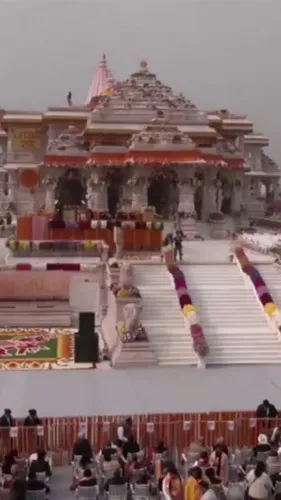
The Ram Mandir, inaugurated on 22 January 2024 under the Shri Ram Janmabhoomi Teerth Kshetra Trust, became one of the most closely watched religious projects in modern Indian history. Donations — chadhava — poured in from across the country. Allegations of misappropriation of that sacred money have since surfaced, and Akhilesh's post claims the investigation has been managed to shield the principal accused while lower-level figures have been arrested. 'The ringleader is still in place, and his servants are behind bars,' he wrote.
Akhilesh declared that Ayodhya is now 'BJP ke bhrashtachar se prataadit, dukh, apmaapit' — 'tormented, aggrieved, and humiliated by BJP's corruption.' The language is deliberately emotive, invoking the very city that the ruling party has positioned as its cultural and electoral crown jewel.
Varanasi's 'double zero' and Ayodhya's electoral warning
Akhilesh did not stop at the corruption charge. He pivoted to electoral arithmetic, pointing to what he described as a BJP 'double zero' result in Varanasi in the Legislative Council elections as evidence of a shifting political tide. He then issued a direct warning: Ayodhya's voters, he said, will deliver a 'five-zero score' against the BJP in the assembly elections, ending the party's presence there permanently.
The reference to PDA — his coalition shorthand for Pichhda, Dalit, Alpsankhyak (Backwards, Dalits, Minorities) — was pointed: 'The entire city of Ayodhya has itself become PDA,' he wrote, suggesting that even in BJP's most symbolic stronghold, the social coalition Akhilesh has built is taking hold.
Why Ayodhya matters ahead of 2027
The 2027 Uttar Pradesh assembly elections make every charge against the BJP in Ayodhya carry outsized weight. The city was central to the BJP's political identity — the Ram Mandir inauguration was a defining moment for the party nationally. Any credible narrative of corruption linked to temple donations strikes at both the governance record and the moral authority the BJP has claimed in that space.
For Akhilesh, the strategy is clear: convert a local corruption allegation into a state-wide trust deficit, and frame Ayodhya not as BJP's trophy but as BJP's liability. Whether the investigation produces the accountability residents are demanding will determine whether this charge lands or fades before polling day.
The people of Ayodhya, Akhilesh is betting, have a longer memory than the inquiry does.
Point of View
But its potency here lies in the target: Ayodhya. If the donation-theft case remains unresolved by 2027, it hands the SP a persistent, emotionally resonant charge in a constituency the BJP cannot afford to lose. The PDA framing layered on top signals that Akhilesh is simultaneously running a social-coalition argument alongside the corruption one — a two-front attack designed to peel away both moral credibility and caste arithmetic from the ruling party.
NationPress
7 Nov 2026
Frequently Asked Questions
What is the Ram Mandir donation theft case Akhilesh Yadav is referring to?
Akhilesh Yadav is referring to allegations of misappropriation of donations — chadhava — collected at the Ram Mandir in Ayodhya. He claims the investigation has shielded the main accused while lower-level individuals have been arrested, and he is demanding transparent accountability from the UP government.
What did Akhilesh Yadav say about CM Yogi Adityanath and Ayodhya?
Akhilesh said the people of Ayodhya are asking CM Yogi when truth will prevail in the donation-theft case. He alleged the inquiry has been a cover-up and declared Ayodhya 'tormented, aggrieved, and humiliated by BJP corruption.'
What is the PDA coalition Akhilesh Yadav mentioned in relation to Ayodhya?
PDA stands for Pichhda, Dalit, Alpsankhyak — Backwards, Dalits, and Minorities. It is the social coalition Akhilesh Yadav has been building as the SP's electoral base. He claimed that even Ayodhya, considered a BJP stronghold, has now aligned with this coalition.
What did Akhilesh Yadav predict for BJP in the 2027 UP assembly elections?
Akhilesh predicted that BJP will be completely wiped out in Ayodhya in the 2027 Uttar Pradesh assembly elections, scoring 'five zeros,' and pointed to what he described as a 'double zero' BJP result in Varanasi's Legislative Council elections as an early sign.
When was the Ram Mandir in Ayodhya inaugurated?
The Ram Mandir in Ayodhya was inaugurated on 22 January 2024 under the Shri Ram Janmabhoomi Teerth Kshetra Trust, with the UP state government playing a facilitative role in the project.