Akhilesh Yadav dares BJP's Ayodhya 'tourists' to speak up
Synopsis
SP president Akhilesh Yadav accused Ayodhya's 'political tourists' of staying silent over derogatory remarks about King Dasharatha, questioning their courage and influence ahead of the 2027 Uttar Pradesh assembly elections.
Key Takeaways
Akhilesh Yadav posted a sharp political attack on 7 November 2026 targeting leaders he called Ayodhya's 'political tourists.' He demanded to know whether they publicly condemned those who made derogatory remarks about Lord Ram's father, King Dasharatha.
Yadav alleged their silence proves their political influence has 'shrunk so much they lacked the courage to speak.' The post continues SP's pattern of turning BJP's Ayodhya narrative against it by highlighting perceived inconsistencies.
The attack is widely seen as part of early positioning ahead of the 2027 Uttar Pradesh assembly elections.
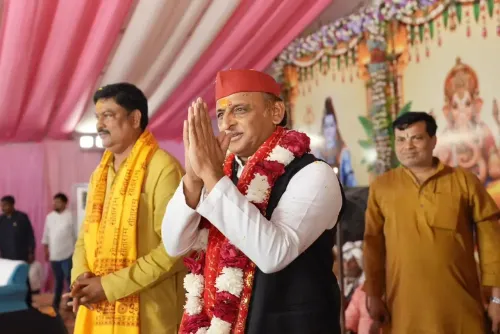
A sharp political needle landed on Saturday night when Samajwadi Party president Akhilesh Yadav called out what he described as Ayodhya's 'political tourists' — leaders who make high-visibility pilgrimages to the temple city for electoral optics but, he alleged, fell conspicuously silent when derogatory remarks were made about Lord Ram's father, King Dasharatha.
Posting on X on Saturday, 7 November 2026, the former Uttar Pradesh Chief Minister wrote in Hindi: 'Ayodhya ka rajnitik paryatan karnewaalon ne Bhagwan Ram ke pita ke baare mein apashabd kahnewalon par kuch bola ya nahin.' — 'Did those who do political tourism to Ayodhya say anything against those who used abusive words about Lord Ram's father? Perhaps their influence has shrunk so much that they did not even have the courage to speak. Departing in such weakness is not good.'
The 'political tourism' charge and what it targets
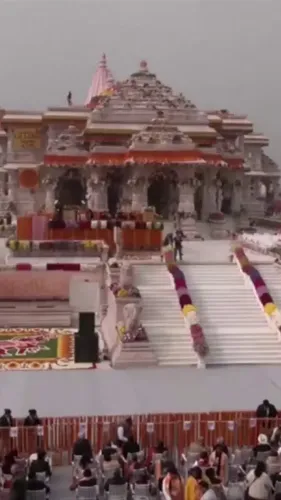
Yadav's phrasing — 'rajnitik paryatan', or political tourism — is a deliberate dig at rival leaders, widely understood to refer to BJP figures, who have made repeated visits to Ayodhya since the consecration of the Ram Janmabhoomi temple in January 2024. That inauguration was positioned by the ruling party as its defining cultural and electoral achievement in Uttar Pradesh. Yadav's argument is blunt: if Ayodhya is your political capital, you are obligated to defend its central deity's lineage — and your silence is evidence that your clout is fading.
The SP chief has used this rhetorical playbook before — turning BJP's religious nationalism back on itself by pointing to moments where the party or its allies appeared to hesitate or stay quiet on a religious controversy. The tactic is designed to peel away the credibility of opponents among the very voters who hold Ram's legacy most sacred.
Why this lands ahead of 2027
The timing is not accidental. Uttar Pradesh assembly elections in 2027 are already reshaping political calculations across the state. Ayodhya sits at the centre of that calculus — a symbol that every party must navigate carefully. SP's Yadav-Muslim support base is traditionally cast as distant from the Ram temple narrative, but Akhilesh has spent the post-2024 period aggressively contesting that framing, positioning himself as the one willing to call out what he sees as performative piety.
His closing line is the sharpest part of the post: 'Itne kamzor hokar vida hona achha nahin' — 'It is not good to leave in such weakness.' It reads less like a taunt and more like a political obituary notice — written, in Yadav's telling, by the silence of his opponents themselves.
Whether Congress, BJP, or other parties respond publicly will be the first signal of how much political heat this moment carries into the weeks ahead.
Point of View
Silent on insults to Ram's lineage. It signals SP's 2027 strategy: not to avoid the Ram discourse, but to fight inside it. The 'departing in weakness' line doubles as an early electoral verdict, framing BJP's alleged silence as organisational decline rather than restraint. If opponents do not respond, Yadav wins the news cycle; if they do, he has forced them onto terrain he chose.
NationPress
7 Nov 2026
Frequently Asked Questions
What did Akhilesh Yadav say about Ayodhya's political tourists?
Akhilesh Yadav accused leaders who make high-profile visits to Ayodhya for political visibility of staying silent when derogatory remarks were made about Lord Ram's father, King Dasharatha, calling their silence a sign of weakening influence.
Who are the 'political tourists' Akhilesh Yadav referred to?
Yadav did not name specific individuals, but the reference is widely understood to target BJP leaders who have frequently visited Ayodhya since the Ram Janmabhoomi temple consecration in January 2024.
What derogatory remarks about Dasharatha is Akhilesh Yadav referring to?
The specific remarks about King Dasharatha that Yadav references could not be independently verified from established public record at the time of this report.
Why is Akhilesh Yadav raising the Ayodhya issue now?
With Uttar Pradesh assembly elections due in 2027, Yadav is working to contest BJP's religious-political narrative around Ayodhya and position SP as willing to hold rivals accountable on the very ground they claim to own.
What is the significance of Ayodhya in UP politics?
Ayodhya has been a recurring electoral flashpoint in Uttar Pradesh since the 1990s. The consecration of the Ram Janmabhoomi temple in January 2024 made it BJP's centrepiece cultural achievement, making it a high-stakes arena for all parties ahead of 2027.