Akhilesh Yadav Targets BJP Over Ayodhya, Crime, Reservations
Synopsis
Samajwadi Party chief Akhilesh Yadav on June 18, 2026, accused BJP of making money its true religion, listing alleged wrongdoing in Ayodhya, crime in Gorakhpur, and a conspiracy against PDA communities' reservation entitlements — a three-pronged political salvo ahead of the 2027 UP polls.
Key Takeaways
Akhilesh Yadav posted on June 18, 2026 , accusing BJP and its allies of prioritising wealth over religious values.
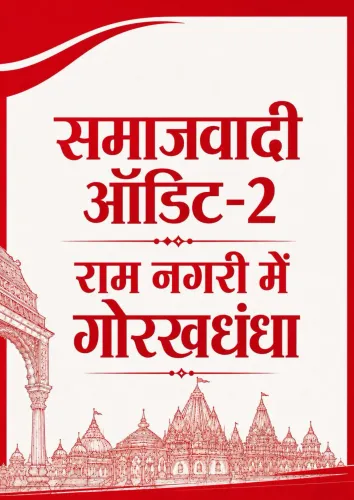
He alleged a 'mahaghotala' (mega scam) linked to the Ayodhya Ram Temple project.
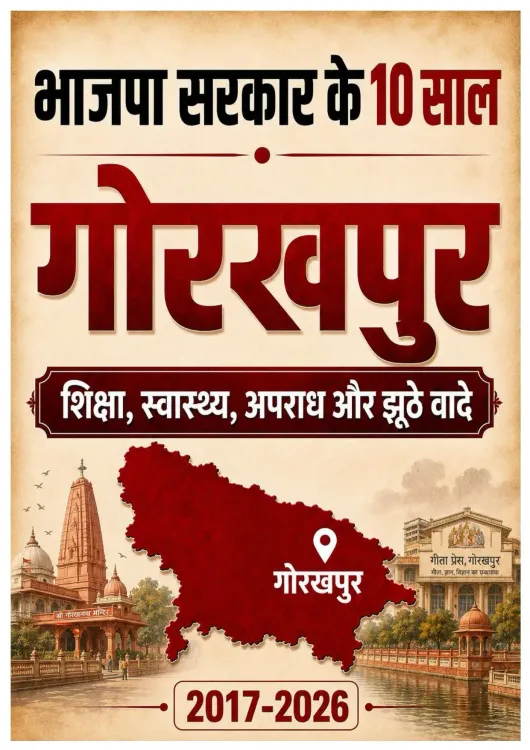
He claimed Gorakhpur — Chief Minister Yogi Adityanath's home constituency — has become Uttar Pradesh's number-one crime district.
He accused the BJP government of orchestrating a 'haqmaari ghotala' — a scheme to deny reservation rights to PDA communities (Backward, Dalit, and Minority).
The attack is consistent with the Samajwadi Party's PDA mobilisation strategy ahead of the 2027 Uttar Pradesh assembly elections .
Specific allegations regarding Ayodhya funds and Gorakhpur's crime ranking have not been confirmed by official public records.
Samajwadi Party president Akhilesh Yadav launched a three-pronged attack on the Bharatiya Janata Party on Thursday, June 18, 2026, accusing the ruling party and its allies of prioritising money over religion while flagging alleged wrongdoing in Ayodhya, law-and-order failures in Gorakhpur, and what he called a conspiracy against reservation rights of backward, Dalit, and minority communities.
Context
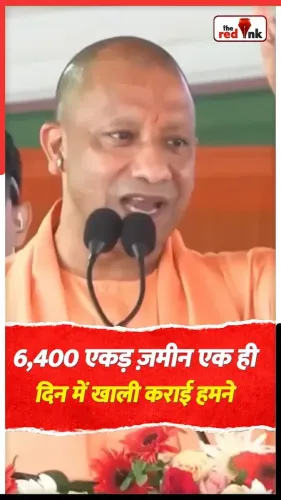
Posting on X, Yadav wrote — 'भाजपा और उसके संगी-साथियों के लिए धन ही धर्म है' — ('For the BJP and its associates, money itself is religion') — a pointed inversion of the party's Hindutva identity. He accompanied the post with four images and listed three specific charges: an 'Ayodhya mahapap-mahaghotala' (great sin and great scam in Ayodhya), Gorakhpur topping Uttar Pradesh in crime, and a 'PDA aarakshan haqmaari ghotala' (a scam robbing the PDA communities of their reservation rights).
The post carries no further elaboration beyond the bullet points, but each charge maps onto a distinct political battleground that the Samajwadi Party has been contesting since the BJP returned to power in Uttar Pradesh in 2017.
Policy Backdrop
The Ayodhya Ram Temple was inaugurated in January 2024 following construction that began after the Supreme Court's November 2019 title verdict. Opposition parties have periodically demanded transparency over fund collection and expenditure related to the temple trust, though no formal audit findings have been made public. Yadav's reference to a 'mahaghotala' in Ayodhya appears to echo those demands, though specific allegations remain unverified in established public records.
On reservations, Yadav's PDA framework — shorthand for Pichhda, Dalit aur Alpsankhyak (Backward, Dalit and Minority) communities — has been the Samajwadi Party's primary electoral mobilisation tool since 2022. The party has consistently argued that BJP-era policy adjustments have diluted OBC and Dalit quota benefits, a charge the ruling party contests.
Gorakhpur, the Lok Sabha constituency of Chief Minister Yogi Adityanath, has been a recurring flashpoint in the opposition's law-and-order critique of the state government. National crime data releases have been cited by opposition parties to question the BJP's 'law and order' governance narrative in Uttar Pradesh, though Gorakhpur's precise ranking in the state's crime indices for recent years is not independently confirmed.
Stakeholders and Impact
The three charges are calibrated to resonate with distinct voter blocs. The Ayodhya allegation targets voters who feel the religious project has been commercially exploited. The Gorakhpur crime charge is aimed at eastern Uttar Pradesh voters, a region the BJP has dominated. The PDA reservation charge speaks directly to OBC, Dalit, and minority communities — the coalition Yadav has been building as the primary counter to BJP dominance ahead of the 2027 Uttar Pradesh assembly elections.
Together, the three points represent a compressed version of the Samajwadi Party's broader governance critique: that the BJP has failed on development, public safety, and social equity simultaneously.
What's Next
The BJP is likely to respond by pointing to its own crime-control record and the Ram Temple's completion as a civilisational achievement, while dismissing the scam allegations as politically motivated. Any official audit of Ayodhya temple trust accounts, fresh National Crime Records Bureau data for Uttar Pradesh, or movement on reservation policy in the state legislature could sharpen this debate considerably. With 2027 assembly polls drawing closer, attacks of this nature from Yadav are expected to grow more frequent and more specific, testing whether the PDA coalition can translate opposition sentiment into electoral consolidation.
Point of View
Law-and-order failure, and social injustice — designed to circulate as a shareable attack graphic rather than a policy document. The 'dhana hi dharma' framing is particularly sharp because it weaponises the BJP's own religious identity against it, suggesting the party has commercialised faith. The PDA reservation charge is the most electorally significant: if Yadav can credibly sustain the narrative that OBC and Dalit quota benefits are being eroded, it directly threatens the BJP's own backward-caste consolidation in Uttar Pradesh. Taken together, the post signals that the Samajwadi Party intends to fight 2027 on governance failures rather than ceding the cultural and religious terrain entirely to the BJP.
NationPress
17 Sept 2026
Frequently Asked Questions
What is Akhilesh Yadav's 'Ayodhya mahaghotala' allegation?
Akhilesh Yadav has alleged financial irregularities in the Ayodhya Ram Temple project, using the term 'mahaghotala' (mega scam). The specific claims refer to fund collection and expenditure by the temple trust, though no official audit findings have been made public and the allegations are unverified in established records.
What is the PDA reservation 'haqmaari ghotala' that Akhilesh Yadav is referring to?
PDA stands for Pichhda (Backward), Dalit, and Alpsankhyak (Minority) — the Samajwadi Party's coalition framework. Yadav alleges that the BJP government in Uttar Pradesh has manipulated reservation policies to deny these communities their rightful quota benefits, a charge the BJP disputes.
Why is Gorakhpur significant in Akhilesh Yadav's attack on BJP?
Gorakhpur is the home Lok Sabha constituency of Uttar Pradesh Chief Minister Yogi Adityanath. By alleging it is the state's top crime district, Yadav is directly targeting the BJP's 'law and order' governance claim in the Chief Minister's own backyard.
What does 'dhana hi dharma' mean in Akhilesh Yadav's post?
The Hindi phrase — 'भाजपा और उसके संगी-साथियों के लिए धन ही धर्म है' — translates to 'For BJP and its associates, money itself is religion.' It is a rhetorical inversion of the BJP's Hindutva identity, accusing the party of prioritising financial gain over genuine religious or moral values.
How does this post relate to the 2027 Uttar Pradesh assembly elections?
Political analysts see Yadav's three-pronged attack as part of a sustained pre-election campaign. The Samajwadi Party is building a PDA coalition of backward, Dalit, and minority voters to challenge BJP's dominance, and governance-failure narratives on corruption, crime, and reservations are central to that strategy ahead of the 2027 polls.