Odisha CM Office Deploys 145 Officers After Cyclone Arnab
Synopsis
Following Cyclone Arnab, Odisha's CMO has deployed 145 agriculture officers in Ganjam district for immediate crop damage assessment and farmer relief, while 5 engineers address urban waterlogging in Brahmapur Mahanagar Nigam.
Key Takeaways
145 agriculture officers deployed in Ganjam district for immediate crop damage assessment after Cyclone Arnab .
5 engineers assigned to Brahmapur Mahanagar Nigam to resolve waterlogging and coordinate urban relief.
Protecting farmer livelihoods and every life during the disaster declared the government's 'utmost priority'.
Ganjam is a repeatedly cyclone-exposed coastal district with significant agricultural stakes.
Response mirrors Odisha's post- Cyclone Fani (2019) model of rapid technical deployment for damage surveys.
Speed of damage assessment directly determines timeline for crop compensation disbursement to affected farmers.
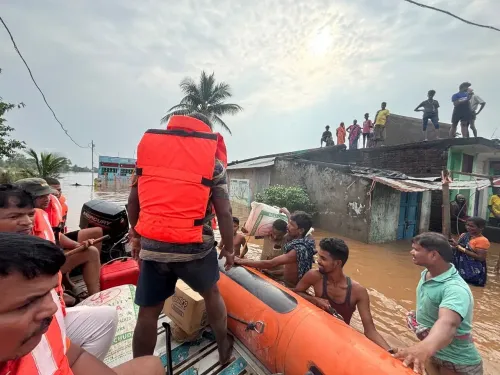
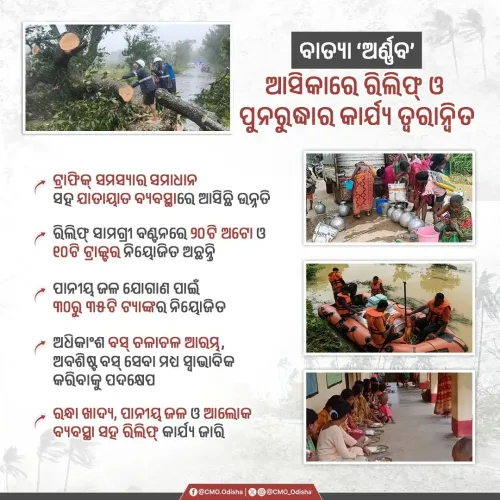
When a cyclone moves on, the real work begins. In the wake of Cyclone Arnab, the Chief Minister's Office of Odisha announced on Sunday, November 1, 2026 that the state government has mobilised a swift, on-ground response to tackle post-cyclone flooding and accelerate recovery — with Ganjam district's farming communities at the centre of the effort.
145 Agriculture Officers Fanned Across Ganjam's Fields
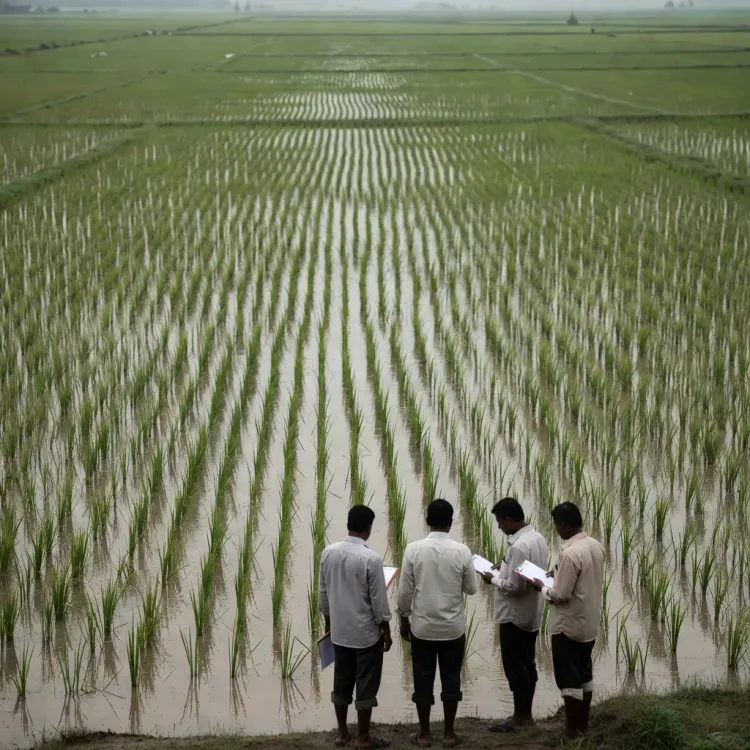
The CMO's post, issued in both Odia and English, confirmed that 145 agriculture officers have been deployed across Ganjam district to carry out an immediate assessment of widespread crop damage. The directive is clear: reach affected farmers fast, quantify losses, and ensure relief arrives without bureaucratic delay. The state called them 'anna data' — the providers of food — signalling the political weight placed on protecting agricultural livelihoods.
Ganjam is one of Odisha's most agriculturally active coastal districts and sits squarely in the Bay of Bengal's cyclone corridor. Damage to standing crops here can cascade into months of income loss for smallholder farming families who have little buffer against a single bad season.
Five Engineers Assigned to Brahmapur's Waterlogging Crisis
Beyond the fields, Brahmapur Mahanagar Nigam — the municipal corporation governing Berhampur, Ganjam's largest city — is confronting severe urban waterlogging. The government has assigned 5 engineers specifically to resolve drainage and inundation problems within the city limits and to coordinate relief operations on the ground. It is a targeted deployment: fewer people, a defined urban problem, accountability built in.
Brahmapur's recurring waterlogging after heavy rain events has long been a civic pressure point. The assignment of dedicated engineering personnel signals that the administration is treating the urban and rural crises as parallel, not sequential, emergencies.
Odisha's Established Playbook for Post-Cyclone Recovery
This response mirrors a framework the Odisha government has refined over successive disasters. After Cyclone Fani in 2019, revenue and agriculture teams were rapidly deployed in Ganjam and other southern districts for damage surveys and relief distribution — a model that drew national attention for its speed. That institutional muscle memory appears to be activating again.
The state's ability to move quickly on damage assessment directly determines how fast compensation reaches farmers. Delays in survey completion routinely translate into delays in disbursement — a gap the 145-officer deployment is designed to close before the window for crop compensation claims narrows.
The numbers are on the ground. Whether the relief reaches farmers' hands before the next sowing decision is what Ganjam will be watching.
Point of View
The CMO is also making a political statement: agrarian welfare is non-negotiable, even mid-disaster. The parallel assignment of engineers to Brahmapur's waterlogging problem suggests an administration keen to demonstrate urban-rural parity in its relief posture. The real test, as always, will be the speed of compensation disbursement once assessments are complete — that gap between survey and payment is where political promises are made or broken.
NationPress
1 Nov 2026
Frequently Asked Questions
What is Cyclone Arnab and which areas of Odisha did it affect?
Cyclone Arnab is a cyclonic storm that struck Odisha, causing widespread crop damage and flooding primarily in Ganjam district in southern Odisha and severe waterlogging in Brahmapur city .
How many agriculture officers has the Odisha government deployed after Cyclone Arnab?
145 agriculture officers have been deployed specifically in Ganjam district to assess crop damage and deliver relief to affected farmers.
What is Brahmapur Mahanagar Nigam and what relief is being provided there?
Brahmapur Mahanagar Nigam is the municipal corporation of Berhampur, Ganjam's largest city. The Odisha government has assigned 5 engineers to tackle waterlogging and coordinate relief operations within its limits.
How does Odisha respond to crop damage after cyclones?
Odisha deploys agriculture and revenue officers rapidly for on-ground damage surveys, a model established after Cyclone Fani in 2019 . Survey completion is the prerequisite for releasing crop compensation to farmers.
When will Ganjam farmers receive compensation for Cyclone Arnab crop losses?
Compensation timelines depend on the speed of damage assessment currently being conducted by the 145 deployed agriculture officers . The CMO has stated that timely relief remains the government's top priority.