Rajnath Singh on Barakhana: Army's rank-free feast
Synopsis
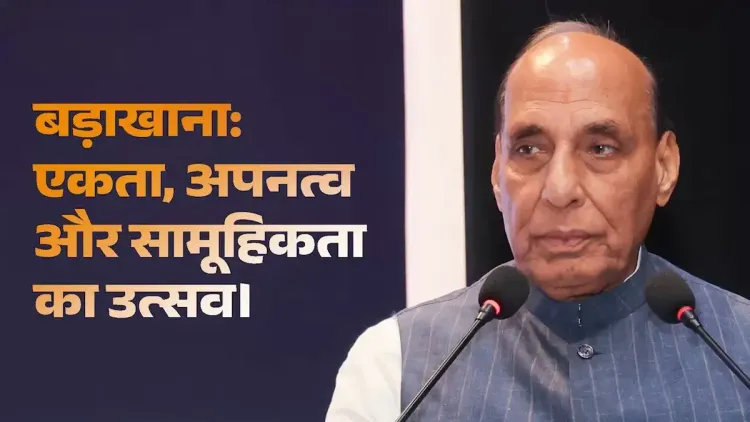
Union Defence Minister Rajnath Singh on 7 November 2026 highlighted the Indian Army's Barakhana tradition, describing it as a practice where rank dissolves and collective family spirit prevails — the institution's true strength.
Key Takeaways
Rajnath Singh posted on 7 November 2026 about the Indian Army's Barakhana tradition.
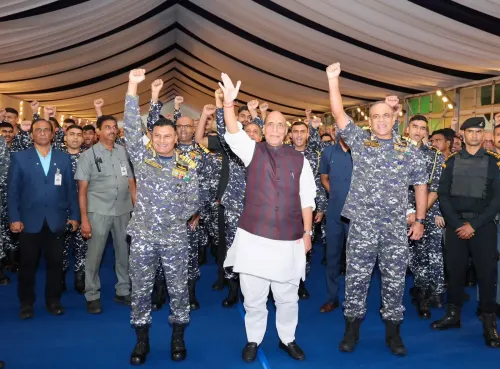
He described Barakhana as an occasion where 'boundaries of rank and position are left behind' and family feeling prevails.
Barakhana is a long-standing Indian Army regimental custom in which all ranks dine together on special occasions.
Singh called this collective spirit 'the true strength of the Indian Army.' The statement aligns with the Defence Minister's broader pattern of publicly engaging with military culture and tradition.
Rank badges, unit insignia, the full weight of hierarchy — and then, for one meal, none of it matters. Union Defence Minister Rajnath Singh invoked the soul of the Indian Army's Barakhana tradition on Saturday, 7 November 2026, calling it not merely a communal feast but the living proof that collective identity is the Indian military's deepest source of strength.
Posting on X, Singh wrote: 'Barakhana kevāl sāth baiṭhkar bhojan karne kā āyojan nahīn, balki ek aisī paramparā hai jahāṃ rank aur pad kī sīmāeṃ pīche chhuṭ jātī hain aur parivār kā bhāv sabse ūpar hotā hai.' In English: 'Barakhana is not merely an occasion to sit together and eat — it is a tradition where the boundaries of rank and position are left behind, and the feeling of family rises above all. This collective spirit is the true strength of the Indian Army.'
What the Barakhana tradition actually means
The Barakhana — literally 'big meal' — is one of the most distinctive customs in the Indian Army's regimental culture. On specific occasions, officers, junior commissioned officers, and jawans share a common table, the usual chain-of-command protocol deliberately set aside. It is a deliberate, structured act of equality: a general eats with a sepoy, and the institution considers that unremarkable.
The tradition is embedded in the Army's regimental system, which prizes unit cohesion above almost everything else. Regiments mark their raising days, battle honours, and festivals with Barakhanas — turning a shared plate of food into an annual reaffirmation that the unit is, at its core, a family. Singh's choice of the word parivār (family) is precise: it is exactly the language the Army uses internally to describe this bond.
Why a Defence Minister's words on this carry weight
Defence ministers periodically invoke military customs to signal civilian appreciation of service culture — and to reinforce morale in the ranks. Such messages carry a quiet but clear meaning to serving personnel: the leadership at the top of the chain understands, and values, what happens at the bottom of the table.
Rajnath Singh, who has held the Defence portfolio since May 2019, has consistently engaged with military ceremonial and tradition — from attending Diwali with troops at forward posts to visiting regiments on their raising days. This post continues that pattern: not a policy announcement, but a reaffirmation of the values the civilian leadership expects the armed forces to carry.
In an era when debates about military reform, the Agnipath scheme, and tri-services integration dominate the defence conversation, a minister pausing to celebrate something as old and human as a shared meal is itself a signal — that modernisation need not come at the cost of the bonds that make the institution tick.
Point of View
Including debates over short-service recruitment, making a reminder of enduring regimental bonds quietly strategic. The framing of the military as a 'family' also echoes the BJP government's broader cultural nationalism vocabulary — drawing the armed forces into a shared civilisational narrative. What it is not is policy; but in an institution where morale and identity are operational assets, words from the top of the chain still land.
NationPress
7 Nov 2026
Frequently Asked Questions
What is Barakhana in the Indian Army?
Barakhana is a traditional communal feast in Indian Army units where personnel of all ranks — from generals to jawans — dine together, setting aside hierarchy to reinforce equality, unit cohesion, and a shared sense of family.
What did Rajnath Singh say about Barakhana?
Union Defence Minister Rajnath Singh said Barakhana is not merely a shared meal but a tradition where 'the boundaries of rank and position are left behind' and the feeling of family rises above all, calling it the true strength of the Indian Army.
Why do Indian Army units hold Barakhana?
Barakhanas are held on occasions such as regimental raising days, battle honour anniversaries, and festivals to foster unit cohesion and morale. The practice is central to the Army's regimental culture, which treats the unit as a close-knit family.
How often does Rajnath Singh engage with Indian military traditions?
Rajnath Singh, Defence Minister since May 2019, regularly engages with military customs — attending Diwali celebrations with troops at forward posts and visiting regiments on raising days — making public acknowledgement of traditions like Barakhana part of his consistent approach.
Is Barakhana unique to the Indian Army?
While many militaries hold ceremonial dinners, the Indian Army's Barakhana is distinctive for deliberately dissolving rank hierarchy at the table. It is rooted specifically in the Indian Army's regimental system and its emphasis on collective identity across all levels of service.