Rijiju to Congress: Raise mature LoP, drop 'Vote Chori' claims
Synopsis
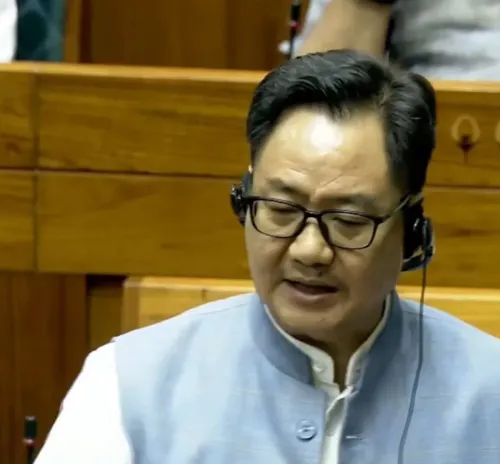
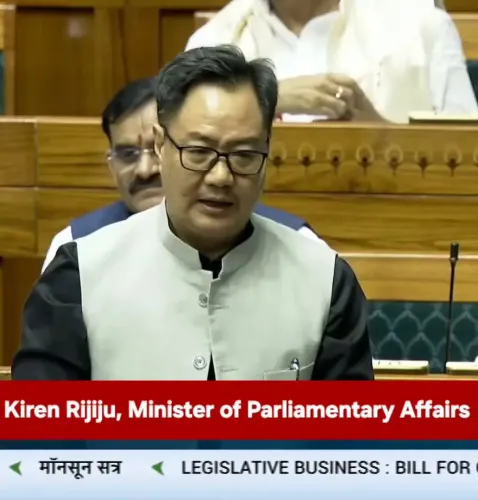
Union Parliamentary Affairs Minister Kiren Rijiju publicly advised Congress on 7 November 2026 to cultivate a mature Leader of Opposition in the mould of Vajpayee, Advani, Sushma Swaraj, and Jaitley, warning the party will keep losing if it relies on 'bogus Vote Chori' claims instead of substantive opposition.
Key Takeaways
Kiren Rijiju posted an open advisory to Congress on 7 November 2026 , framing it as 'friendly advice from a political rival, not an enemy.' He cited Atal Bihari Vajpayee , L.K.
Advani , Sushma Swaraj , and Arun Jaitley as models of a mature, effective Leader of Opposition.
Rijiju warned that Congress will 'lose further' if it keeps raising what he called 'bogus Vote Chori' allegations instead of building substantive opposition.
Rijiju explicitly stated that 'a strong opposition is good for India,' an unusually candid admission from the government's own Parliamentary Affairs Minister.
The post reflects the post- 2014 pattern of BJP positioning itself as a defender of institutional parliamentary norms while critiquing Congress's approach to electoral setbacks.
A senior minister reaching across the aisle — not to attack, but to counsel. Union Parliamentary Affairs Minister Kiren Rijiju posted a pointed, unsolicited piece of advice to the Indian National Congress on Saturday, 7 November 2026, urging the party to field a mature Leader of Opposition and abandon what he called 'bogus Vote Chori' allegations.
Rijiju's message was blunt but framed as goodwill: 'Do not take it negatively. I'm giving a friendly advice as a political rival not as an enemy.' The minister invoked four towering BJP figures — Atal Bihari Vajpayee, L.K. Advani, Sushma Swaraj, and Arun Jaitley — as the gold standard for what an opposition Leader of Opposition should look like. The implicit message: Congress is falling short of that bar.
The four names Rijiju chose — and why they matter
None of those four names was chosen at random. Vajpayee led the opposition in the Lok Sabha during Congress-ruled governments of the 1980s and 1990s, widely admired even by political opponents for his oratory and institutional temperament. Advani held the Leader of Opposition post in the late 1990s and early 2000s, known for hard-nosed but procedurally grounded parliamentary combat. Sushma Swaraj became a byword for surgical parliamentary interventions before the BJP's return to power in 2014. Arun Jaitley was the party's sharp-edged debater in the Rajya Sabha through the same decade.
Together, they represent an era when BJP — in opposition — shaped legislation, forced accountability, and drew national attention to executive overreach without, Rijiju's framing implies, questioning election results as the default move. The comparison is both a compliment to the past and a critique of the present.
The 'Vote Chori' charge — and Rijiju's pushback
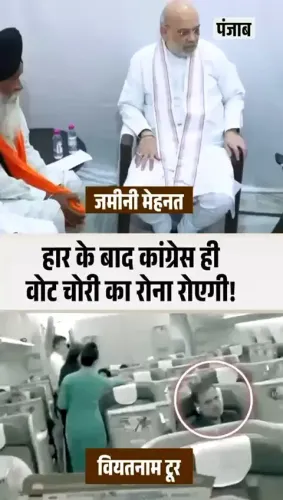
Rijiju's warning that 'Congress will lose further and keep raising bogus Vote Chori' targets a recurring Congress posture of attributing electoral defeats to rigged processes rather than political miscalculation. The term 'Vote Chori' — literally 'vote theft' — has circulated in Indian political discourse as a shorthand for such claims.
His argument is structural: a party that explains every loss through fraud, he suggests, never does the internal work needed to recover. The minister frames himself not as an adversary wanting Congress to stay weak, but as one who understands that a flaccid opposition is bad for the republic itself. 'A strong opposition is good for India,' he wrote — a line that carries real weight coming from the Parliamentary Affairs Minister, whose job includes managing the government's floor business against whatever the opposition can mount.
Parliamentary Affairs Minister advising the opposition — the institutional dimension
There is a layered irony here worth noting. The Parliamentary Affairs Minister is constitutionally the government's chief liaison with both Houses of Parliament — his role is to ensure the government's legislative agenda clears the floor. That the same official is publicly urging the opposition to get stronger reflects either confident magnanimity or a calculated political point, possibly both.
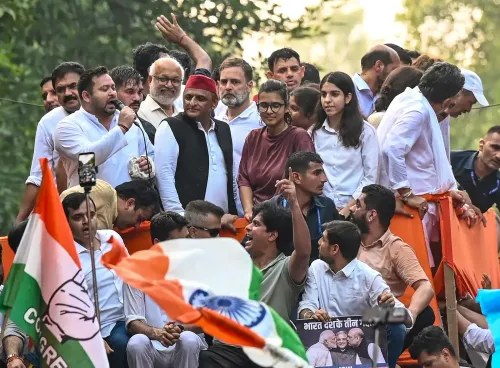
The post arrives as parliamentary dynamics remain closely watched, with questions about opposition coordination and the formal recognition of Leader of Opposition continuing to shape the texture of Lok Sabha proceedings.
Rijiju has thrown down a standard. Whether Congress chooses to pick it up — or dismiss it as BJP patronising — will define the temperature of the next parliamentary session.
Point of View
Not an enemy,' he simultaneously occupies the high ground of statesmanship and delivers a sharply calibrated attack on Congress's credibility as an opposition force. The 'Vote Chori' critique is particularly targeted — it suggests Congress has substituted electoral grievance for electoral strategy, which, if accepted even partially by voters, deepens the party's credibility problem. Coming from the Parliamentary Affairs Minister, whose institutional role requires a functional opposition, the message lands with unusual authority.
NationPress
8 Nov 2026
Frequently Asked Questions
What did Kiren Rijiju say to Congress about the Leader of Opposition?
Rijiju advised Congress to build a 'mature' Leader of Opposition comparable to past BJP leaders like Vajpayee, Advani, Sushma Swaraj, and Arun Jaitley, warning the party will continue losing if it focuses on 'bogus Vote Chori' claims.
What does 'Vote Chori' mean in Indian politics?
'Vote Chori' literally means 'vote theft' in Hindi and is used in Indian political discourse to describe allegations by losing parties that election results were manipulated or rigged.
Who were the BJP leaders Rijiju named as model opposition figures?
Rijiju named Atal Bihari Vajpayee , L.K. Advani , Sushma Swaraj , and Arun Jaitley — all former BJP leaders celebrated for their parliamentary conduct during the years when BJP was in opposition before 2014.
Why is Kiren Rijiju significant in Parliament?
Rijiju serves as Union Minister of Parliamentary Affairs, making him the government's chief liaison with both Houses of Parliament and responsible for steering the ruling party's legislative agenda on the floor.
What is the Leader of Opposition role in India's Lok Sabha?
The Leader of Opposition in the Lok Sabha is the head of the largest opposition party or alliance in the lower house of Parliament, constitutionally recognised as a key accountability check on the ruling government.