Smriti Irani: Armed Naxals Defeated, Ideological Ones Remain
Synopsis
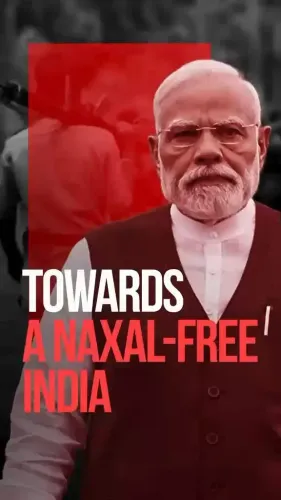
BJP leader Smriti Irani on 8 November 2026 declared that armed Naxals in India's forests have been defeated, but warned that 'ideological Naxals' remain the next challenge — reigniting debate over dissent, security, and the limits of the counter-insurgency frame.
Key Takeaways
Smriti Irani posted on 8 November 2026 that armed Naxals from India's forests have been eliminated.
She said 'ideological Naxals' — dimagi Naxali — remain to be defeated, extending the counter-insurgency frame beyond armed conflict.
India's Naxalite-Maoist insurgency dates to 1967 and historically concentrated in the Red Corridor spanning Chhattisgarh, Jharkhand, and Odisha.
The central government's SAMADHAN strategy (2017) combined security operations, development, and rehabilitation to combat Left Wing Extremism.
The 'intellectual Naxal' framing remains contested — critics argue it risks conflating legitimate dissent with support for violence.
Tribal communities across central India remain the core stakeholders in any measure of genuine peace.
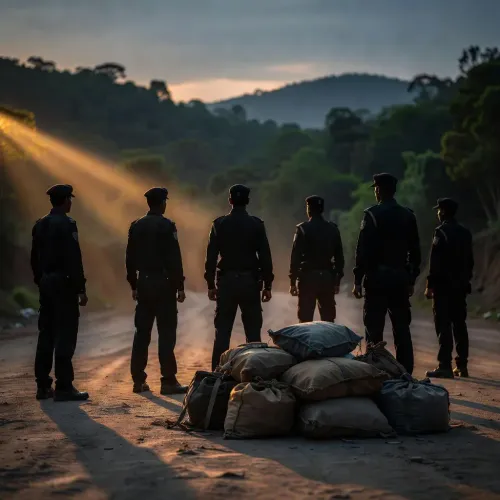
The guns in the forests may be going silent — but BJP leader Smriti Irani says the harder battle is still being fought in minds, not jungles. On Sunday, 8 November 2026, the former Union Minister posted a pointed remark on X that drew a sharp line between two fronts of India's long war against Left Wing Extremism.
Irani wrote in Hindi: 'जंगलों से हथियारी नक्सल तो मिट गए, लेकिन दिमागी नक्सलियों को अभी हमें परास्त करना है.' — 'The armed Naxals from the forests have been eliminated, but the ideological Naxals are yet to be defeated by us.' The sentence is short. Its implications are not.
From the Red Corridor to the Ideological Battlefield
India's Naxalite-Maoist insurgency has roots stretching back to 1967, born in the Bengal village of Naxalbari and spreading across the tribal heartland of central and eastern India. For decades, the so-called Red Corridor — cutting through Chhattisgarh, Jharkhand, and Odisha — was synonymous with ambushes, IED blasts, and contested sovereignty over forested tracts.
The SAMADHAN strategy, adopted by the central government in 2017, attempted a more comprehensive answer: security operations paired with development schemes and rehabilitation pathways. Security forces have reported successive years of declining Maoist-initiated violence and shrinking territorial control. Irani's post draws on that narrative of operational success — framing the forest insurgency as a chapter that has effectively closed.
Who Are the 'Dimagi Naxals'?
The phrase 'dimagi Naxali' — 'ideological' or 'intellectual Naxals' — is not new to Indian political vocabulary, but its use by a senior BJP figure carries deliberate weight. It points to a wider counter-insurgency debate: whether urban academics, lawyers, activists, and civil society voices who oppose state security operations provide intellectual legitimacy, and thereby sustenance, to armed movements.
This framing has been contested sharply. Critics argue it conflates lawful dissent with insurgency, and that tribal communities, human-rights defenders, and legal advocates working in conflict zones deserve protection — not suspicion. Irani's post does not name individuals or organisations, but it reopens one of Indian democracy's most charged fault lines: where does ideological opposition end and material support for violence begin?
The Political Stakes of This Framing
Irani's remark fits a pattern the BJP-led government has pursued consistently — combining claims of security gains on the ground with ongoing scrutiny of perceived ideological enablers. For the ruling party, it is a two-front narrative: proof of governance delivering peace in the forest, and a mandate to continue challenging the intellectual ecosystem it holds responsible for prolonging the conflict.
Tribal communities across central India — the people most directly caught between armed groups and security operations — remain the defining stakeholders. Any genuine victory, armed or ideological, is ultimately measured in whether their lives become safer, their land rights more secure, and their voices heard. That test is still ongoing.
The forests may be quieter. The argument about who enabled the fire — and whether that argument itself becomes a tool of suppression — is nowhere near settled.
Point of View
Academia, and legal activists working in conflict zones — and invoking it now suggests the BJP intends to sustain that scrutiny as a governance theme, not just an election-season talking point. The risk in this framing is well-documented: without precise legal definitions, it can expand to cover inconvenient dissent far beyond any operational threat. How the Home Ministry translates this political rhetoric into specific policy action — if at all — will be the real indicator of intent.
NationPress
8 Nov 2026
Frequently Asked Questions
What did Smriti Irani say about Naxals on 8 November 2026?
Smriti Irani posted in Hindi that armed Naxals from India's forests have been eliminated, but that 'ideological Naxals' — those who provide intellectual support to the insurgency — remain to be defeated.
What does 'dimagi Naxal' or 'ideological Naxal' mean?
'Dimagi Naxali' refers to individuals — typically academics, lawyers, or activists — whom some in government allege provide ideological legitimacy or material support to armed Maoist groups, though the term is contested and critics say it can be used to target legitimate dissent.
What is the SAMADHAN strategy against Naxalism?
SAMADHAN is a counter-Left Wing Extremism strategy adopted by the Indian central government in 2017, combining security operations, development initiatives, and rehabilitation programmes targeting the Red Corridor states.
Which states make up India's Red Corridor?
The Red Corridor historically includes states such as Chhattisgarh, Jharkhand, and Odisha — the tribal heartland where Naxalite-Maoist groups have been most active since the insurgency began in 1967.
Why is the 'ideological Naxal' framing controversial?
Critics argue the label is imprecise and risks being applied to human-rights defenders, journalists, and tribal advocates who work in conflict zones — blurring the line between lawful political opposition and actual support for violence.