CM Saini Backs Modi's Pledge to Uproot Naxalism

Synopsis
Haryana CM Nayab Singh Saini on June 24, 2026, quoted PM Modi declaring Maoist terror is in its 'last breaths', citing a decade of sustained counter-insurgency operations and the SAMADHAN doctrine as key drivers of the insurgency's decline across central and eastern India.
Key Takeaways
Haryana CM Nayab Singh Saini shared a statement by PM Narendra Modi on June 24, 2026 , claiming Maoist insurgency is approaching its end.
The Modi government has pursued anti-Naxal operations since 2014 , combining security pressure with rehabilitation and development in LWE districts.
The SAMADHAN doctrine, launched in 2017 , is the formal policy framework integrating military, intelligence, and development tools against CPI(Maoist) .
At its peak, Naxalism affected more than 200 districts ; official assessments cite measurable declines in both incidents and geographic spread since 2014.
South Chhattisgarh's Bastar region remains the most active theatre and is expected to be the focus of continued operations.
The next Ministry of Home Affairs annual report on Left Wing Extremism will be closely watched for updated data on the insurgency's current status.
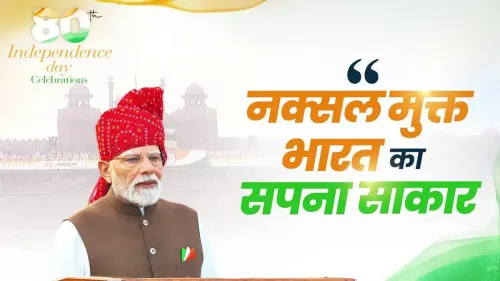
Haryana Chief Minister Nayab Singh Saini on Wednesday, June 24, 2026, shared a statement attributed to Prime Minister Narendra Modi asserting that Maoist-Naxalite insurgency is in its final phase, citing the Union government's decade-long campaign against Left Wing Extremism as the driving force behind the turnaround.
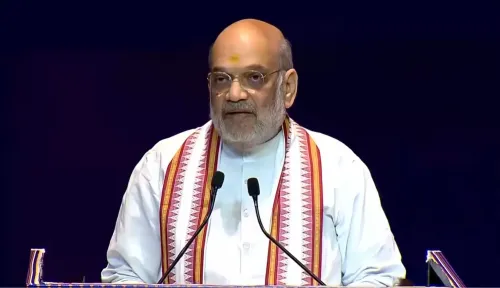
Quoting Prime Minister Modi, Saini wrote: '2014 ke baad humne sankalp liya ki Naksalwad Maowaad ko jadd se ukhad phenkenge' ['After 2014 we resolved to uproot Naxalism and Maoism from the roots, and today the entire country is seeing the result — today Maoist terror in the country is counting its last breaths']. The post, accompanied by a video, was shared widely as a statement of the ruling dispensation's counter-insurgency record.
Context
Naxalism, rooted in a 1967 peasant uprising in Naxalbari, West Bengal, evolved over decades into a sustained armed insurgency led primarily by CPI(Maoist) across the forested districts of central and eastern India — a corridor the Union government once described as its gravest internal security challenge. At its peak, the movement affected more than 200 districts across multiple states. Since 2014, the Narendra Modi government made dismantling this network a stated security priority, combining military pressure with development outreach in affected regions.
Policy Backdrop
The policy architecture behind the campaign took formal shape in 2017 when the Ministry of Home Affairs introduced the SAMADHAN doctrine — an acronym covering smart leadership, aggressive strategy, motivation and training, actionable intelligence, dashboard-based key performance indicators, harnessing technology, action plan for each theatre, and no access to financing. The doctrine integrated security operations with surrender-and-rehabilitation packages and accelerated infrastructure delivery in Left Wing Extremism (LWE)-affected districts. Official assessments have documented measurable declines in violent incidents and the geographic footprint of CPI(Maoist) over the period since its adoption.
Coordinated operations between central paramilitary forces — particularly the Central Reserve Police Force and its elite CoBRA battalions — and state police in Chhattisgarh, Jharkhand, Odisha, and Telangana have resulted in significant leadership attrition within the Maoist movement. Road connectivity, mobile networks, and banking access extended into previously inaccessible districts have been cited by the government as complementary tools that erode the insurgency's social base.
Stakeholders and Impact
Security forces — including jawans from the CRPF, state armed police, and district reserve guards — have borne the operational cost of the campaign over many years, with hundreds of personnel killed in action since 2014. Tribal communities in LWE districts represent the most directly affected civilian population, caught between insurgent coercion and counter-insurgency pressure, but also the primary intended beneficiaries of the accompanying development push. Civil society groups working in these regions have long called for a rights-based approach alongside security measures.
CM Saini's post amplifies the political messaging ahead of what observers expect will be a renewed focus on the government's internal-security record. BJP leaders across states have increasingly cited the declining violence statistics in LWE districts as evidence of effective governance under Prime Minister Modi.
What's Next
Attention will now turn to the Ministry of Home Affairs' next annual report on Left Wing Extremism, which is expected to provide updated incident data and a district-level assessment of the insurgency's current reach. Remaining strongholds — particularly in south Chhattisgarh's Bastar division — are likely to remain the focus of fresh operational directives. Whether the government formally declares the LWE threat neutralised, or maintains a calibrated operational posture, will shape both security policy and political messaging in the months ahead.
Point of View
Using PM Modi's own words to reinforce the BJP's governance narrative around internal security ahead of what is likely a period of heightened political activity. The framing — 'last breaths' — is strong and goes beyond what verified data can currently confirm, but it aligns with a broader ruling-party strategy of presenting the Maoist question as a mission nearly accomplished rather than an ongoing challenge. This matters because it sets expectations: if violence resurges in Bastar or elsewhere, the political cost of such declarative language rises sharply. The post also reflects how state-level BJP leaders increasingly function as amplifiers of the central government's security record, tying their own political identity to Delhi's policy outcomes.
NationPress
22 Sept 2026
Frequently Asked Questions
What is the current status of Naxalism in India in 2026?
The Union government's official position, echoed by BJP leaders including Haryana CM Nayab Singh Saini, is that Maoist insurgency is in severe decline after a decade of coordinated operations. Official assessments cite falling incident counts and a shrinking geographic footprint, though south Chhattisgarh remains an active zone.
What is the SAMADHAN doctrine against Naxalism?
SAMADHAN is a counter-Left Wing Extremism policy framework introduced by the Ministry of Home Affairs in 2017. It combines security operations, actionable intelligence, technology deployment, surrender-rehabilitation packages, and infrastructure development in affected districts to address both the armed and social dimensions of the insurgency.
Which states are most affected by Naxalism in India?
Chhattisgarh — particularly the Bastar division — along with Jharkhand, Odisha, and Telangana have historically been the most affected states. At its peak, the insurgency touched more than 200 districts across central and eastern India.
Who are CPI(Maoist) and what do they want?
CPI(Maoist) is the principal insurgent organisation behind the Naxalite movement in India. It seeks to overthrow the Indian state through armed struggle, drawing ideological roots from Marxist-Leninist-Maoist thought, and has historically recruited from marginalised tribal communities in forested regions.
Why is Haryana CM Nayab Singh Saini commenting on Naxalism?
Saini, a senior BJP leader, shared PM Modi's statement as part of the ruling party's broader effort to highlight the central government's internal security record. State-level BJP leaders frequently amplify Delhi's policy achievements on national platforms to reinforce the party's governance narrative.