Naxalbari to near extinction: How Modi govt dismantled Maoist movement
Synopsis
From 126 affected districts to just two — India's decades-long Maoist insurgency has been reduced to a residual threat. The Modi government's 'Naxal Mukt Bharat' mission, combining Operation Black Forest-style strikes with rural development and rehabilitation, has achieved what successive governments could not. The battle has now shifted from forests to cities, where intelligence agencies are tracking attempts to keep the ideology alive.
Key Takeaways
The Maoist movement originated in Naxalbari, West Bengal in 1967 and once spread across West Bengal, Odisha, Jharkhand , and Andhra Pradesh .
Between 2005 and 2010 , 126 districts were affected by Left-Wing Extremism (LWE) ; after March 2026 , only two districts continue to witness Maoist activity.
Union Home Minister Amit Shah announced the 'Naxal Mukt Bharat' deadline of 31 March 2026 in August 2024 , declaring near-success on 18 May 2025 .
Operation Green Hunt and Operation Black Forest in 2025 led to seizure of large arms stockpiles and elimination or arrest of top Maoist commanders.
Improved road and mobile connectivity in remote areas, alongside rehabilitation programmes, were cited as key factors in the movement's decline.
Intelligence Bureau officials have flagged attempts by pro-Maoist elements to shift activity to urban areas and infiltrate protests.
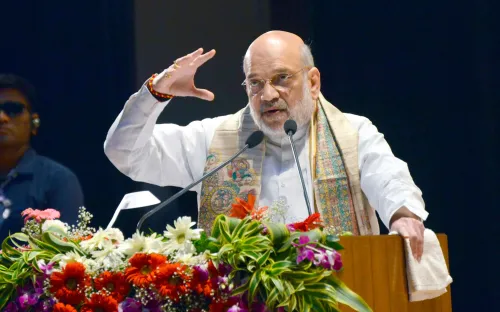
What began as a peasant revolt in West Bengal's Naxalbari village in 1967 has been reduced to a residual threat confined to just two districts across India — a dramatic decline that officials attribute to a decade-long twin-track campaign of security operations and accelerated development under the National Democratic Alliance (NDA) government led by Prime Minister Narendra Modi. On 18 May 2025, Union Home Minister Amit Shah declared that the government had largely succeeded in freeing India from Maoist violence, marking a significant milestone in the 'Naxal Mukt Bharat' mission.
Origins and Spread of the Movement
The Naxalite movement traces its roots to 1967, when agrarian unrest in Naxalbari ignited a far-left insurgency that claimed to champion land rights, resist tribal exploitation, and fill governance vacuums. Over subsequent decades, it spread across West Bengal, Odisha, Jharkhand, and Andhra Pradesh, drawing support from sections of local populations who viewed it as resistance against social and economic injustice.
However, alongside its geographic expansion, the movement became increasingly associated with violence, extortion, and attacks on civilians and security personnel. According to officials, the Maoists also cultivated support networks in urban areas, where certain sympathisers allegedly promoted the movement through propaganda and ideological outreach.
Two major outfits — the People's War Group (PWG) and the Maoist Communist Centre (MCC) — merged on 21 September 2004 to form the Communist Party of India (Maoist), consolidating the movement under a unified banner.
The Bhima Koregaon Case and Urban Linkages
Violence surrounding the Bhima Koregaon commemoration in 2018 near Pune, Maharashtra became a pivotal moment in the Centre's counter-Maoist strategy. Pune Police alleged that the clashes had been covertly funded and organised through front organisations linked to the banned Communist Party of India (Maoist). Several individuals were arrested, with investigators alleging that funds were channelled to certain accused with the intent of fomenting unrest and provoking confrontation with the State.
The episode sharpened the government's focus on what officials described as the Maoists' dual structure — an armed presence in forest regions and an ideological network in cities. National security planners reportedly concluded that countering the movement required dismantling both simultaneously.
The Two-Pronged Strategy
When the Modi government came to power at the Centre in 2014, it resolved to tackle Left-Wing Extremism (LWE) through a clearly articulated two-pronged approach: intensified security operations combined with accelerated development in affected regions. Amit Shah, in August 2024, formally announced a deadline of 31 March 2026 to eliminate the Maoist threat under the 'Naxal Mukt Bharat' mission.
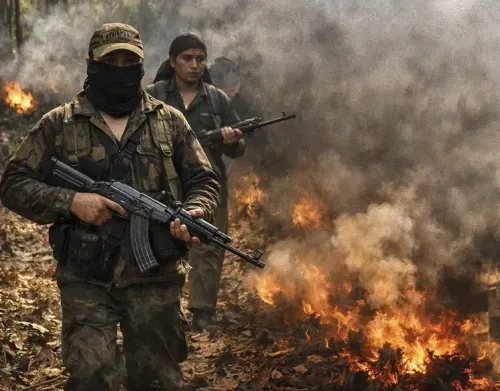
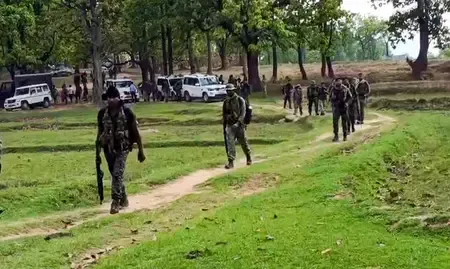
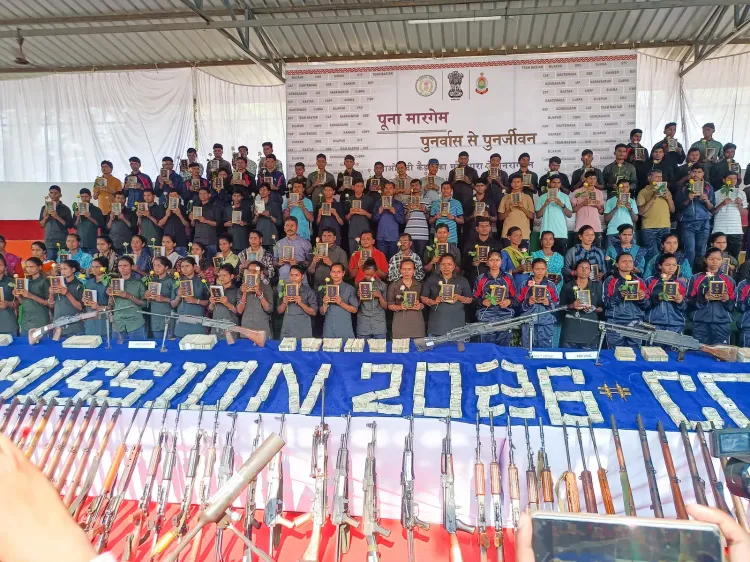
On the security side, major campaigns including Operation Green Hunt and Operation Black Forest in 2025 resulted in the seizure of large arms stockpiles and the arrest or elimination of several top Maoist leaders and commanders. Officials note that the government's policy was unambiguous: Maoists were urged to either surrender and reintegrate into mainstream society, or face security action.
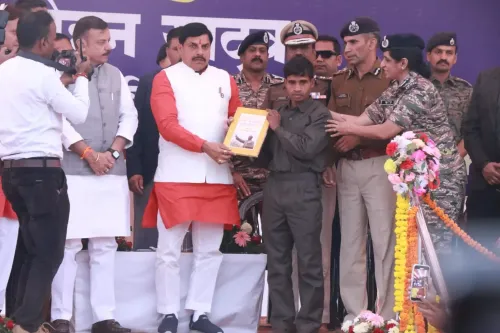
Those who surrendered were enrolled in rehabilitation programmes offering psychological counselling, literacy and educational support, vocational training, and livelihood assistance, according to officials.
Development as a Force Multiplier
Officials emphasise that the decline of the Maoist movement cannot be attributed to security operations alone. Improved road and mobile connectivity in remote areas enhanced intelligence-sharing, operational coordination, and the speed at which security forces could respond. More significantly, it altered the relationship between local communities and the State.
'Development initiatives received widespread acceptance among local communities in Maoist-affected regions. As governance and public services improved, many residents who had earlier remained silent or were perceived to be sympathetic to the Maoists began cooperating with the authorities,' officials said. This shift in public sentiment, they noted, proved to be a major turning point, with locals providing actionable intelligence that aided security operations.
The strategy also included fortifying police stations and addressing long-standing governance gaps. 'Equally important was the close coordination between central and state agencies, which ensured a unified approach to the anti-Maoist campaign,' an official noted.
From 126 Districts to Two: The Numbers
The scale of the retreat is stark. Between 2005 and 2010, as many as 126 districts across India were affected by Left-Wing Extremism. After March 2026, that number has fallen to just two districts, and none are classified as critically affected pockets, according to officials.
The government's focus has now reportedly shifted to preventing Maoist influence from re-establishing itself in urban areas. Intelligence Bureau officials have flagged attempts by some pro-Maoist elements to infiltrate protests and instigate violence. 'They will try to keep the pot boiling, but would find it very hard as the eyes and ears of the agencies are very much to the ground,' an official said. The battle, it appears, has moved from the forests to the cities — and the government is watching closely.
Point of View
Yet security operations such as Operation Green Hunt predate the Modi government by several years. The Bhima Koregaon case, which officials cite as evidence of an urban Maoist network, remains contested in courts, and several arrests under it have drawn civil liberties concerns. The real test of 'Naxal Mukt Bharat' will be whether the development gains in former red corridors are sustained after the security spotlight moves on — or whether governance gaps, which gave the movement its original foothold, quietly return.
NationPress
23 Oct 2026
Frequently Asked Questions
What is the 'Naxal Mukt Bharat' mission?
'Naxal Mukt Bharat' is the Modi government's mission to eliminate Left-Wing Extremism from India, with a deadline of 31 March 2026 announced by Home Minister Amit Shah in August 2024. It combines security operations against Maoist cadres with development initiatives in affected regions to reduce the movement's social base.
How many districts are still affected by Maoist activity in India?
After March 2026, only two districts continue to witness Maoist activity, down from 126 districts affected between 2005 and 2010. None of the remaining districts are classified as critically affected pockets, according to officials.
What were Operation Green Hunt and Operation Black Forest?
Operation Green Hunt and Operation Black Forest were major security campaigns launched in 2025 against Maoist strongholds. They resulted in the seizure of large arms stockpiles and the arrest or elimination of several top Maoist leaders and commanders, according to officials.
How did the Bhima Koregaon violence connect to the Maoists?
Pune Police alleged that violence around the Bhima Koregaon commemoration in 2018 was covertly funded and organised through front organisations linked to the banned Communist Party of India (Maoist). Several individuals were arrested, with investigators alleging that funds were channelled to foment unrest and provoke confrontation with the State.
What happens to Maoists who surrender?
Maoists who surrender are enrolled in government rehabilitation programmes that include psychological counselling, literacy and educational support, vocational training, and livelihood assistance, aimed at helping them reintegrate into mainstream society.