What Led to the Surrender of 10 Hardcore Maoists Before CM Mohan Yadav?
Synopsis
On December 7, ten Maoists surrendered in Madhya Pradesh, indicating a major shift in the state's battle against Naxalism. Chief Minister Mohan Yadav presented the former rebels with copies of the Indian Constitution, highlighting the government's commitment to peace and rehabilitation.
Key Takeaways
Ten Maoists surrendered, signaling progress in rehabilitation efforts.
Chief Minister Yadav emphasized the need for peace and integration.
Weapons surrendered included AK-47s and INSAS rifles.
New camps and support initiatives are being established for former rebels.
The event reflects a diminishing Naxalite influence in Madhya Pradesh.
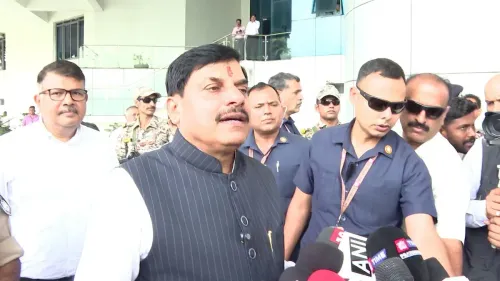
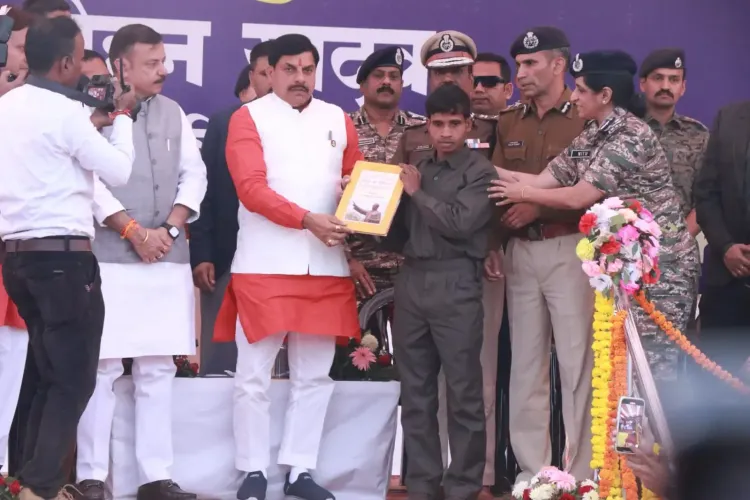
In a pivotal event, on December 7 in Balaghat, Madhya Pradesh, ten notorious Maoists chose to surrender to Chief Minister Mohan Yadav. This momentous occasion unfolded in Balaghat, an area adjacent to regions in Chhattisgarh known for Maoist activities. Initial reports had suggested the surrender of eleven Maoists.
The surrender, facilitated by the state's 'Rehabilitation through Rebirth' program, represents a significant shift, as these individuals were deeply involved in violent acts across the KB and MMC (Maharashtra, Madhya Pradesh Central) regions.
Their previous activities included orchestrating IED blasts, engaging in armed confrontations with police, instilling fear within local populations, dominating forest routes, and assaulting operational teams—actions that posed a persistent challenge to security forces.
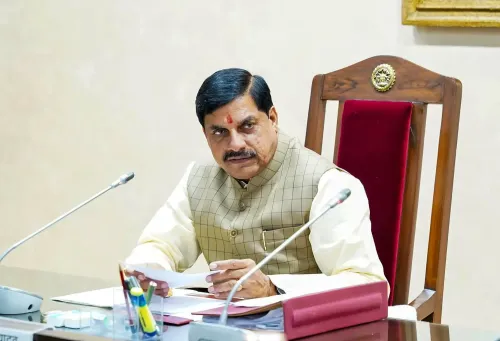
During the ceremony, Chief Minister Yadav presented each former Maoist with a copy of the Indian Constitution. He reiterated the government's commitment to eliminating Naxal influence in Madhya Pradesh, aligning with the vision of Prime Minister Narendra Modi and Union Home Minister Amit Shah.
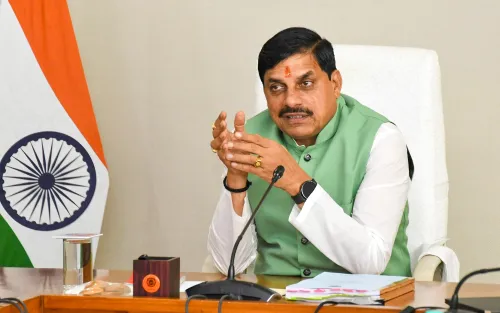
Yadav emphasized that no one has the authority to resort to arms against the nation. He urged Maoists to accept the government’s rehabilitation initiatives, assuring them that all necessary measures would be taken to protect their lives, promote their development, and assist them in reintegrating into mainstream society.
Under ongoing pressure from both ground operations and the government’s rehabilitation strategy, these Maoists surrendered their weapons, which included AK-47s, INSAS rifles, SLRs, and BGLs, to the Chief Minister.
This event is perceived as a significant indicator of the diminishing hold of Naxalites in the KB region.
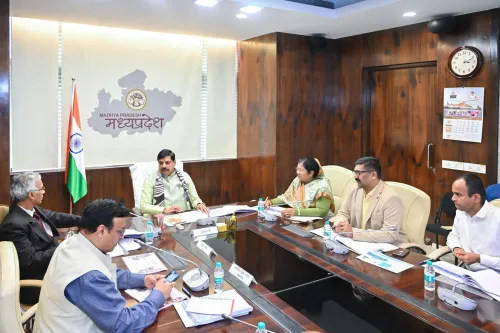
CM Yadav, while motivating officers and troops, highlighted the continuous strengthening of the anti-Naxal campaign. He announced the establishment of 15 new temporary camps and 882 posts for the Special Support Squad. He pointed out that ongoing monitoring, thorough investigations, and decisive actions have notably curtailed Naxalite presence in the state.
Additionally, CM Yadav mentioned that 46 “One-Stop Facility Centres” were inaugurated last year in Naxal-affected regions, providing job opportunities, forest rights certificates, and essential services. Honoring the martyr Ashish Sharma, he noted that 328 police personnel, including members of the Hawk Force, received out-of-turn promotions for their outstanding service.
Director General of Police Kailash Makwana reaffirmed that the campaign has gained momentum under the Chief Minister’s guidance, with the establishment of new camps and expansion of forces. He emphasized that officers and soldiers are consistently motivated, which is reflected in the increasing number of surrenders.
Makwana added that the Madhya Pradesh Police is dedicated to achieving a Naxal-free India, with progress evident in integrating youth and citizens from affected areas into the mainstream through employment and skill development.
The surrender ceremony was attended by Uday Pratap Singh, the Minister overseeing Transport and School Education in Balaghat, along with senior police officials and personnel.
The individuals who surrendered include Surendra alias Kabir alias Soma Sodhi, Rakesh Odi alias Manish, Lalsingh Maravi alias Singa alias Praveen, Shilpa Nuppo, Salita alias Savitri Alawa, Naveen Nuppo alias Hidma, Jaishila alias Lalita Oyam, Vikram alias Hidma Vatti, Jarina alias Jogi Musak, and Samar alias Samaru alias Raju Atram.
This collective choice to return to mainstream society is celebrated as a significant triumph for Madhya Pradesh’s rehabilitation policy and a crucial step towards destabilizing the Naxal network in the region.
Point of View
This event signifies a landmark moment in India's efforts to combat insurgency. The state’s rehabilitation initiatives are gaining traction, reflecting a broader commitment to peace and stability in regions historically plagued by violence.
NationPress
27 Sept 2026
Frequently Asked Questions
What does the surrender of Maoists indicate?
It indicates a significant shift in the government's efforts to combat Naxalism and the effectiveness of rehabilitation programs.
Who is Chief Minister Mohan Yadav?
Mohan Yadav is the Chief Minister of Madhya Pradesh, focusing on eliminating Naxal influence in the state.
What weapons did the Maoists surrender?
They surrendered various weapons, including AK-47s, INSAS rifles, SLRs, and BGLs.
How is the government supporting former Maoists?
The government is providing support through rehabilitation programs that aim to reintegrate them into society.
What is the 'Rehabilitation through Rebirth' initiative?
It is a state program designed to help former rebels return to mainstream society and provide them with necessary support.