End of Naxalism in India: Government's Strategic Plans to Prevent Resurgence
Synopsis
As the Naxalite movement in India nears its conclusion, the Union Ministry of Home Affairs is strategically planning to prevent any resurgence of this long-standing threat. Explore the measures being implemented to ensure lasting peace and stability.
Key Takeaways
The Naxalite movement is effectively ending in India.
Strategic measures are in place to prevent resurgence.
Key areas have been designated for ongoing support.
The government aims for significant development in affected regions.
Infrastructure improvements have benefited local communities.
New Delhi, Feb 26 (NationPress) As the Naxalite movement that has troubled India for decades approaches its conclusion, the Union Ministry of Home Affairs (MHA) is taking proactive steps to devise a strategy that prevents its resurgence.
Officials state that the ideology is effectively extinguished today, yet vigilance remains critical to ensure that new forms of crime do not emerge in regions where Naxalism was once predominant.
The MHA understands that once the issue is resolved, the prudent approach is to prevent any future relapse. The identification of 31 “Legacy Thrust Districts” in areas such as Gadchiroli, Balaghat, and Badradri Kothagundem is a measure aimed at thwarting any revival of the movement. These districts will continue to benefit from security and development initiatives.
The goal is not merely to disengage and leave matters to the state. Certain locations where Naxalism previously thrived require ongoing Central support as the state may not be able to manage the situation immediately, an official noted.
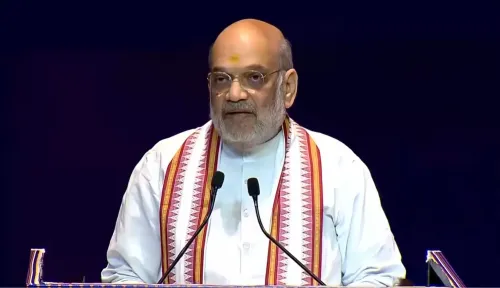
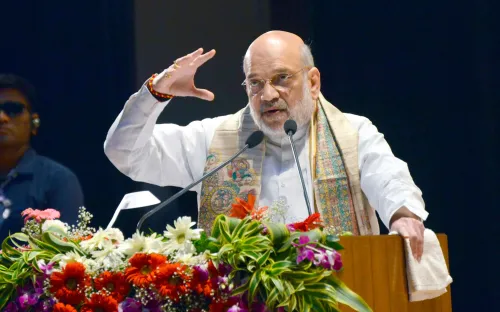
Another representative stated that the struggle against the Naxal movement has persisted for years. However, under the leadership of the Modi government, there has been a renewed push. Union Home Minister Amit Shah has taken a decisive role, not only granting security forces considerable autonomy but also facilitating effective coordination between the Centre and the states.
Home Minister Shah has issued an ultimatum to Naxalites: they must either surrender or face elimination. He has set a deadline of March 31, 2026, for the dissolution of the Naxalite movement. In the year 2000, there were 200 districts affected by Left-Wing Extremism (LWE). By 2025, this number had decreased to 38. Currently, as per MHA data, only seven districts remain affected — five in Chhattisgarh and one each in Jharkhand and Odisha. Among these, merely three are classified as “Most Affected.”
These districts have been designated as “Legacy Thrust Districts.”
After the March 31 deadline, the MHA intends to ensure that states pursue substantial development and governance in LWE-affected districts. Any oversight could lead to a resurgence, which the government aims to prevent at all costs.
The Centre is committed to ensuring that development in these regions continues unabated.
The triumph against the Naxalites cannot solely be credited to armed encounters. In this ongoing battle, over 15,000 kilometers of roads have been constructed, and more than 9,000 mobile towers have been erected. This infrastructure has not only enhanced the capabilities of security forces but has also significantly benefited local communities. Residents who once acted as informants for the Naxalites are now fully aligned with the government, an official remarked.
An Intelligence Bureau official indicated that the Naxalites have largely capitulated. Only a few individuals wish to continue the fight, but even they are aware that their days are numbered. The focus will be on facilitating their surrender or ensuring their elimination.
The Naxalite movement suffered a major setback when a Maoist Central Committee secretary, Tippiri Tirupati alias Devi, surrendered to the Telangana Police. Authorities reported that only 11 individuals from Telangana remain underground, with many already negotiating their surrender.
Furthermore, the Central government is actively coordinating with states regarding the next steps. Currently, it has been decided that forces will not be withdrawn immediately but will instead be phased out.
During this transitional period, bureaucratic efficiency will be crucial, and states have been advised to avoid any missteps. Intelligence agencies have warned that security personnel must monitor social media and public gatherings in urban areas, as propaganda could be disseminated in these environments to revive the movement.
While a resurgence seems unlikely, agencies will continue to oversee these channels and suppress any attempts, as they could pose significant challenges, officials assert.
Frequently Asked Questions
What is the current status of the Naxalite movement in India?
The Naxalite movement is nearing its end, with the Union Ministry of Home Affairs actively working on strategies to prevent its resurgence.
What measures are being taken to prevent the resurgence of Naxalism?
The government has identified 31 'Legacy Thrust Districts' for ongoing security and development support to ensure that Naxalism does not re-emerge.
What is the deadline set by Home Minister Amit Shah regarding the Naxalite movement?
Home Minister Amit Shah has set a deadline of March 31, 2026, for the Naxalite movement to come to an end.
How has the infrastructure improved in Naxal-affected areas?
Over 15,000 kilometers of roads and more than 9,000 mobile towers have been built, significantly improving security and local communication.
What is the government's approach towards remaining Naxalites?
The government is urging Naxalites to surrender or face elimination, focusing on reducing their numbers and facilitating peace.