The End of an Era: India Declares Itself Naxal-Free
Synopsis
In a significant announcement, Union Home Minister Amit Shah declares India free from the clutches of Naxalism, a movement that has plagued the nation since 1967. This article delves into the historical journey, the impact of the insurgency, and the challenges that remain.
Key Takeaways
Naxalism's origins date back to 1967 in West Bengal.
The movement has resulted in the loss of over 20,000 lives .
Government strategies include security operations and community engagement .
While declared Naxal-free, challenges remain in certain areas.
Infrastructure development has played a crucial role in reducing insurgent appeal .
New Delhi, March 30 (NationPress) The saga of Naxalism in India traces back to 1967, evolving through the subsequent decades. It emerged with a challenge to feudal land ownership and progressively spread across the southern regions, aligning with Mao Zedong’s assertion that “political power comes from the barrel of a gun.”
The ideological framework established by the founding figure of Communist China was adopted by a select group of extreme Leftists during a peasant uprising in Naxalbari, West Bengal. Over time, this ideology became more of a romantic notion than a concrete political doctrine.
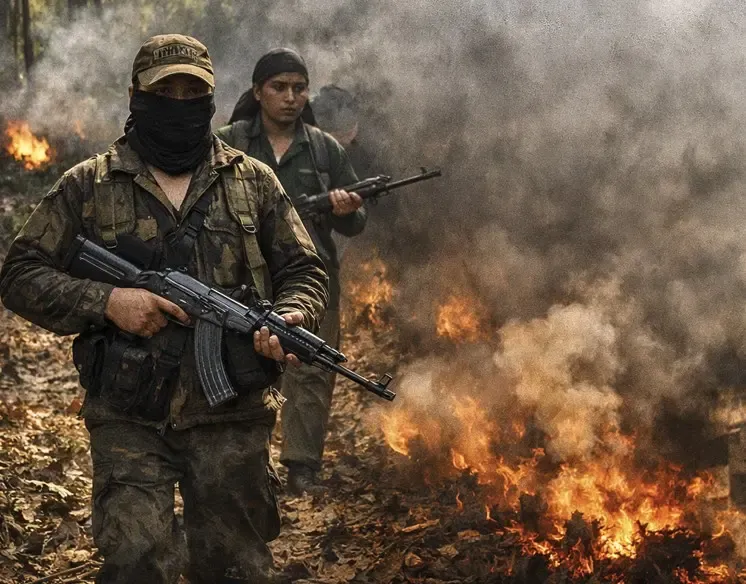
Armed insurgents, donning camouflage and branding themselves as “Maoists,” forged a path known as the “Red Corridor,” traversing dense forests and remote areas from what was once unified Andhra Pradesh to Maharashtra, Madhya Pradesh (which later included Chhattisgarh), Odisha, and Bihar, eventually reaching West Bengal and crossing into Nepal.
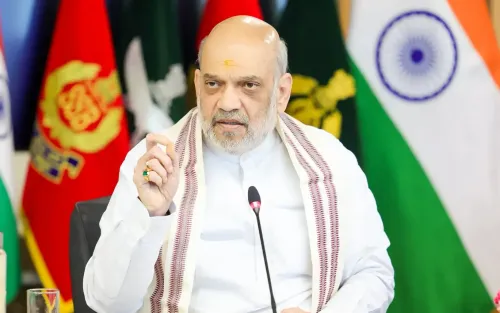
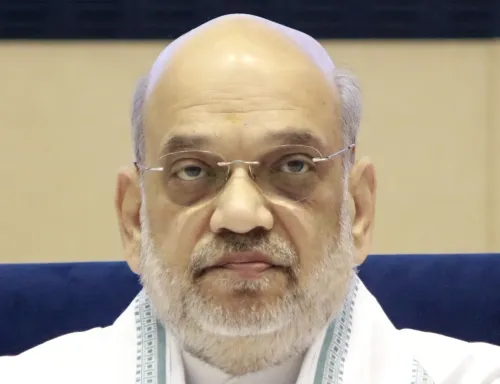
Now, nearly six decades later, Union Home Minister Amit Shah proclaimed in Parliament that India is officially “Naxal-free,” marking a significant milestone in the long battle against an insurgency that once gripped vast regions of the country.
During his address, Shah recounted the historical ramifications of the movement, which resulted in the deaths of thousands, including security personnel and civilians, while stifling development in the affected areas.
He traced the roots of this insurgency back to West Bengal and noted its proliferation across various states, leading to the establishment of Maoist factions.
Shah criticized previous administrations for permitting the insurgency's growth, noting that Maoist violence has claimed over 20,000 lives. He characterized this uprising as a direct assault on democracy, cautioning that such movements strive to create vacuums in governance and security.
The Home Minister promised robust security measures combined with enhanced development initiatives in impacted regions to eradicate insurgency and restore stability.
According to Shah, former Prime Minister Indira Gandhi had a role in fostering this movement, allowing Leftist ideologies to gain traction in India's political landscape.
He portrayed Naxalism as not merely a security threat but as a consequence of political decisions made during the Congress era.
By associating the insurgency with past leaders, Shah reinforced the Bharatiya Janata Party’s narrative of amending historical injustices and positioning itself as a protector of national stability.
He also reignited the “urban Naxal” debate, alleging support for insurgent groups from certain segments of the urban intelligentsia, providing examples to substantiate his claims.
Clearly, the ultra-Left insurgency in India has seen a marked decline over the past 20 years. At its zenith, it impacted over 200 districts along the “Red Corridor.”
Today, as the government asserts, only a few areas remain at risk, and those are largely under control.
A multitude of factors has contributed to this decline, Shah reiterated, including enhanced security measures, infrastructure improvements, and community outreach.
Coordinated efforts by both central and state forces, including specialized units like the Central Reserve Police Force’s COBRA battalions, have been instrumental in dismantling Naxal networks.
Simultaneously, significant investments in roads, schools, and healthcare in previously overlooked tribal regions have diminished the appeal of insurgent factions. Initiatives aimed at integrating tribal communities into formal governance and creating job opportunities have further eroded the support base for the insurgents.
While the official announcement is certainly a landmark moment, challenges persist. Remnants of insurgency remain, and the political ideology has not been completely extinguished.
Point of View
It becomes evident that the struggle against this insurgency has shaped the political and social landscape of the nation. The government's declaration of a Naxal-free India signals a significant achievement, yet the remnants of this ideology remind us of the ongoing challenges that demand attention and resolution for a stable future.
NationPress
2 Oct 2026
Frequently Asked Questions
What triggered the Naxalism movement in India?
The Naxalism movement began in 1967, primarily as a response to feudal landholding issues and has since evolved into a broader challenge against the state.
How has the Naxalism insurgency affected India?
The insurgency has led to the loss of over 20,000 lives and has significantly hindered development in affected regions.
What steps has the Indian government taken to combat Naxalism?
The government has implemented security operations, infrastructure development, and community engagement initiatives to address the issue.
Are there still areas in India affected by Naxalism?
Yes, while the government claims to have reduced the insurgency's impact, residual pockets of Naxalism still exist.
What role did former Prime Minister Indira Gandhi play in the rise of Naxalism?
Amit Shah accused Indira Gandhi of patronizing Leftist ideologies, which allowed Naxalism to gain traction in India's political discourse.