Transforming Conflict to Peace: India's Strategic Victory Over Naxalism
Synopsis
On March 31, Union Home Minister Amit Shah proclaimed India as **Naxal-free**, marking a historic shift from a long-standing conflict. This achievement results from a comprehensive strategy combining security, technology, development, and rehabilitation, reshaping the landscape of affected regions.
Key Takeaways
India is now effectively Naxal-free .
The strategy involved security, development, and rehabilitation.
Over 20 crore citizens were impacted by Naxalism.
A significant reduction in affected districts was achieved.
Infrastructure development is crucial for ongoing peace.
Raipur/New Delhi, March 31 (NationPress) Following the announcement by Union Home Minister Amit Shah, India has celebrated a monumental achievement in declaring itself effectively Naxal-free by the self-imposed deadline of March 31. This marks a pivotal moment for the nation, transitioning from a prolonged conflict that previous administrations struggled to manage.
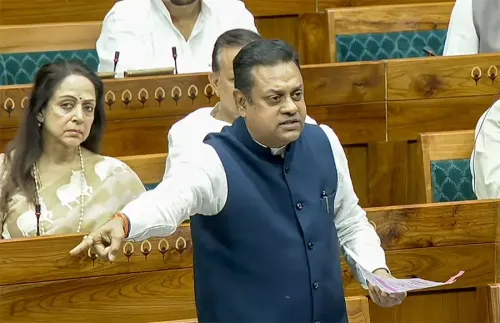
During his address to the Lok Sabha on March 30, HM Shah highlighted a transformative reality. What was once perceived as an unmanageable conflict, deeply entrenched in underdevelopment, has been dismantled through a comprehensive strategy that includes relentless security measures, advanced technology, a robust infrastructure initiative, and a compassionate yet resolute rehabilitation policy.
Shah's remarks not only acknowledged this significant milestone but also dispelled long-standing misconceptions regarding the roots of Naxalism. At its height, the infamous Red Corridor extended across 12 states, affecting nearly 70% of India's land area and the lives of over 200 million citizens. The ideological movement, which began with the Naxalbari uprising in 1967, was responsible for more than 20,000 deaths, including over 5,000 security personnel who made the ultimate sacrifice.
Naxal factions reportedly extorted around Rs 240 crore each year as “tax” from the populace, with approximately 92% of their armaments acquired from police facilities and armories rather than through imports.
Amit Shah firmly rejected the assertion that Naxalism arose from poverty, referencing data from the 1960s which indicated that the Naxalbari region had a higher per capita income than several unaffected areas, such as Saharsa in Bihar. The movement was propelled not by the genuine grievances of the impoverished but by a rigid, foreign ideology focused on seizing power through armed conflict.
The 2005 Jehanabad jailbreak — where around 1,000 armed Naxals overwhelmed a CRPF camp to liberate 389 prisoners — exemplified the audacity and organizational prowess of the extremists.
Urban intellectuals and organizations, labeled as “Urban Naxals,” played a crucial role in providing logistical and ideological support, complicating the state's response for many years. The transformation observed over the last 12 years has been extraordinary.
In 2014, 126 districts were impacted by Naxal activities, with 35 categorized as “most affected.” By 2026, the number has drastically reduced to just two affected districts, with none classified as “most affected.”
The entire leadership of the CPI (Maoist), comprising all 21 members of the Central Committee and Politburo, has either been neutralized or has surrendered. A stringent “zero tolerance” policy has dismantled urban support networks and affiliated organizations.
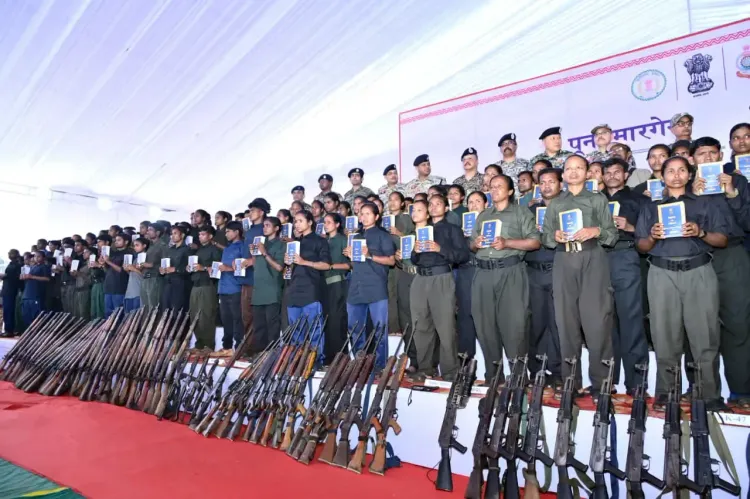
This success was not solely a result of security operations. A lucrative surrender-and-rehabilitation program has played a critical role, offering immediate assistance of Rs 50,000, a monthly stipend for 36 months, housing under the PM Awas Yojana, free education for children up to Class 12, and increased rewards for group surrenders. Panchayats that became Naxal-free were incentivized with Rs one crore. This approach encouraged thousands to abandon violence and reintegrate into mainstream society.
Key security operations have shifted the balance. Notable missions such as 'Operation Octopus' in Bihar, 'Operation Double Bull' in Gumla-Latehar, 'Operation Thunderstorm' in Jharkhand, and the grueling 21-day 'Operation Black Forest'—conducted under extreme conditions—have significantly weakened persistent Naxal strongholds.
Security forces were equipped with 400 bullet- and blast-proof vehicles, 68 night-landing helipads, and 596 fortified police stations. The integration of technology, including UAVs, drones, satellite imaging, and AI-based analytics, has provided unprecedented operational advantages.
Alongside these kinetic operations, the government initiated an extensive development campaign in tribal areas. Over 12,000 km of roads were constructed, with Rs 20,815 crore allocated specifically for LWE-affected regions. More than 5,000 mobile towers were installed, and the Prime Minister has tasked the installation of an additional 8,000 to ensure that tribal connectivity is on par with urban standards, including those of Delhi.
Financial inclusion initiatives led to the opening of 1,804 new bank branches, 1,321 ATMs, and over 6,000 post offices. Women received loans of Rs two lakh, while men received Rs five lakh for self-employment. Educational infrastructure expanded with the establishment of 259 Eklavya Model Schools and numerous ITIs and skill centers.
Healthcare saw enhancements with the establishment of a 240-bed super-speciality hospital in Jagdalpur.
Cultural initiatives, such as the Bastar Olympics (with over 5.5 lakh tribal participants) and Bastar Pandum (featuring 1.2 lakh artists), promoted pride and social integration.
Home Minister Shah's address emphasized a clear philosophy: “Goli ka jawab goli (bullet for bullet)” coupled with “development for all.”
This dual strategy has reinstated the rule of law while addressing the genuine aspirations of tribal populations.
The collapse of Naxalism signifies the conclusion of a 56-year-old conflict that once posed a threat to India's internal security and democratic integrity.
As India enters a new era on April 1, 2026, this achievement stands as a testament to coordinated governance, political resolve, and the sacrifices made by security forces and civilians alike.
While challenges related to sustained development and vigilance against any ideological resurgence persist, the momentum is undeniably irreversible.
The Red Corridor, previously a symbol of fear and violence, is now being replaced by roads, schools, hospitals, and opportunities—demonstrating that democracy and development, reinforced by steadfast security, can triumph over even the most entrenched insurgencies.
Point of View
The government's strategic approach to dismantling Naxalism through security, infrastructure, and rehabilitation reflects a successful policy framework. This achievement should be viewed as a significant milestone in addressing both security challenges and the developmental needs of affected communities.
NationPress
30 Sept 2026
Frequently Asked Questions
What led to the declaration of India as Naxal-free?
The declaration was made by Union Home Minister Amit Shah, citing a comprehensive strategy that combined security operations, technological advancements, infrastructure development, and rehabilitation policies.
How did Naxalism impact India?
Naxalism historically affected over 20 crore citizens, claiming more than 20,000 lives, including over 5,000 security personnel, and extended across 12 states.
What measures were taken to combat Naxalism?
Key measures included security operations, a robust rehabilitation policy, and significant infrastructure investments in tribal areas.
What is the significance of the Red Corridor?
The Red Corridor represented the heart of Naxal influence, covering approximately 70% of India's landmass at its peak, affecting millions of lives.
What does the future hold for the regions affected by Naxalism?
The government aims to ensure sustained development and vigilance against ideological resurgence, fostering opportunities for the local populations.