Amit Shah: Five decades of Naxalism ended under BJP rule by March 2026
Synopsis
Home Minister Amit Shah has put a precise date on one of India's longest-running security crises — declaring Naxalism officially over as of 31 March 2026. The claim, made at a hostel inauguration in Ahmedabad, is the BJP's sharpest assertion yet on internal security, and comes paired with the announcement of a new Demographic Change Commission targeting infiltration-linked population shifts.
Key Takeaways
Amit Shah declared that Naxalism in India ended on 31 March 2026 under Prime Minister Narendra Modi's leadership.
Shah said both terrorism and Naxalism had been 'eliminated' within 10 years of BJP governance.
The Union Home Ministry has formed a Demographic Change Commission to study infiltration-linked demographic shifts, with a focus on West Bengal .
Shah spoke at the inauguration of two 13-storey hostel buildings at Mata Umiya Dham, Ahmedabad , built at a cost of over ₹170 crore for 1,600 students .
Gujarat CM Bhupendra Patel and Rajkot MP Parshottam Rupala were among senior leaders present at the event.
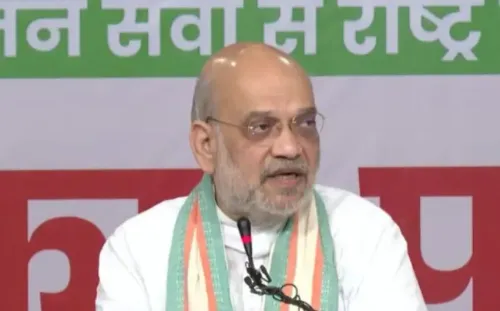
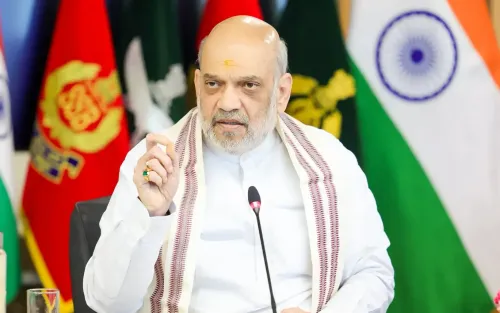
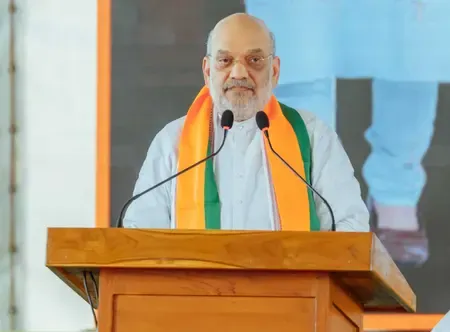
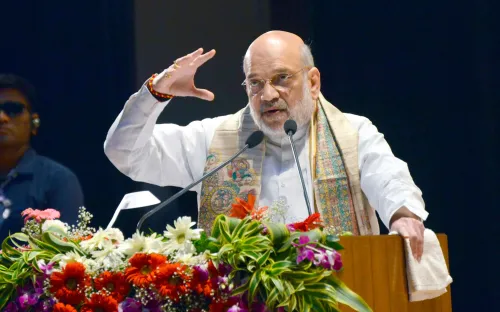
Union Home Minister Amit Shah on Thursday, 28 May 2026, declared that Naxalism — a challenge that plagued India for over five decades — had been fully eliminated by 31 March 2026 under the leadership of Prime Minister Narendra Modi. Shah made the assertion at the inauguration of new hostel facilities at Mata Umiya Dham in Ahmedabad, while crediting the Bharatiya Janata Party (BJP) government with a sweeping transformation of India's internal security landscape over the past decade.
Key Declarations on Internal Security
Addressing an audience of community leaders, students, donors, and political representatives, Shah said the Modi government had achieved what previous administrations could not — dismantling both terrorism and Naxalism within a single decade. 'Economic transformation has taken place across the country, but there has also been a revolutionary transformation in national security,' he said.
He was unambiguous on the Naxal question: 'Naxalism, which had become a festering problem for five decades, ended on 31 March 2026, under this BJP government.' The claim positions the ruling party's security record as a defining achievement ahead of upcoming electoral cycles.
Demographic Change Commission Announced
Shah also disclosed that the Union Home Ministry has constituted a Demographic Change Commission to investigate what he described as 'unnatural demographic changes' linked to infiltration. He said the commission would examine the causes of such shifts and explore legal remedies. The remarks came in the context of developments in West Bengal, which Shah referenced specifically during his address.
Inauguration of ₹170 Crore Hostel Complex
The occasion was the inauguration of the J.S. Patel Hostel and the Tapasvi Kumar Arvindbhai Patel Girls' Hostel at Mata Umiya Dham. According to organisers, the two 13-storey buildings were constructed at a combined cost of more than ₹170 crore and will accommodate approximately 1,600 students pursuing education in Ahmedabad and Gandhinagar.
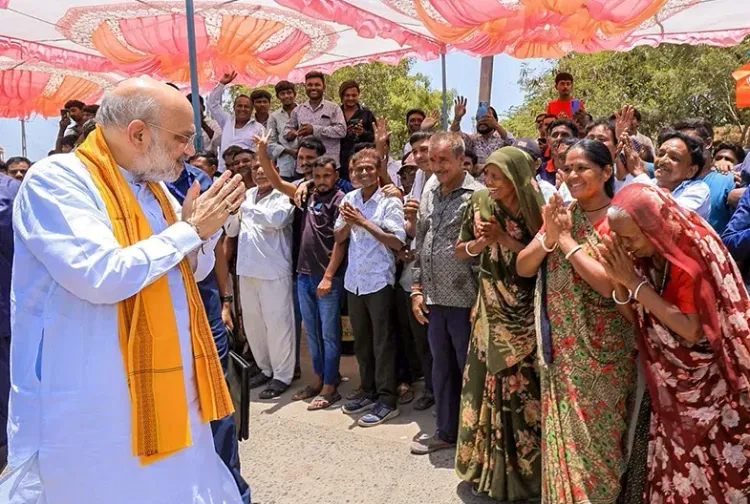
Shah was joined at the event by Gujarat Chief Minister Bhupendra Patel, senior BJP leader and former Deputy Chief Minister Nitin Patel, Rajkot MP Parshottam Rupala, state ministers, and office-bearers of the Umiya Mata Sansthan.
Context and Significance
The claim that Naxalism has been eliminated marks a significant rhetorical milestone. Left-wing extremism had, at its peak, affected over 200 districts across central and eastern India. Security analysts and opposition leaders are likely to scrutinise the declaration closely, given that ground-level assessments of residual Naxal activity have varied. This is the first time a senior Union minister has explicitly named a date — 31 March 2026 — as the endpoint of organised Naxal presence in India.
The Home Ministry's formation of a Demographic Change Commission adds a new institutional dimension to the Centre's approach to infiltration — a politically charged issue that has dominated discourse around West Bengal and border states. With the commission's mandate still being defined, its scope and independence will be closely watched.
Point of View
Not zero, Naxal footprint; naming a definitive endpoint raises the bar for verification. The simultaneous announcement of a Demographic Change Commission signals that the government is now institutionalising its infiltration narrative, which has electoral salience in West Bengal and border states. Taken together, the two moves suggest the BJP is framing its third-term security legacy in concrete, dateable terms — a strategy that strengthens its base but also creates accountability benchmarks opponents will use.
NationPress
19 Sept 2026
Frequently Asked Questions
What did Amit Shah say about Naxalism in India?
Home Minister Amit Shah declared on 28 May 2026 that Naxalism — active for over five decades — had ended on 31 March 2026 under Prime Minister Narendra Modi's government. He made the statement at a hostel inauguration event in Ahmedabad, Gujarat.
What is the Demographic Change Commission announced by Amit Shah?
The Union Home Ministry has constituted a Demographic Change Commission to study what Shah called 'unnatural demographic changes' caused by infiltration, examine their causes, and explore legal measures. Shah referenced developments in West Bengal while announcing the commission.
Where did Amit Shah make these remarks?
Shah spoke at the inauguration of the J.S. Patel Hostel and the Tapasvi Kumar Arvindbhai Patel Girls' Hostel at Mata Umiya Dham in Ahmedabad on 28 May 2026. The two 13-storey buildings were built at a combined cost of over ₹170 crore.
How many students will the new Ahmedabad hostels accommodate?
According to organisers, the two newly inaugurated hostel buildings at Mata Umiya Dham will accommodate approximately 1,600 students pursuing education in Ahmedabad and Gandhinagar.
Why is Shah's claim about Naxalism significant?
It is the first time a senior Union minister has assigned a specific date — 31 March 2026 — to the end of organised Naxal activity in India, a conflict that had at its peak affected over 200 districts. The claim sets a verifiable benchmark that security analysts and opposition parties are expected to scrutinise closely.