MP CM Mohan Yadav Declares State Naxal-Free on Independence Day
Synopsis
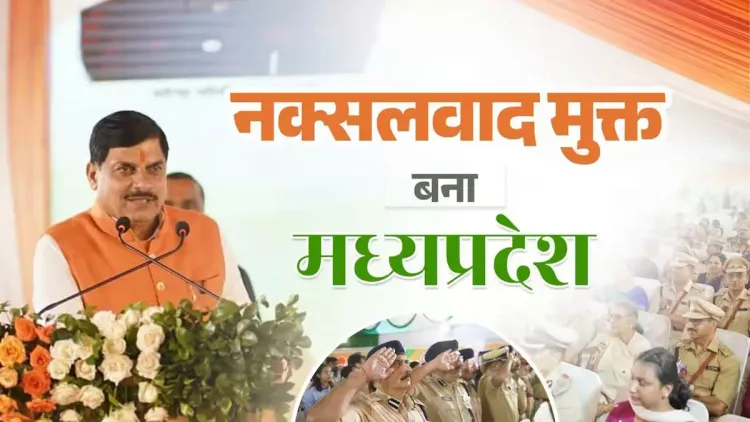
Chief Minister Mohan Yadav declared Madhya Pradesh fully free of Naxal influence on Independence Day 2026, crediting PM Modi and Home Minister Amit Shah's national security campaign, and announced an accelerated development push in formerly affected districts like Balaghat and Mandla.
Key Takeaways
CM Mohan Yadav declared Madhya Pradesh completely free from Naxalism on 15 August 2026 .
The announcement credits national anti-LWE campaigns led by PM Narendra Modi and Home Minister Amit Shah .
Historically affected districts include Balaghat and Mandla , bordering Naxal heartland Chhattisgarh .
The SAMADHAN doctrine (2017) provided the multi-dimensional strategic framework combining security and development.
The state government has signalled an accelerated infrastructure and welfare push in erstwhile LWE-affected areas.
Official MHA district reclassification data remains the primary benchmark for verifying the Naxal-free claim.
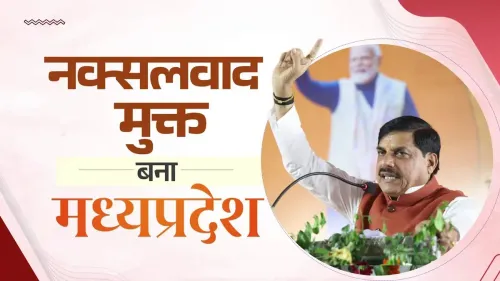
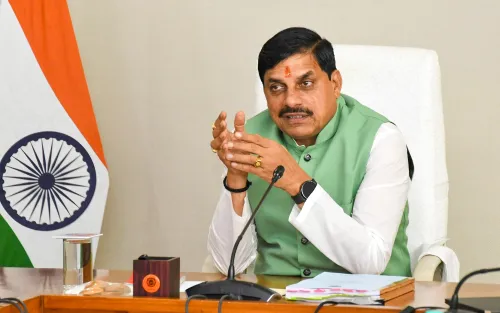
On Independence Day, 15 August 2026, Madhya Pradesh Chief Minister Dr. Mohan Yadav made a sweeping declaration: the state has been completely liberated from the grip of Naxalism — and the focus now shifts from security to development in districts that lived under the shadow of Left Wing Extremism for decades.
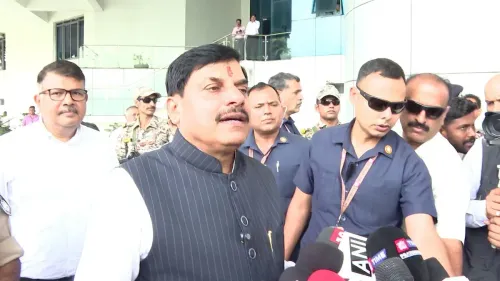
Posting in Hindi on the occasion of Independence Day 2026, CM Yadav attributed the achievement to sustained nationwide anti-Naxal campaigns led by Prime Minister Narendra Modi and Union Home Minister Amit Shah. 'Madhya Pradesh has become completely free from the influence of Naxalism,' he said, adding that work is now underway to 'accelerate the pace of development in erstwhile Naxal-affected areas and bring positive change to people's lives.'
From Balaghat's Forests to the National Security Doctrine
Madhya Pradesh once had active Naxal pockets — most notably in the forested districts of Balaghat and Mandla in the state's eastern belt, bordering Chhattisgarh, the historic heartland of Left Wing Extremism. The Union Ministry of Home Affairs has tracked a progressive reduction in LWE-affected districts since 2014, as joint security operations, intelligence coordination and community outreach chipped away at insurgent networks across central and eastern India.
The strategic backbone of this push was the SAMADHAN doctrine, articulated in 2017, which laid out a multi-dimensional approach: smart leadership, aggressive strategy, motivation and training, actionable intelligence, dashboard-based monitoring, harnessing technology, action plans for each theatre, and no access to financing. It was never purely a guns-and-boots campaign — development delivery ran alongside security operations.
What 'Naxal-Free' Means on the Ground
For the tribal communities of Balaghat and Mandla, the declaration signals a tangible shift in how state resources flow. Districts reclassified out of the LWE-affected list typically see an acceleration of road construction, school expansion and welfare scheme penetration — programmes that were either delayed or difficult to implement when armed groups controlled access. CM Yadav signalled exactly this pivot, describing 'continuous work' to bring 'positive change' (सकारात्मक बदलाव) to residents of these regions.
Madhya Pradesh's claim mirrors a pattern seen in other states — including parts of Jharkhand and Odisha — where governments have declared reduced or zero Naxal footprints after sustained joint operations, then redirected security budgets toward infrastructure. The credibility of such declarations ultimately rests on official MHA district reclassification data and ground-level verification.
The real test will come in the months ahead: whether development budgets actually reach the last village in Balaghat's interior, and whether MHA's periodic reports confirm what the Chief Minister declared from the dais on 15 August.
Point of View
Timed for maximum resonance on a national stage. The shift in language from 'security operations' to 'development acceleration' signals that the BJP-led state government is now pivoting the LWE narrative into an electoral and welfare-delivery argument. If MHA data validates the Naxal-free claim, Madhya Pradesh becomes a template the Centre can deploy in ongoing operations in Chhattisgarh and Jharkhand. The harder question — whether development budgets will durably reach the most isolated tribal villages — will define whether the declaration holds political and policy weight beyond the podium.
NationPress
30 Sept 2026
Frequently Asked Questions
Is Madhya Pradesh really Naxal-free in 2026?
Chief Minister Mohan Yadav declared on 15 August 2026 that Madhya Pradesh is completely free from Naxal influence. The claim is attributable to the state government; official MHA district reclassification reports are the primary source for independent verification.
Which districts in Madhya Pradesh were affected by Naxalism?
Balaghat and Mandla districts in eastern Madhya Pradesh were historically the most prominent Naxal-affected areas, sharing a border with Chhattisgarh, the traditional heartland of Left Wing Extremism.
What is the SAMADHAN doctrine?
The SAMADHAN doctrine , articulated in 2017 by the Union Home Ministry, is a multi-dimensional strategy against Left Wing Extremism combining smart leadership, actionable intelligence, technology, development delivery, and cutting off insurgent financing.
What role did Amit Shah play in anti-Naxal operations?
Union Home Minister Amit Shah has directed coordinated national anti-Naxal security operations and policy since taking charge, overseeing joint operations between central forces and state police across LWE-affected states.
What happens to Naxal-affected districts after they are declared Naxal-free?
Districts reclassified out of the LWE-affected list typically see accelerated infrastructure investment — roads, schools, and welfare scheme delivery — as security constraints ease and state resources are redirected toward development.