CM Mohan Yadav: MP Govt Eradicated Naxalism Under Modi, Shah
Synopsis
The Chief Minister's Office of Madhya Pradesh declared on June 13, 2026 that the state has fully eradicated its decades-old Naxal problem, crediting PM Narendra Modi's resolve and Home Minister Amit Shah's leadership, citing it as a model of good governance.
Key Takeaways
The Chief Minister's Office of Madhya Pradesh claimed on June 13, 2026 that the state has rooted out its long-standing Naxal insurgency.
Mohan Yadav attributed the achievement to PM Narendra Modi's resolve and Union Home Minister Amit Shah's leadership.
Madhya Pradesh's historically Naxal-affected districts include Balaghat and Mandla in the state's southern and eastern forest belt.
The claim aligns with the Centre's SAMADHAN doctrine (2017) and the Aspirational Districts Programme (2018) , which paired security operations with development in LWE zones.
Ministry of Home Affairs data from 2019 onward had already documented a nationwide reduction in Naxal-affected districts.
Formal verification of the claim would require the MHA's annual LWE report and official district de-notification.
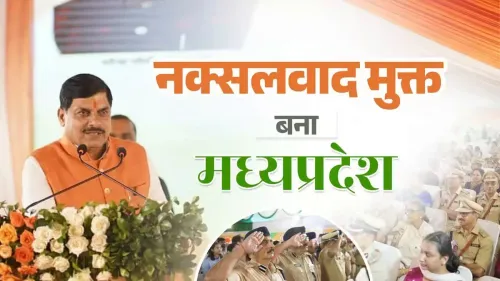
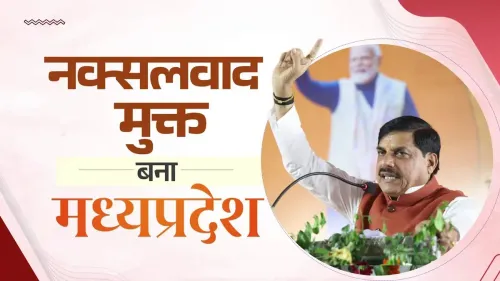
The Chief Minister's Office of Madhya Pradesh declared on Saturday, June 13, 2026 that the state government has eradicated the decades-old Naxal problem and set a benchmark of good governance, crediting the resolve of Prime Minister Narendra Modi and the leadership of Union Home Minister Amit Shah.
The post, attributed to Chief Minister Dr. Mohan Yadav, stated in Hindi: 'yashasvi Pradhanmantri Shri Narendra Modi ji ke sankalp aur Amit Shah ji ke netritva mein pradesh sarkar ne varshon purani Naksal samasya ko jadd se samaapt kar sushasan ki misaal kaayam ki hai' — loosely translated as: 'Under the resolve of the honourable Prime Minister Narendra Modi and the leadership of Union Home Minister Amit Shah, the state government has rooted out the long-standing Naxal problem and set an example of good governance.'
Context
Madhya Pradesh has historically recorded Naxal activity in its forested southern and eastern districts, particularly Balaghat and Mandla, where Maoist groups exploited tribal grievances and difficult terrain. The Naxalite insurgency, which traces its origins to the late 1960s, spread across central and eastern India over decades, disrupting administration and development in affected pockets. The state's claim of having fully addressed this challenge marks a significant shift in the official security narrative for the region.
Policy Backdrop
The announcement aligns with a sustained national framework on Left-Wing Extremism (LWE) pursued by the Ministry of Home Affairs. In 2017, the Centre introduced the SAMADHAN doctrine — a multi-dimensional strategy combining counter-insurgency operations, intelligence sharing, and developmental outreach in affected zones. This was complemented by the Aspirational Districts Programme launched in 2018, which prioritised accelerated welfare delivery in several LWE-affected districts, including those in Madhya Pradesh.
Ministry of Home Affairs data released from 2019 onward documented a steady decline in the number of Naxal-affected districts nationwide, with violence incidents contracting geographically across central and eastern India. Madhya Pradesh's assertion mirrors similar claims from neighbouring states operating under the same central security framework.
Stakeholders and Impact
The communities most directly affected by any improvement in security conditions are tribal populations in the former Naxal belts of southern and eastern Madhya Pradesh, who bore the brunt of insurgent violence and administrative neglect for decades. Improved security, if sustained, opens these areas to greater infrastructure investment, forest-based livelihoods, and welfare scheme delivery. Local residents and district administrations in Balaghat and Mandla stand to benefit most immediately from normalisation.
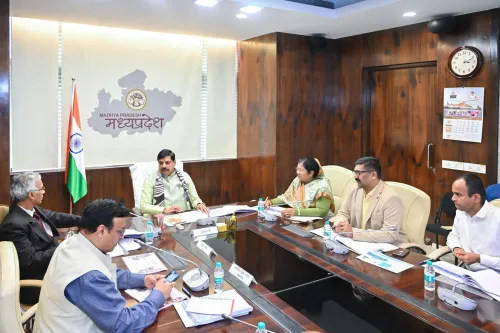
CM Dr. Mohan Yadav, who took office in December 2023, has positioned this achievement as evidence of effective implementation of central security directives at the state level, reinforcing the BJP government's governance credentials ahead of future electoral cycles.
What's Next
Attention will now turn to the Ministry of Home Affairs annual LWE reports, which provide the most authoritative quantitative assessment of violence indicators and district-level threat classifications. Formal de-notification of districts from the LWE-affected list would constitute official confirmation of the state's claim. Observers will also watch for announcements on rehabilitation packages, road connectivity projects, and expanded welfare outreach in formerly insurgency-hit pockets of Madhya Pradesh — the development dividend that the SAMADHAN framework promised alongside security gains.
Point of View
The communication reinforces the BJP's dual narrative of strong internal security and development-led governance ahead of future electoral contests. The claim follows a well-established pattern across BJP-governed states of announcing LWE normalisation in sync with central MHA messaging, lending the declaration a coordinated character. The real test will be whether formal MHA district de-listings and on-ground development indicators in Balaghat and Mandla corroborate the political assertion.
NationPress
18 Sept 2026
Frequently Asked Questions
Has Madhya Pradesh completely eliminated Naxalism?
The Chief Minister's Office of Madhya Pradesh claimed on June 13, 2026 that the state has fully eradicated its Naxal problem. However, formal confirmation would require the Ministry of Home Affairs to officially de-notify affected districts in its annual LWE report.
Which districts in Madhya Pradesh were affected by Naxalism?
The primary Naxal-affected districts in Madhya Pradesh have historically been Balaghat and Mandla in the state's southern and eastern forested regions, where Maoist groups were active for decades.
What is the SAMADHAN doctrine and how does it relate to Madhya Pradesh?
The SAMADHAN doctrine, introduced by the Ministry of Home Affairs in 2017, is a multi-dimensional anti-Naxal strategy combining security operations, intelligence coordination, and development outreach. Madhya Pradesh's anti-Naxal efforts have been conducted within this national framework.
What is CM Mohan Yadav's role in Madhya Pradesh's anti-Naxal campaign?
Dr. Mohan Yadav has served as Chief Minister of Madhya Pradesh since December 2023 and has overseen state-level implementation of central security and development directives targeting Left-Wing Extremism.
What happens to tribal communities in former Naxal areas of Madhya Pradesh?
Tribal populations in formerly Naxal-affected districts stand to benefit most from normalisation, gaining access to improved infrastructure, welfare scheme delivery, and forest-based livelihoods as security conditions stabilise.