CM Mohan Yadav: MP Naxal-Free, Now Targeting Cyber Crime & Drugs
Synopsis
Chief Minister Dr. Mohan Yadav praised Madhya Pradesh Police for rendering the state Naxal-free and announced a determined push to curb cybercrime and build a drug-free Madhya Pradesh, signalling a strategic pivot in the state's internal-security priorities.
Key Takeaways
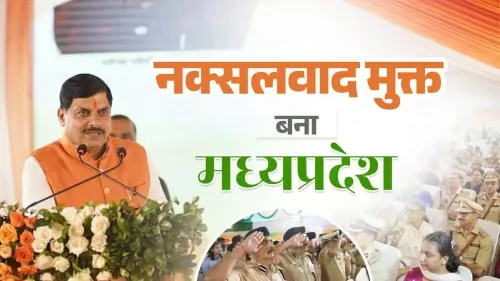
Mohan Yadav declared on October 21, 2026 that Madhya Pradesh has been made Naxal-free through the efforts of the state police force.
The state's counter-Naxal campaign built on operations dating back to 2018 and the central government's SAMADHAN framework (2017) .
The CM announced a firm resolve to curb cybercrime as the next major law-enforcement priority for the state.
Building a drug-free Madhya Pradesh was named alongside cybercrime as a twin mission for the police going forward.
The statement was directed at Madhya Pradesh Police personnel and tagged to the state's Home Department , signalling an official strategic brief.
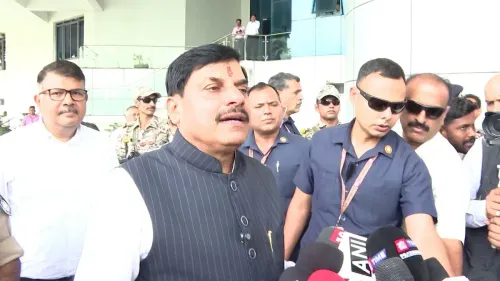
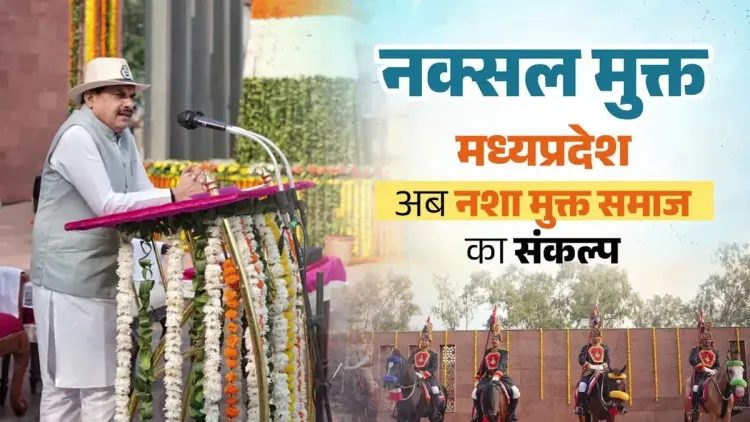
From jungle clearances to digital crackdowns — Madhya Pradesh Chief Minister Dr. Mohan Yadav declared on Wednesday, October 21, 2026 that the state's police force has driven Madhya Pradesh to a Naxal-free status and is now turning its full force toward cybercrime and narcotics, the two frontiers defining India's next internal-security battle.
Addressing the state police, CM Yadav said, 'Police jawans have enhanced the pride of Madhya Pradesh through their efficiency, courage, and dedication to duty. Our jawans have played a crucial role in making the state Naxal-free. Now we are moving forward with firm resolve to curb cyber crimes and build a drug-free Madhya Pradesh.'
The Long Road to a Naxal-Free Madhya Pradesh
The declaration did not arrive overnight. Madhya Pradesh sits on the western edge of India's historic 'Red Corridor', the belt of central and eastern states where Left Wing Extremism once paralysed tribal districts for decades. Sustained security operations from 2018 onward — under successive state governments, coordinated with the central government's SAMADHAN strategy launched in 2017 — progressively choked Naxal networks across the affected districts.
Across the broader Red Corridor, incidents of Naxal violence have recorded measurable declines over the past decade. Madhya Pradesh Police, in combination with central forces, kept consistent pressure on the movement in the state's tribal belts. The cumulative result, as the CM framed it Wednesday, is a state that has effectively closed that chapter of insurgency.
The Pivot: Cybercrime Networks and the Narcotics Threat
Declaring victory on one front, the CM immediately named the next two. Cybercrime has emerged as one of India's fastest-growing law-enforcement challenges — sophisticated fraud networks, often operating across state and national borders, have drained ordinary citizens of savings and eroded trust in digital infrastructure. For a state police force sharpened by counter-insurgency work, the pivot to cyber investigation units represents a significant retraining and reorientation challenge.
The narcotics threat runs parallel. Drug trafficking routes through central India have drawn increasing policy attention, and a 'drug-free Madhya Pradesh' pledge signals the state intends to treat substance abuse not just as a social issue but as a law-and-order priority demanding the same operational intensity once pointed at armed insurgents.
What Dr. Mohan Yadav's Statement Signals for the Force
Dr. Mohan Yadav, who took charge as Chief Minister in December 2023, has consistently positioned internal security and law enforcement as a pillar of his governance identity. Wednesday's statement — directed at police personnel and tagged to @mohdept (the Madhya Pradesh Home Department) — functions simultaneously as a public commendation for the force and a forward brief for its next mandate.
The message to the rank and file is pointed: the mission has evolved, not ended. The same dakshata, sahas aur kartavyanishtha (efficiency, courage, and dedication) that cleared the state of Naxal presence is now expected to bring the same result against cyber fraudsters and drug networks.
India's internal-security calendar is turning a page. Madhya Pradesh, if it delivers on both pledges, could become the template for how post-insurgency states redeploy a battle-tested police apparatus against the threats that define the next decade.
Point of View
Where the security apparatus built for jungle warfare must now navigate digital forensics and drug-supply-chain disruption. For Yadav, declaring Naxal-free status is both a governance credential and a base from which to launch the next law-enforcement narrative ahead of future electoral cycles. Whether the force has the institutional capacity to make the leap — from counter-insurgency to cyber investigation — will determine whether this speech marks a genuine transition or a rhetorical one.
NationPress
21 Oct 2026
Frequently Asked Questions
Is Madhya Pradesh officially Naxal-free?
Chief Minister Dr. Mohan Yadav declared on October 21, 2026 that Madhya Pradesh has been made Naxal-free, crediting the state police with playing a crucial role in achieving this status through sustained operations over several years.
What is CM Mohan Yadav's plan against cybercrime in Madhya Pradesh?
CM Yadav announced a firm resolve to curb cybercrime in Madhya Pradesh, directing the state police — freshly recognised for their counter-Naxal success — to pivot toward cyber crime investigation as a priority mission, though specific unit details have not yet been confirmed.
What is the SAMADHAN strategy and how did it help Madhya Pradesh?
SAMADHAN is a coordinated anti-Left Wing Extremism framework introduced by the central government in 2017, providing states including Madhya Pradesh with a structured approach to security operations, intelligence sharing, and development in affected districts.
What is drug-free Madhya Pradesh and what does the CM plan to do?
A drug-free Madhya Pradesh is a stated policy goal of CM Dr. Mohan Yadav, treating narcotics trafficking and substance abuse as a law-and-order challenge to be addressed with the same operational intensity the police previously applied to Naxal insurgency.
Who is Dr. Mohan Yadav, the Chief Minister of Madhya Pradesh?
Dr. Mohan Yadav has been the Chief Minister of Madhya Pradesh since December 2023, with internal security, law enforcement, and development of the state's tribal and rural regions among his key governance priorities.