CM Mohan Yadav Reviews MP Police on Cyber Crime, Naxal Ops
Synopsis
Madhya Pradesh Chief Minister Dr. Mohan Yadav has directed the state police to engage IT consultants for cyber crime and expand e-challan and e-evidence use, while commending the force on Naxal-free efforts, disaster training, road safety, and ex-servicemen welfare, with the Ministry of Defence praising the state's soldier welfare work.
Key Takeaways
Mohan Yadav directed Madhya Pradesh Police to hire IT consultants specifically to tackle cyber crime.
The Chief Minister called for maximum use of e-challan and e-evidence systems across the state police force.
MP Police was commended for efforts to make the state Naxal-free and for training Aapda Mitra disaster volunteers.
The Ministry of Defence has recognised Madhya Pradesh 's work in the field of ex-servicemen welfare.
The review covered multiple policing domains: road safety, traffic management, fire services, and air ambulance support.
The directive aligns with the Ministry of Home Affairs ' push for state-level digital policing capacity since 2019 .
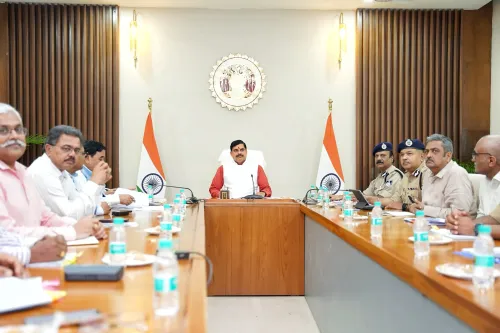
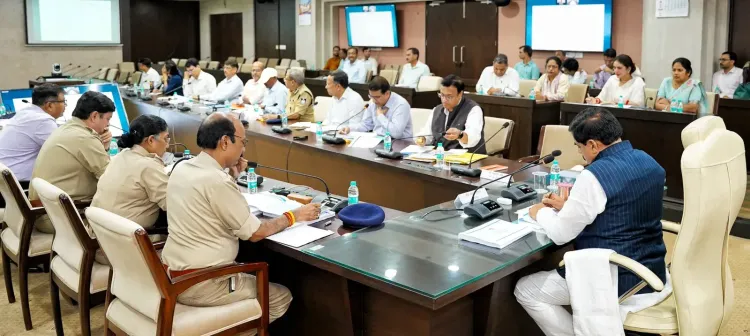
Madhya Pradesh Chief Minister Dr. Mohan Yadav on Friday, June 12, 2026 publicly reviewed the performance of Madhya Pradesh Police, directing the force to engage IT consultants to combat cyber crime and to maximise use of e-challan and e-evidence systems. The Chief Minister also commended the police for their work across multiple fronts, including making the state Naxal-free, disaster preparedness training, road safety, traffic management, fire services, air ambulance support, and ex-servicemen welfare.
Context
Posting on X, Dr. Mohan Yadav stated — 'साइबर अपराधों से निपटने के लिए आईटी कंसल्टेंट की सेवाएं लें। ई-चालान एवं ई-साक्ष्य का अधिकतम उपयोग करें।' ['Engage IT consultant services to deal with cyber crimes. Make maximum use of e-challan and e-evidence.'] The directive signals a push to institutionalise technology-led policing at the state level. He also noted that the Ministry of Defence has praised Madhya Pradesh's contributions in the field of ex-servicemen welfare.
The post was a reply to the Chief Minister's own official handle @DrMohanYadav51, suggesting it formed part of a broader thread reviewing police functioning. The acknowledgment of central government praise adds a layer of inter-governmental validation to the state's welfare efforts.
Policy Backdrop
The push to hire IT consultants for cyber crime cells aligns with the broader framework established by the Ministry of Home Affairs, which launched the National Cyber Crime Reporting Portal in 2019 to coordinate state-level responses to digital offences. States have since been encouraged to build local technical capacity alongside the central portal. Madhya Pradesh has participated in successive phases of the Modernisation of Police Forces scheme, which has progressively incorporated digital tools including e-evidence protocols.
The Aapda Mitra scheme, rolled out by the National Disaster Management Authority (NDMA) in 2016, underpins the disaster preparedness training referenced by the Chief Minister. Community volunteers trained under this programme serve as first responders, supplementing police and civil defence capacity during floods, fires, and other emergencies.
On the security front, Madhya Pradesh has historically had Naxal-affected pockets in its southern and eastern districts. The state's efforts to neutralise Left-Wing Extremism form part of the central government's wider anti-Naxal strategy coordinated through the Ministry of Home Affairs.
Stakeholders and Impact
The directive to use IT consultants directly affects how Madhya Pradesh Police's cyber crime cells are structured and staffed, with potential benefits for citizens who are victims of online fraud, identity theft, and digital harassment. Wider deployment of the e-challan system is expected to improve road safety compliance and reduce manual intervention in traffic enforcement, benefiting road users across the state.
Ex-servicemen and their families stand to gain from the continued focus on sainik kalyan (soldier welfare), a domain where the Ministry of Defence's recognition signals that state-level initiatives are being monitored and appreciated at the national level. Disaster-affected communities benefit from the expanded Aapda Mitra volunteer network.
What's Next
The immediate focus will be on whether Madhya Pradesh Police moves to formally recruit or empanel IT consultants for its cyber crime units, and how the state scales up e-challan and e-evidence adoption across districts. Any formal central government assessment of the state's policing modernisation or additional recognition for ex-servicemen welfare programmes will be a key indicator of progress. The Chief Minister's public review sets a visible accountability benchmark for the force heading into the second half of 2026.
Point of View
The post positions the Chief Minister as hands-on across both legacy security challenges like Naxalism and emerging threats like cyber crime, reinforcing a broad-based governance narrative.
NationPress
19 Sept 2026
Frequently Asked Questions
What did CM Mohan Yadav say about cyber crime in Madhya Pradesh?
CM Dr. Mohan Yadav directed Madhya Pradesh Police to engage IT consultants to deal with cyber crime and to make maximum use of e-challan and e-evidence systems for enforcement.
Has Madhya Pradesh been declared Naxal-free?
CM Mohan Yadav praised MP Police for their ongoing efforts to make the state Naxal-free, though the research notes that exact current figures on Naxal-free status cannot be independently verified from established public records.
What is the Aapda Mitra scheme mentioned in the MP Police review?
Aapda Mitra is a community volunteer training programme launched by the National Disaster Management Authority in 2016 to prepare local volunteers for disaster response; Madhya Pradesh Police has been supporting this training.
Why did the Ministry of Defence praise Madhya Pradesh?
The Ministry of Defence recognised Madhya Pradesh's work in the field of ex-servicemen welfare, as highlighted by CM Mohan Yadav in his post on June 12, 2026.
What is the e-challan system and why is CM Mohan Yadav promoting it?
The e-challan system is an electronic traffic violation enforcement mechanism that reduces manual intervention and improves road safety compliance; CM Yadav directed MP Police to maximise its use alongside e-evidence protocols.