CM Mohan Yadav Launches 'Safe Click 2.0' Cyber Awareness Drive
Synopsis
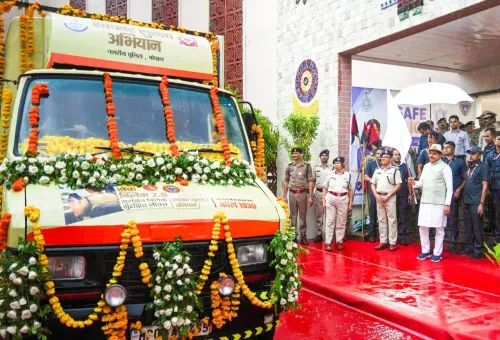
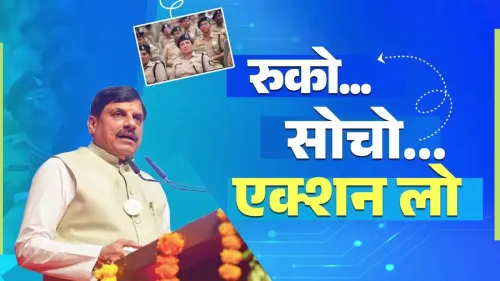
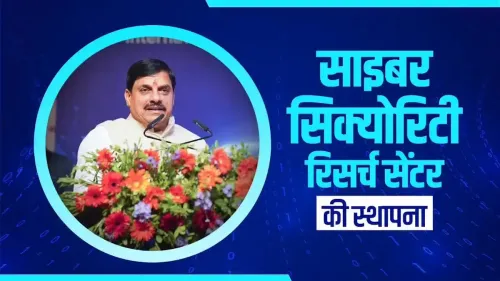
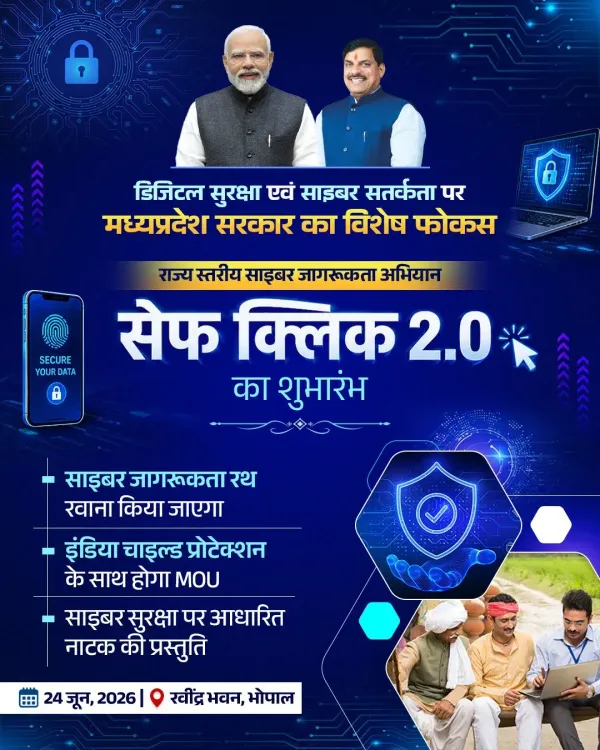
Madhya Pradesh Chief Minister Dr. Mohan Yadav announced the launch of 'Safe Click 2.0', a state-level cyber awareness campaign aimed at protecting citizens from cyber crimes and promoting responsible digital behaviour across the state.
Key Takeaways
Safe Click 2.0 is a state-level cyber awareness campaign launched by Madhya Pradesh under Chief Minister Dr.
The campaign targets two goals: protecting citizens from cyber crimes and promoting responsible digital behaviour.
The initiative aligns with national frameworks including the National Cyber Security Policy (2013) , Digital India (2015) , and the Indian Cyber Crime Coordination Centre (I4C, 2018) .
Rising digital adoption across India has directly correlated with increased cyber fraud, making state-level campaigns a critical last-mile intervention.
District-level rollout metrics and potential linkage with cybercrime.gov.in will be key indicators of the campaign's reach and effectiveness.
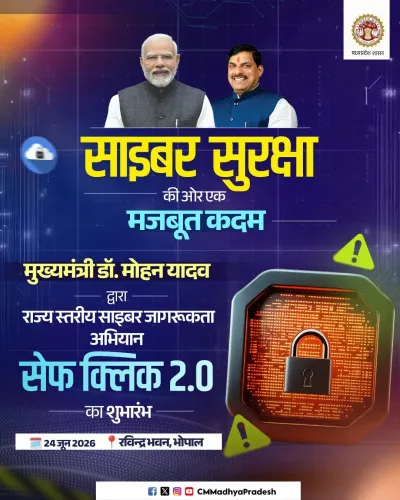
Madhya Pradesh Chief Minister Dr. Mohan Yadav announced on Wednesday, 24 June 2026, that the state would launch 'Safe Click 2.0', a state-level cyber awareness campaign designed to protect citizens from online crimes and promote responsible digital behaviour.
Context
In his post on X, Dr. Yadav stated that the campaign — "Safe Click 2.0" — would be inaugurated with the twin goals of 'nagarikon ko cyber aparadhon se surakshit rakhne' (protecting citizens from cyber crimes) and 'jimmedar digital vyavahar ko badhava dene' (promoting responsible digital behaviour). The announcement positions Madhya Pradesh among states actively building localised cyber-safety frameworks atop national infrastructure.
Cyber fraud has emerged as one of the fastest-growing categories of crime in India, with rising digital adoption under national programmes correlating directly with increased incidents of online financial fraud, phishing, and identity theft. State-level campaigns are increasingly seen as essential last-mile complements to central enforcement mechanisms.
Policy Backdrop
India's cyber-safety architecture has been built in layers over more than a decade. The National Cyber Security Policy of 2013 laid the foundational framework for a secure computing environment, while the Digital India programme launched in 2015 embedded digital literacy and cyber hygiene as explicit objectives.
The Indian Cyber Crime Coordination Centre (I4C), established in 2018, created a national nerve centre for coordinating responses to online crimes and operates the citizen-facing portal cybercrime.gov.in. States like Madhya Pradesh frequently adapt I4C guidelines into localised drives to reach populations in regional languages and across varied digital literacy levels.
'Safe Click 2.0' fits within this pattern — a state-level initiative that draws on the national policy lineage but is tailored to the specific demographics and digital footprint of Madhya Pradesh, a large, centrally located state with rapidly expanding internet penetration in both urban and rural areas.
Stakeholders and Impact
The primary beneficiaries of the campaign are ordinary citizens and internet users across Madhya Pradesh, particularly those newly onboarded to digital financial services, e-governance platforms, and social media. First-time smartphone users in semi-urban and rural districts are disproportionately targeted by cyber fraudsters, making awareness drives at the state level especially consequential.
The campaign also signals a governance priority for the Dr. Mohan Yadav administration — framing digital safety not merely as a law-enforcement challenge but as a civic responsibility. By branding the initiative as 'Safe Click 2.0', the state government implicitly acknowledges an iterative approach to the problem, building on prior outreach efforts.
What's Next
Observers will watch for the district-level rollout metrics of Safe Click 2.0, including the number of awareness sessions, reach across divisions, and any formal linkage with central portals such as cybercrime.gov.in for reporting and follow-up. Whether the campaign integrates with school curricula, gram panchayat networks, or Jan Seva Kendras will determine its depth of penetration beyond urban centres.
The initiative also sets a benchmark for other states grappling with the same challenge — as India's digital economy deepens, the race between cybercriminals and public awareness programmes is only likely to intensify.
Point of View
The campaign is an opportunity to demonstrate administrative responsiveness to a problem that cuts across class and geography. The '2.0' branding suggests an iterative policy approach — a signal that the administration is tracking outcomes rather than merely running one-off drives. In the context of competitive federalism on digital governance, Madhya Pradesh's move could prompt neighbouring states to accelerate or rebrand their own cyber-safety programmes.
NationPress
22 Sept 2026
Frequently Asked Questions
What is Safe Click 2.0 in Madhya Pradesh?
Safe Click 2.0 is a state-level cyber awareness campaign launched by Madhya Pradesh Chief Minister Dr. Mohan Yadav to protect citizens from cyber crimes and encourage responsible digital behaviour across the state.
Who launched the Safe Click 2.0 campaign?
The campaign was announced by Madhya Pradesh Chief Minister Dr. Mohan Yadav on 24 June 2026 via a post on X.
What is the goal of the Safe Click 2.0 campaign?
The campaign aims to safeguard citizens from online crimes such as cyber fraud and phishing, and to promote safe, responsible use of digital platforms.
How does Safe Click 2.0 relate to national cyber safety efforts?
The campaign builds on national frameworks including the National Cyber Security Policy of 2013, the Digital India programme of 2015, and the Indian Cyber Crime Coordination Centre (I4C) established in 2018, adapting them for Madhya Pradesh's specific needs.
Where can Madhya Pradesh citizens report cyber crimes?
Citizens can report cyber crimes on the central government portal cybercrime.gov.in, and state-level campaigns like Safe Click 2.0 are expected to direct users to such platforms for assistance.