CM Mohan Yadav hails Cyber Tehsil 2.0 for transparent governance

Synopsis
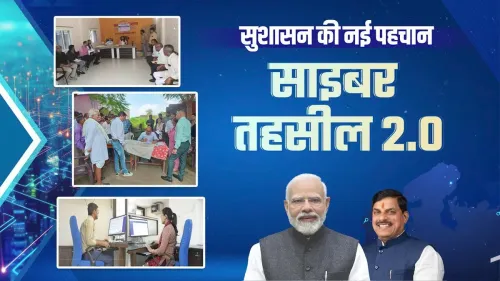
Madhya Pradesh Chief Minister Dr. Mohan Yadav has credited Cyber Tehsil 2.0 with giving fresh pace to good governance and making citizen services more transparent. In a post on X tagged #ViksitMadhyaPradesh, he framed the platform as part of a wider digital transformation of the state's administration and revenue service delivery.
Key Takeaways
Mohan Yadav highlighted Cyber Tehsil 2.0 as a driver of transparent governance in Madhya Pradesh.
The post on X was tagged #ViksitMadhyaPradesh, linking state reform to the Viksit Bharat 2047 vision.
Cyber Tehsil is an online platform for handling land-record mutations and revenue cases without office visits.
The initiative builds on Madhya Pradesh's land-records computerisation drive that began in the 2000s.
It aligns with the central Digital India programme launched in 2015 for electronic service delivery.
Rural citizens and tehsil-level revenue staff are the key stakeholders affected by the platform.
Madhya Pradesh Chief Minister Dr. Mohan Yadav on Wednesday, June 3, 2026, said the state's Cyber Tehsil 2.0 platform has given fresh momentum to good governance and made citizen services more transparent. In a post on X accompanied by a video, the chief minister framed the rollout as evidence of an ongoing digital transformation across Madhya Pradesh.
'Madhya Pradesh is changing, Madhya Pradesh is going digital,' the chief minister wrote, adding that 'Cyber Tehsil 2.0 ke maadhyam se sushasan ko nayi gati mili hai evam sevayein aur adhik paardarshi hui hain' (Cyber Tehsil 2.0 has given new pace to good governance and services have become more transparent). The post carried the hashtag #ViksitMadhyaPradesh, the state-level rallying cry that mirrors the centre's Viksit Bharat vision for a developed India by 2047.
Context
Cyber Tehsil is the umbrella term used by the Madhya Pradesh revenue department for an online platform designed to handle routine land-record mutations and revenue-case workflows without requiring citizens to visit a physical tehsil office. The chief minister's reference to a 2.0 iteration signals an upgrade over the earlier version of the platform.
Dr. Yadav, who assumed office as chief minister in December 2023, has repeatedly positioned digital service delivery as a centrepiece of his administration's good-governance pitch. Wednesday's message continues that thread, linking platform-level reform to the broader Viksit Madhya Pradesh narrative.
Policy backdrop
The push sits within a longer arc of state-led e-governance in India. Madhya Pradesh began computerising land records and rolling out online revenue services in the 2000s, and successive state administrations have layered new digital tools on top of that base.
At the national level, the Digital India programme launched in 2015 set the template for delivering government services electronically and expanding digital public infrastructure. Land administration, long viewed as one of the most friction-heavy citizen interfaces, has been a priority focus for states seeking to cut paperwork and reduce face-to-face dealings at the tehsil level.
Stakeholders and impact
The most direct beneficiaries of a functioning Cyber Tehsil system are rural citizens who depend on revenue offices for mutations, certified copies and case updates linked to agricultural and homestead land. A platform-based workflow can, in principle, shorten turnaround times and create a digital trail for each case.
For tehsil-level revenue staff, the shift implies a recalibration of work — from over-the-counter file handling to monitoring and disposing of cases through a dashboard. The chief minister's emphasis on transparency suggests the state intends to use the platform as an accountability tool as much as a service window.
What's next
Key markers to watch will be service-uptake data, pendency in revenue cases handled through the platform, and grievance volumes reported by users. Integration with central digital infrastructure such as UMANG and DigiLocker would further widen access and allow citizens to pull verified documents into other government workflows.
For Dr. Yadav's government, the political utility of Cyber Tehsil 2.0 will hinge on whether citizens experience tangibly faster and cleaner service at the tehsil counter — the test by which most land-administration reforms in India are ultimately judged.
Point of View
So any credible reduction in tehsil-level friction carries electoral weight. For Dr. Yadav, anchoring the message in the Viksit Madhya Pradesh hashtag signals an effort to map state delivery onto the BJP's national Viksit Bharat 2047 storyline. The real test will be measurable disposal rates and grievance trends, not platform branding.
NationPress
17 Oct 2026
Frequently Asked Questions
What is Cyber Tehsil 2.0 in Madhya Pradesh?
Cyber Tehsil 2.0 is an upgraded online platform of the Madhya Pradesh revenue department for handling routine land-record mutations and revenue-case workflows without requiring citizens to visit a physical tehsil office.
Who launched the Cyber Tehsil initiative in MP?
The initiative is run by the Madhya Pradesh state government's revenue department, with the latest 2.0 version being publicly endorsed by Chief Minister Dr. Mohan Yadav as part of his digital governance push.
How does Cyber Tehsil benefit rural citizens?
It is designed to let rural citizens get land mutations, certified copies and revenue case updates processed digitally, reducing the need for repeated visits to tehsil offices and creating a digital record of each case.
What is the Viksit Madhya Pradesh campaign?
Viksit Madhya Pradesh is the state-level branding used by the Madhya Pradesh government to align its development and governance reforms with the central Viksit Bharat vision of a developed India by 2047.
When did Mohan Yadav become CM of Madhya Pradesh?
Dr. Mohan Yadav took over as Chief Minister of Madhya Pradesh in December 2023, after being chosen by the BJP following the party's victory in the state assembly elections.