CM Mohan Yadav's Cyber Tehsil 2.0 Clears 5.60 Lakh Mutations
Synopsis
Madhya Pradesh's Cyber Tehsil 2.0 has cleared over 5.60 lakh online land-mutation cases, the Chief Minister's Office announced on 28 May 2026, highlighting the platform's role in delivering transparent, paperless revenue services to landowners across the state.
Key Takeaways
The Chief Minister's Office of Madhya Pradesh announced on 28 May 2026 that Cyber Tehsil 2.0 has resolved more than 5.60 lakh online land-mutation (namantaran) cases .
Cyber Tehsil 2.0 is an upgraded digital platform run by the Madhya Pradesh Revenue Department for end-to-end online processing of property-ownership transfers in government records.
The initiative is rooted in the central government's National Land Records Modernisation Programme (NLRMP) launched in 2008 and aligns with the Digital India framework of 2015 .
Mohan Yadav , in office since December 2023 , has promoted digital revenue-administration reforms as a core governance priority.
The platform benefits landowners and farmers by eliminating repeated visits to physical tehsil offices and creates a digitally auditable trail for revenue officials.
Future steps may include integration with Aadhaar-linked services and expansion of digital-disposal modules to other revenue functions.
The Chief Minister's Office of Madhya Pradesh announced on Thursday, 28 May 2026 that Cyber Tehsil 2.0, the state's upgraded digital land-mutation platform, has successfully resolved more than 5.60 lakh online namantaran (mutation) cases through a transparent, paperless process.
Context
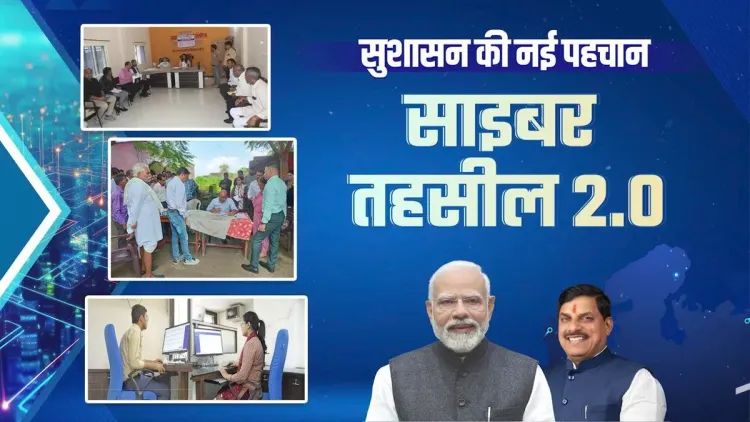
The post, shared by the official handle of the Chief Minister's Office and tagging Chief Minister Dr. Mohan Yadav and the Madhya Pradesh Revenue Department, describes Cyber Tehsil 2.0 as a 'suushasan ki nayi pehchaan' — 'a new identity of good governance'. The milestone figure of 5.60 lakh-plus cases disposed of online underscores the scale at which the state is processing property-ownership transfers without applicants visiting a physical tehsil office.
A land mutation, or namantaran, is the official update of a property owner's name in government revenue records following a sale, inheritance, or gift deed. Delays and opaque procedures in this process have historically been a source of grievance for landowners across India.
Policy Backdrop
Madhya Pradesh's digital land-records push is rooted in the National Land Records Modernisation Programme (NLRMP), a central government initiative launched in 2008 to computerise land records and streamline mutation workflows across states. The programme laid the infrastructure groundwork that state-level platforms such as Cyber Tehsil later built upon.
Cyber Tehsil 2.0 is the enhanced iteration of that effort, developed by the Madhya Pradesh Revenue Department with an emphasis on end-to-end online processing, real-time status tracking, and reduced scope for discretionary delays. The initiative aligns with the broader Digital India framework, under which states have been encouraged since 2015 to migrate citizen-facing revenue services to centralised digital portals.
Dr. Mohan Yadav, who has served as Chief Minister since December 2023, has positioned digital governance reforms — particularly in revenue administration — as a signature agenda of his administration.
Stakeholders and Impact
The primary beneficiaries of Cyber Tehsil 2.0 are landowners and farmers across Madhya Pradesh who previously had to make multiple visits to tehsil offices, often waiting weeks or months for mutation orders. Online disposal reduces physical touchpoints and, by extension, the opportunity for rent-seeking at the local revenue-office level.
For revenue officials, the platform introduces a digitally auditable workflow, meaning each case carries a timestamped trail from application to disposal. This accountability layer is central to the state's claim of a 'transparent system.' With more than 5.60 lakh cases already resolved, the volume signals meaningful adoption rather than a pilot-stage rollout.
What's Next
Analysts watching Madhya Pradesh's e-governance trajectory will look for further integration of Cyber Tehsil with Aadhaar-linked identity verification, which could automate applicant authentication and reduce processing time further. The Revenue Department may also extend similar digital-disposal modules to other revenue functions — such as diversion of land use or partition cases — across the state's districts.
The broader question is whether the 5.60 lakh milestone translates into measurable reductions in pendency rates at tehsil offices, a metric that would validate the platform's impact beyond headline numbers and set a benchmark for other states pursuing comparable reforms.
Point of View
Who has sought to distinguish his tenure through measurable e-governance outputs rather than policy announcements alone. Clearing 5.60 lakh mutation cases online is a substantial operational number that, if sustained, addresses one of the most persistent friction points between citizens and the state in rural India. The move fits a nationwide pattern in which BJP-governed states have leaned into Digital India deliverables as a governance-legitimacy argument ahead of electoral cycles. The real test, however, lies in pendency data: whether the backlog of unresolved mutations has structurally declined, or whether the headline figure masks a selective clearing of easier cases while complex disputes remain stuck.
NationPress
11 Oct 2026
Frequently Asked Questions
What is Cyber Tehsil 2.0 in Madhya Pradesh?
Cyber Tehsil 2.0 is an upgraded digital platform developed by the Madhya Pradesh Revenue Department that allows landowners to apply for and track land-mutation (namantaran) cases entirely online, reducing the need for visits to physical tehsil offices.
How many cases has Cyber Tehsil 2.0 resolved?
According to the Chief Minister's Office of Madhya Pradesh, Cyber Tehsil 2.0 has successfully resolved more than 5.60 lakh online land-mutation cases as of 28 May 2026 .
What is a namantaran or land mutation?
A namantaran, or land mutation, is the process of updating the owner's name in government revenue records after a property transaction such as a sale, inheritance, or gift deed. It is a mandatory step for legal recognition of ownership in India.
How does Cyber Tehsil 2.0 help landowners in MP?
The platform lets applicants submit mutation requests online, track their status in real time, and receive orders digitally, eliminating multiple trips to the tehsil office and reducing delays and informal payments.
What is the National Land Records Modernisation Programme?
The National Land Records Modernisation Programme (NLRMP) is a central government scheme launched in 2008 to computerise land records and mutation workflows across Indian states, forming the policy foundation for platforms like Cyber Tehsil 2.0.