Tharoor Hails Skyroot Vikram-1 Launch as Space Milestone
Synopsis
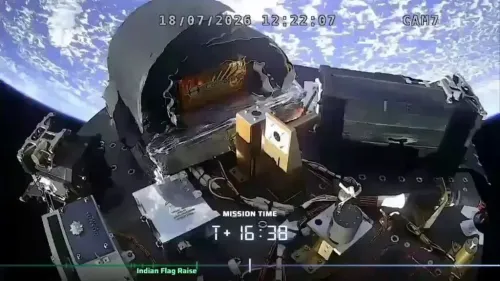
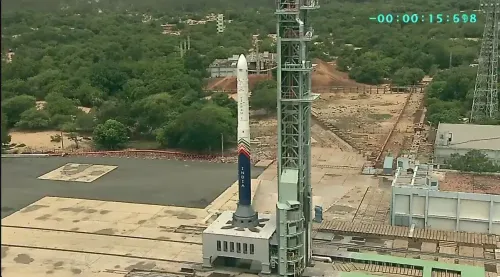
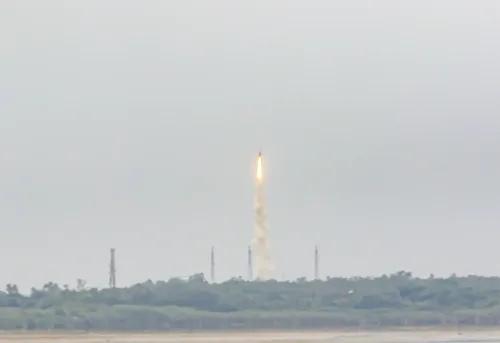
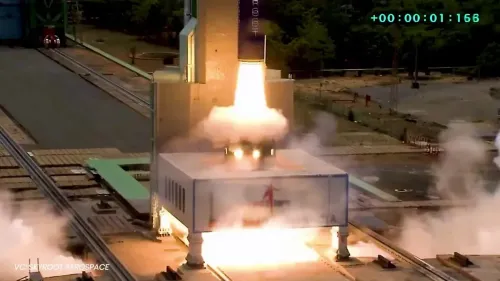
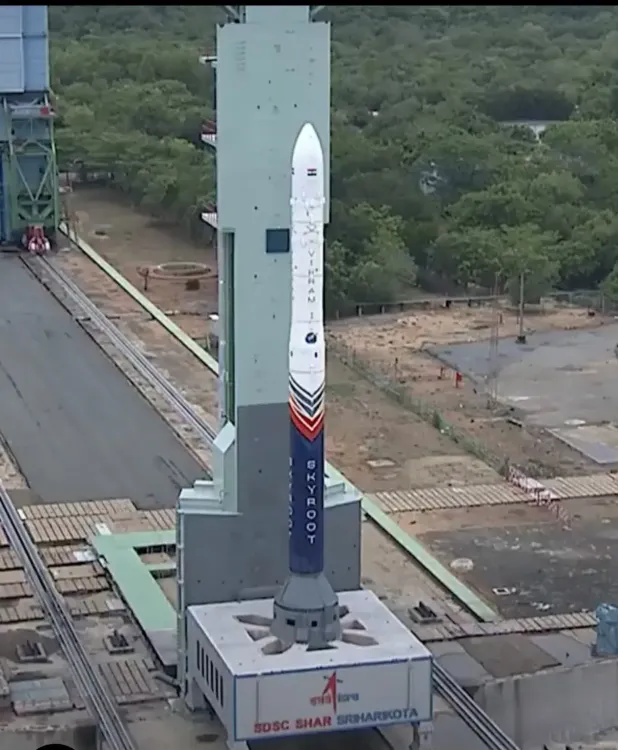
Congress MP Dr. Shashi Tharoor hailed Skyroot Aerospace's Vikram-1 rocket on 18 July 2026 after it became India's first privately developed launch vehicle to successfully place satellites into a 450-km Low Earth Orbit on its maiden flight, marking a landmark moment for India's commercialised space programme.
Key Takeaways
Skyroot Aerospace became India's first private company to successfully place satellites in orbit with its Vikram-1 rocket.
The target orbit was 450-km Low Earth Orbit , achieved on the vehicle's very first launch attempt.
Shashi Tharoor called the achievement 'a defining milestone for India's space sector' on 18 July 2026 .
The success is a direct outcome of India's 2020 space sector reforms that opened orbital launch activities to private firms.
Regulatory body IN-SPACe , established in 2020 , provided the single-window clearance framework that enabled Skyroot's mission.
The milestone intensifies competition among Indian private launch startups and raises expectations for faster policy support on infrastructure and incentives.
Congress MP Dr. Shashi Tharoor on Saturday, 18 July 2026 congratulated Skyroot Aerospace on the successful launch of its Vikram-1 rocket, calling it 'a defining milestone for India's space sector' after the vehicle placed satellites into a 450-km Low Earth Orbit on its very first attempt.
Context
Skyroot Aerospace, a Hyderabad-based private space startup founded in 2018, became India's first private company to successfully deliver satellites to orbit on a debut mission. Dr. Tharoor, writing on X, noted that Skyroot had 'achieved' what no Indian private launch vehicle had done before — a clean orbital insertion on the first flight attempt. The achievement marks a tangible inflection point for the country's nascent commercial launch industry.
Policy Backdrop
The launch is a direct product of the 2020 space sector reforms approved by the Government of India, which for the first time permitted private companies to undertake end-to-end launch activities previously reserved exclusively for ISRO. Alongside those reforms, the government established IN-SPACe — the Indian National Space Promotion and Authorisation Centre — as a single-window regulatory body to clear and support non-governmental space projects. Together, these policy moves created the legal and institutional runway that companies like Skyroot needed to develop and fly their own rockets.
ISRO, India's national space agency established in 1969, has historically been the sole operator of orbital launch vehicles in the country. The Vikram-1 success signals that the hybrid model envisioned in the 2020 reforms is beginning to yield operational results, not just investment announcements.
Stakeholders and Impact
The immediate beneficiaries are India's growing community of small-satellite operators — domestic and international — who have long sought affordable, reliable, and dedicated launch options without depending on foreign providers or waiting for slots on ISRO's workhorse vehicles. A proven indigenous private launcher at 450 km LEO opens a commercially attractive orbital band for earth-observation, IoT connectivity, and technology-demonstration payloads.
For the broader startup ecosystem, the milestone is a confidence signal. It demonstrates that private Indian capital and engineering talent can navigate the full cycle from design to successful orbital deployment. Dr. Tharoor's public endorsement — from a parliamentarian with a long record of championing technology policy — adds cross-party political visibility to what has largely been an executive-branch reform story.
What's Next
Attention in the sector will now turn to follow-on Vikram-1 missions and the commercial manifest Skyroot can build on the back of this debut. Rival private launch vehicle programmes — including Agnikul Cosmos's Agnibaan — will face renewed pressure to reach orbit as investor and customer expectations rise. Policymakers at IN-SPACe are expected to face calls for faster clearance timelines and expanded launch infrastructure to accommodate a pipeline that is now visibly maturing. Any government announcement on space manufacturing incentives or a dedicated spaceport expansion would be the logical next policy step to consolidate the momentum that Vikram-1's success has generated.
Point of View
The launch validates the IN-SPACe architecture; for the opposition, it is an opportunity to press for bolder incentives and faster regulatory timelines. The next test will be whether India can convert a single landmark launch into a sustained, commercially competitive private launch cadence.
NationPress
17 Oct 2026
Frequently Asked Questions
What is Vikram-1 and who made it?
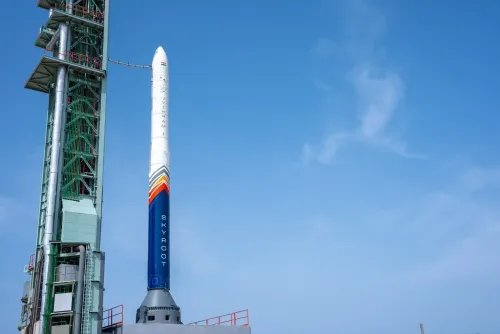
Vikram-1 is a small satellite launch vehicle developed by Skyroot Aerospace , a private space startup headquartered in Hyderabad and founded in 2018 . It is designed to carry small satellites to Low Earth Orbit using indigenous liquid-fuel technology.
What record did Skyroot Aerospace set with Vikram-1?
Skyroot Aerospace became India's first private company to successfully place satellites into orbit, achieving a 450-km Low Earth Orbit insertion on the very first launch attempt of Vikram-1.
What did Shashi Tharoor say about the Vikram-1 launch?
Congress MP Dr. Shashi Tharoor congratulated Skyroot Aerospace on 18 July 2026 , describing the launch as 'a defining milestone for India's space sector' on his official X account.
How did India's 2020 space reforms enable Skyroot's launch?
The Government of India's 2020 space sector reforms permitted private companies to conduct end-to-end launch activities for the first time, and the creation of IN-SPACe provided a single-window regulatory clearance mechanism that companies like Skyroot needed to develop and fly their own rockets.
What is IN-SPACe and what role did it play?
IN-SPACe — the Indian National Space Promotion and Authorisation Centre — was established in 2020 as the nodal agency to regulate and promote non-governmental space activities in India, providing the institutional framework under which Skyroot's Vikram-1 mission was cleared and conducted.