Vikram-1 launch: India's first private orbital rocket reaches orbit under Mission Aagaman

Synopsis
India has joined an exclusive club of just three nations — alongside the US and China — where a private company has successfully launched a rocket into orbit. Skyroot Aerospace's Vikram-1, a Hyderabad-built, four-stage vehicle named after Dr Vikram Sarabhai, lifted off from Sriharikota on 18 July under Mission Aagaman, marking a turning point for India's commercial space ambitions.
Key Takeaways
Vikram-1 , India's first privately developed orbital rocket by Skyroot Aerospace , successfully launched on 18 July under Mission Aagaman .
The rocket lifted off from ISRO's First Launch Pad at Satish Dhawan Space Centre, Sriharikota .
India became only the third nation globally — after the US and China — with a private company capable of orbital launch.
The four-stage, seven-storey rocket is targeting a Low Earth Orbit at approximately 450 km altitude.
Named after Dr Vikram Sarabhai , the vehicle is designed for rapid, on-demand small-satellite launch services.
Former Andhra Pradesh CM Jagan Mohan Reddy congratulated Skyroot Aerospace, calling it 'a landmark achievement.'
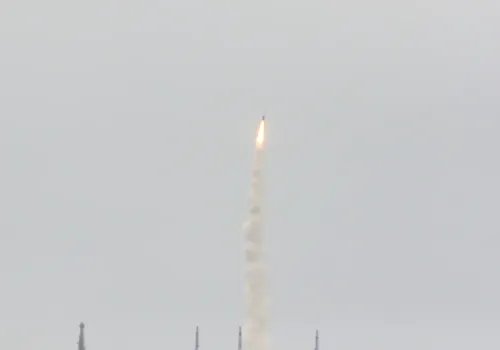
Skyroot Aerospace's Vikram-1 rocket lifted off from the Satish Dhawan Space Centre (SDSC-SHAR) in Sriharikota, Andhra Pradesh, on 18 July, becoming India's first privately developed orbital launch vehicle to reach space under Mission Aagaman. The milestone makes India only the third nation in the world — after the United States and China — where a private company has demonstrated the ability to place a rocket into orbit.
Historic Lift-Off from Sriharikota
The four-stage rocket launched from the Indian Space Research Organisation's (ISRO) First Launch Pad at SDSC-SHAR, clearing the launch tower within 10 seconds of lift-off. Skyroot Aerospace confirmed the milestone in a post on social media platform X: 'LIFT-OFF! Vikram-1 has left the pad at Sriharikota. India's first privately developed orbital rocket is flying. History is being made.' The company subsequently confirmed safe tower clearance at the T+10 second mark.
About the Vikram-1 Rocket
Named in honour of Dr Vikram Sarabhai, widely regarded as the father of India's space programme, the seven-storey Vikram-1 is engineered to deliver rapid, on-demand launch services for small satellites. The vehicle is targeting a Low Earth Orbit (LEO) at an altitude of approximately 450 km. Its design philosophy prioritises turnaround speed and commercial flexibility — qualities that are increasingly in demand as the global small-satellite market expands.
Political Reactions
Former Andhra Pradesh Chief Minister and YSR Congress Party (YSRCP) chief Jagan Mohan Reddy congratulated the Hyderabad-based firm in a post on X, calling the launch 'a landmark achievement as India's first privately developed orbital launch vehicle.' Reddy added: 'This milestone reflects the extraordinary capabilities of our scientists, engineers, innovators, and entrepreneurs... Wishing the entire team continued success as they inspire a new era of innovation and technological excellence for our nation.'
What This Means for India's Space Sector
The successful launch is expected to strengthen India's position in the global commercial launch market, which is increasingly dominated by private players. This comes amid a broader liberalisation of India's space sector following the government's decision to open the industry to private participation. Hyderabad has emerged as a focal point of this new space economy, with Skyroot Aerospace being among the most prominent startups to emerge from the city's deep-tech ecosystem. The mission signals that India's private space ambitions have moved decisively from the drawing board to orbit.
Point of View
A timeline that would have seemed implausible a decade ago. The real competitive test, however, lies ahead: whether Skyroot can convert this demonstration flight into a reliable, price-competitive commercial launch cadence that challenges established players. India's broader space liberalisation story now has a proof point, but a single successful test flight does not yet constitute a launch industry.
NationPress
16 Oct 2026
Frequently Asked Questions
What is Vikram-1 and who built it?
Vikram-1 is India's first privately developed orbital launch vehicle, built by Hyderabad-based startup Skyroot Aerospace. It is a four-stage, seven-storey rocket named after Dr Vikram Sarabhai, the father of India's space programme, and is designed to carry small satellites to Low Earth Orbit.
What is Mission Aagaman?
Mission Aagaman is the designation for Skyroot Aerospace's inaugural orbital launch mission, during which Vikram-1 lifted off from the Satish Dhawan Space Centre in Sriharikota on 18 July. It marks the first time a privately developed Indian rocket has attempted and achieved orbital flight.
Why is the Vikram-1 launch historically significant?
The successful launch makes India only the third country in the world — after the United States and China — where a private company has demonstrated the capability to place a rocket into orbit. It marks a major milestone for India's rapidly expanding private space sector.
Where did Vikram-1 launch from?
Vikram-1 launched from ISRO's First Launch Pad at the Satish Dhawan Space Centre (SDSC-SHAR) in Sriharikota, Andhra Pradesh, targeting a Low Earth Orbit at an altitude of approximately 450 km.
What orbit is Vikram-1 targeting?
Vikram-1 is headed for a Low Earth Orbit (LEO) at an altitude of approximately 450 km. The vehicle is designed to provide rapid and on-demand launch services for small satellites in this orbital range.