Nadda hails Skyroot Aerospace's Vikram-1 orbital launch

Synopsis
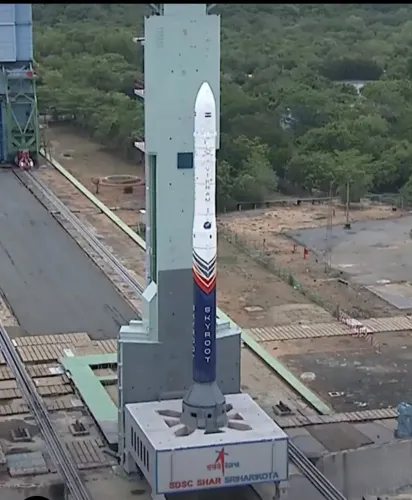
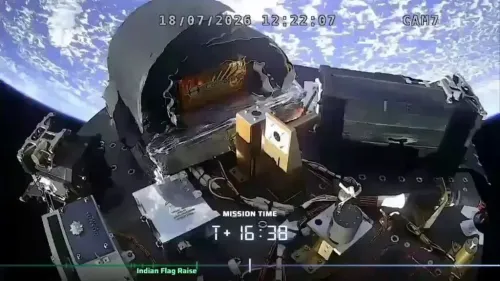
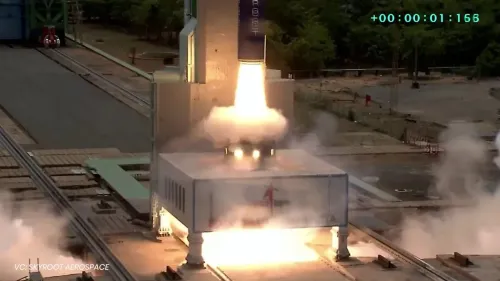
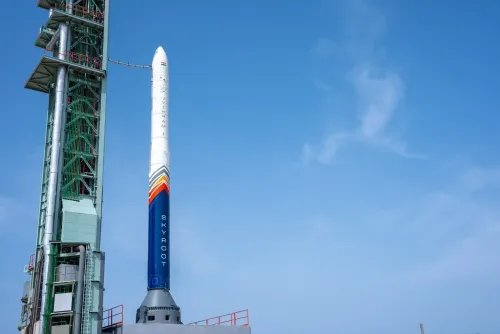
Skyroot Aerospace's Vikram-1 rocket successfully reached orbit from Sriharikota on 18 July 2026, making the Hyderabad-based startup the first Indian private company to achieve orbital launch capability and placing India among a handful of nations where private firms have independently launched rockets into orbit.
Key Takeaways
Skyroot Aerospace became the first Indian private company to successfully place an orbital rocket into space with the Vikram-1 launch.
The launch took place from Sriharikota on Saturday, 18 July 2026 .
India is now the third country in the world to achieve private orbital launch capability.
Union Health Minister J.
Nadda hailed the feat as a milestone under PM Modi 's leadership and the #AatmanirbharBharat initiative.
The achievement is expected to boost India's competitiveness in the global commercial small-satellite launch market.
Skyroot had previously conducted a sub-orbital test of Vikram-S in November 2022 , its first rocket launch.
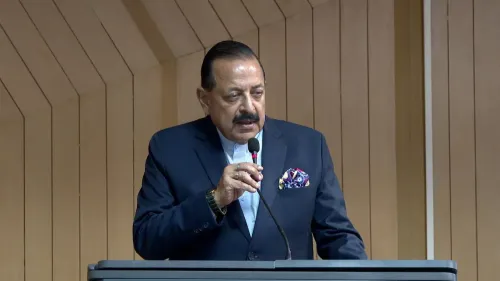
Union Health Minister J. P. Nadda on Saturday, 18 July 2026, congratulated Skyroot Aerospace on the successful launch of its Vikram-1 rocket from Sriharikota, calling it a landmark moment that makes India the third country in the world to achieve private orbital launch capability.
Context
Nadda described the achievement as 'a significant leap for India's space industry,' noting that Skyroot Aerospace has become the first Indian private company to place an orbital rocket into space. The launch of Vikram-1 from the Satish Dhawan Space Centre, Sriharikota, marks a historic first for the country's nascent commercial space sector.
In his post on X, the minister wrote: 'This marks a significant leap for India's space industry and makes India the third country in the world to achieve private orbital launch capability.'
Policy Backdrop
The milestone arrives against the backdrop of sweeping reforms that opened India's space sector to private players, a policy direction accelerated under Prime Minister Narendra Modi's government. The establishment of IN-SPACe (Indian National Space Promotion and Authorisation Centre) as a regulatory body was central to enabling companies like Skyroot Aerospace to develop and launch their own rockets.
Nadda linked the achievement directly to the #AatmanirbharBharat (Self-Reliant India) initiative and the broader #ViksitBharat (Developed India) vision, framing the orbital launch as evidence that India is 'scripting a new chapter in space exploration.' Skyroot Aerospace, a Hyderabad-based startup, had previously conducted a sub-orbital test flight of its Vikram-S rocket in November 2022, making it the first Indian private firm to launch a rocket into space at all.
Stakeholders and Impact
The successful orbital insertion elevates India into a select group of nations — alongside the United States and one other country — where private entities have independently achieved orbital launch capability. This positions Indian commercial space firms as credible competitors in the global small-satellite launch market, which is projected to grow substantially through the decade.
For the broader Indian startup ecosystem, the achievement signals that deep-tech, capital-intensive ventures in space can reach fruition within the domestic regulatory and funding environment. Investors, satellite operators, and government agencies seeking commercial launch partners are expected to take note of Vikram-1's orbital success.
What's Next
With orbital launch capability now demonstrated, Skyroot Aerospace is expected to move toward commercial operations, offering launch services to domestic and international satellite customers. The government's continued emphasis on the #ViksitBharat framework suggests further policy support — including streamlined launch approvals and potential public-sector contracts — could follow for proven private launch providers.
India's broader space ambitions, including the Gaganyaan human spaceflight programme and planned lunar and interplanetary missions, are likely to benefit from a maturing private launch ecosystem that can shoulder a portion of the country's growing manifest of space missions.
Point of View
The ruling party is staking a clear claim on the narrative of India's space-tech rise ahead of a crowded global commercial launch market. The milestone itself is substantive: orbital capability from a private Indian firm is a genuine first, and India joining the US and one other country in this club carries real strategic weight. The framing of the journey from #AatmanirbharBharat to #ViksitBharat reflects the government's effort to show a policy arc — from self-reliance to global leadership — materialising in measurable outcomes. If Skyroot can convert this demonstration into a reliable commercial launch cadence, the political dividend for the party that liberalised the sector will be durable.
NationPress
16 Oct 2026
Frequently Asked Questions
What is Vikram-1 and who made it?
Vikram-1 is an orbital rocket developed by Skyroot Aerospace, a Hyderabad-based private space startup. It is named after pioneering Indian space scientist Vikram Sarabhai and is designed to carry small satellites into low Earth orbit.
When did Vikram-1 launch and from where?
Vikram-1 launched on Saturday, 18 July 2026 , from the Satish Dhawan Space Centre in Sriharikota , Andhra Pradesh.
Is India the first country to achieve private orbital launch capability?
No. India is the third country in the world where a private company has independently achieved orbital launch capability, following the United States and one other nation.
What did JP Nadda say about the Skyroot Aerospace launch?
Union Health Minister J. P. Nadda congratulated Skyroot Aerospace on X, calling the Vikram-1 launch 'a significant leap for India's space industry' and crediting PM Narendra Modi 's leadership for enabling this milestone.
What is the connection between Vikram-1 and AatmanirbharBharat?
The #AatmanirbharBharat (Self-Reliant India) initiative includes opening the space sector to private players through bodies like IN-SPACe . Skyroot Aerospace's orbital launch is seen as a direct outcome of these liberalisation policies.