CM Saini Hails Vikram-1 Launch as Space Milestone

Synopsis
Haryana Chief Minister Nayab Singh Saini hailed the successful launch of Vikram-1 by Skyroot Aerospace as a landmark moment for India's private space sector and the Atmanirbhar Bharat mission, crediting Prime Minister Modi's leadership for enabling the milestone.
Key Takeaways
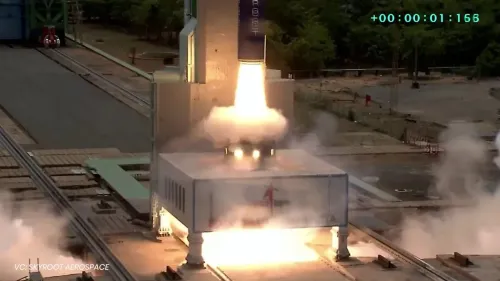
Haryana CM Nayab Singh Saini congratulated Skyroot Aerospace on the successful launch of Vikram-1 on 18 July 2026 .
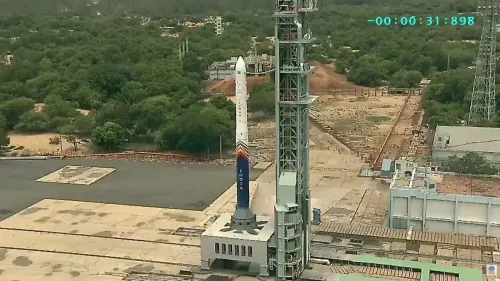
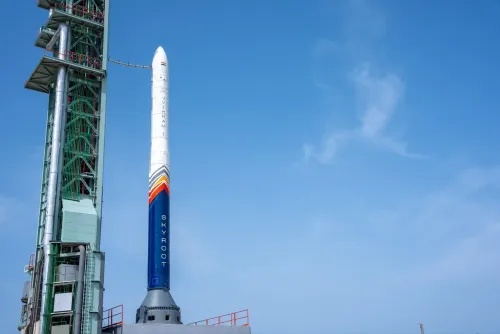
Vikram-1 is described as India's first privately developed orbital launch vehicle, built by Hyderabad -based Skyroot Aerospace , founded in 2018 .
The launch is framed as a milestone for the Atmanirbhar Bharat initiative, which opened India's space sector to private companies from 2020 .
Policy reforms since 2020 through IN-SPACe have allowed private firms to develop and operate satellites and launch vehicles in India.
Saini said the achievement would give India a 'new identity in the global space sector' and inspire youth and startups.
Subsequent commercial flights and new IN-SPACe licensing decisions are being closely watched by the industry.
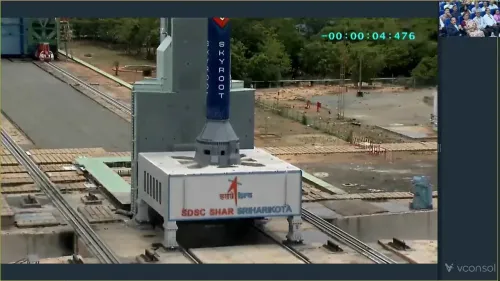
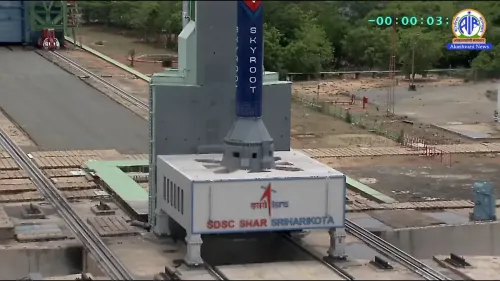
Haryana Chief Minister Nayab Singh Saini on Saturday, 18 July 2026, congratulated Skyroot Aerospace on the successful launch of Vikram-1, calling it a proud chapter in India's journey toward self-reliance and a symbol of the country's growing strength in space science and technology.
Context
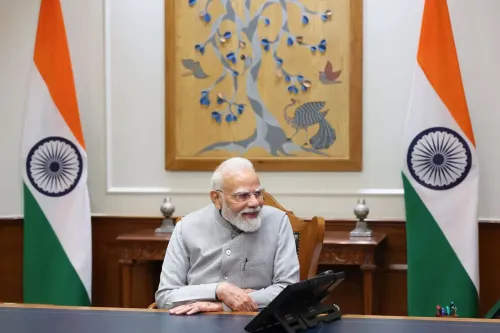
Saini's post, shared in Hindi on X, celebrated the successful flight of Vikram-1 — described as India's first privately developed launch vehicle — as an 'auspicious chapter' (gaurvapoorn adhyay) in the Atmanirbhar Bharat mission. He credited the achievement to the leadership of Prime Minister Narendra Modi, saying India is 'continuously expanding its capabilities and setting new records' in space science and technology.
The Chief Minister also noted that the milestone would give India 'a new identity in the global space sector' and serve as fresh inspiration for youth and startups across the country.
Policy Backdrop
Skyroot Aerospace is a Hyderabad-based private space startup founded in 2018 with the goal of developing small satellite launch vehicles. Vikram-1 is the company's three-stage, small-lift orbital rocket — designed to carry satellites into low-Earth orbit for commercial customers.
The launch follows sweeping space-sector reforms announced by the Government of India in 2020, which opened the sector to private companies for satellite development, launch-vehicle manufacturing, and commercial operations. These reforms, channelled through the nodal body IN-SPACe (Indian National Space Promotion and Authorisation Centre), mirror public-private models already established in the United States and Europe.
The Atmanirbhar Bharat initiative, launched in 2020, provided the broader policy framework under which domestic space startups have been encouraged to reduce India's dependence on foreign launch services and grow the country's share of the global commercial launch market.
Stakeholders and Impact
A successful orbital mission by a private Indian company would mark a significant milestone for the country's commercial space ecosystem, which has seen a surge in startup activity since the 2020 reforms. Investors, STEM students, and early-stage space ventures are among the stakeholders who stand to benefit from the demonstration that privately built Indian rockets can reach orbit.
India has long relied on the state-run Indian Space Research Organisation (ISRO) for launch capability. Private firms entering the orbital launch market could expand capacity, reduce costs, and attract international satellite customers to Indian launch providers.
What's Next
Attention will now turn to subsequent test and commercial flights by Skyroot Aerospace and other Indian space startups, as well as potential new licensing or funding announcements from IN-SPACe. Observers will watch whether Vikram-1's entry into commercial service translates into signed launch contracts with domestic and international satellite operators.
For the broader Indian startup ecosystem, the launch is expected to catalyse further private investment in space technology and encourage a new generation of entrepreneurs to pursue deep-tech ventures in a sector once considered exclusively the domain of government agencies.
Point of View
The messaging ties a technology milestone to a political brand, a deliberate framing that reinforces the party's governance credentials in high-visibility sectors. The Vikram-1 launch, if fully verified, would represent the most concrete evidence yet that India's 2020 space-sector liberalisation is producing operational results rather than just policy intent. The political salience of space success — combining national pride, youth aspiration, and economic ambition — makes it a natural rallying point for leaders at both the state and central level.
NationPress
18 Jul 2026
Frequently Asked Questions
What is Vikram-1 and who built it?
Vikram-1 is India's first privately developed small-lift orbital launch vehicle, built by Hyderabad-based startup Skyroot Aerospace, which was founded in 2018 to develop commercial rockets for satellite launches.
Why did Haryana CM Nayab Singh Saini comment on the Vikram-1 launch?
CM Saini posted on X to congratulate Skyroot Aerospace and frame the launch as a symbol of India's growing self-reliance under Prime Minister Modi's leadership, connecting the achievement to the Atmanirbhar Bharat mission.
What are India's space-sector reforms that enabled private rocket launches?
In 2020, the Government of India opened the space sector to private companies through regulatory changes channelled via IN-SPACe, allowing firms to build satellites, develop launch vehicles, and compete for commercial launch contracts.
What is Atmanirbhar Bharat and how does it relate to space?
Atmanirbhar Bharat is a national self-reliance initiative launched in 2020 that spans multiple sectors including space, encouraging domestic manufacturing and reducing dependence on foreign technology and services.
What comes next for Skyroot Aerospace after the Vikram-1 launch?
Industry observers are watching for subsequent commercial flights, signed satellite launch contracts with domestic and international customers, and new licensing or funding announcements from IN-SPACe for Skyroot and other Indian space startups.